Indian Prime Minister Narendra Modi delivered a strong message to China and its ally Pakistan over terrorism on Tuesday, July 4th. Modi was speaking during the Shanghai Cooperation Organization (SCO) Head of State level meeting in New Delhi, which was virtually joined by Chinese President Xi Jinping and Pakistani Prime Minister Shehbaz Sharif, among others.
Though Modi didn’t directly name China or Pakistan, he reiterated India’s accusations against Islamabad regarding state-sponsored cross-border terrorism. He also indirectly criticised China for supporting Pakistan and its alleged role in promoting terrorism in India. Modi stressed that the SCO should strengthen cooperation to combat terrorism and enhance the security of its member states.
“Some countries use cross-border terrorism as an instrument of their policies, provide shelter to terrorists. SCO should not hesitate to criticise such nations. There should be no place for double standards on such serious matters”, Modi said at the SCO meeting in New Delhi.
New Delhi alleges that China, as a permanent member of the United Nations Security Council (UNSC), continues to block any measure against designated Pakistani terrorists. While India has moved to the UNSC several times with the cases of those it considers Pakistan-based terrorists, China has been accused of blocking the majority of them using its veto power.
While responding to Modi, Sharif harped criticism against India without naming it. Sharif stressed that the SCO members should condemn terrorism in all its forms and manifestations, including “state terrorism”. Pakistan accuses India of resorting to state terrorism in Jammu & Kashmir.
Sharif also warned about the threat posed by “violent ultra-nationalism and demonisation of religious minorities in pursuit of domestic political agendas”, criticising Modi’s ultra-right Bharatiya Janata Party’s (BJP) rampant usage of communal vitriol to polarise the majority Hindu voters against minority Muslims in India.
Xi didn’t indulge in diplomatic slugfest during the SCO meeting in New Delhi. He stressed the importance of combatting terrorism, while also stressing the need for dialogue between countries with differences, without directly referring to the contradiction between India and China over the borders drawn by British colonial rulers.
Talking about terrorism and other challenges, Xi mentioned China’s unique problem with the western-sponsored “East Turkistan” terrorist forces, which attempt to wreak havoc on its territory. “We should crack down hard on the forces of terrorism, separatism and extremism such as the ‘East Turkistan’ elements, drug trafficking, and cyber and transnational organised crimes”, Xi said.
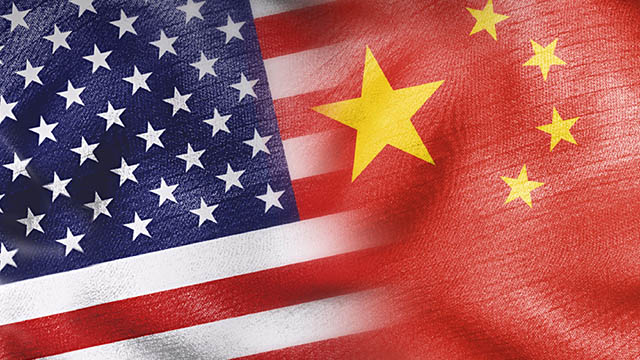
However, Xi also lambasted the US, without naming it, during his speech. “We must be highly vigilant against external attempts to foment a new Cold War or camp-based confrontation in our region. We must resolutely reject any interference in our internal affairs and the instigation of ‘colour revolutions’ by any country under whatever pretext. The future of our development must be held firmly in our own hands”, Xi said during the SCO meeting.
China has accused the US of pursuing a hegemonist quest and stirring trouble in its neighbourhood, along with its allies. Incidentally, India is an unofficial ally of the US in its military entente against China in the so-called “Indo-Pacific” war theatre demarcated by the Pentagon.
Without mentioning the India-Pakistan antagonism over Jammu & Kashmir and other issues, Xi highlighted the role of dialogue in resolving the bilateral issues. “We should step up strategic communication and coordination, bridge differences through dialogue, and replace competition with cooperation. We should truly respect each other’s core interests and major concerns and firmly support each other’s endeavours for development and rejuvenation. We should keep in mind the overall and long-term interests of our region, and make our foreign policies independently”, Xi said without naming India.
India has been opposing Xi’s dream project Belt Road Initiative (BRI), raising concerns over the violation of its sovereignty, as the roads constructed in the Pakistan-occupied Jammu & Kashmir are considered Indian territory by New Delhi.
During the SCO meeting, Modi ignored the BRI altogether and highlighted the importance of the Chabahar Port in Iran, which New Delhi has helped in constructing, as an important port that will connect the landlocked countries of Central Asia. However, most of these Eurasian countries are now in the fold of the BRI, and it’s unlikely they will quit the offer.
“Better connectivity not only enhances mutual trade but also fosters mutual trust. However, in these efforts, it is essential to uphold the basic principles of the SCO charter, particularly respecting the sovereignty and regional integrity of the member states. Following Iran’s membership in the SCO, we can work towards maximising the utilisation of the Chabahar Port. The International North-South Transport Corridor can serve as a secure and efficient route for landlocked countries in Central Asia to access the Indian Ocean”, Modi said during the SCO meeting in New Delhi.
Modi’s government has been following a two-pronged approach regarding China, which is keeping the peaceful settlement of disputes at bay.
Firstly, Modi and his BJP have been vocal against China’s alleged “aggressive” posture against India. Magnifying the risk posed by China to India’s security, Modi has made India a partner in the four-nation anti-China military entente named QUAD. Even though New Delhi denies that the QUAD is a military clique, the other members of the body—Australia, Japan and the US—acknowledge it.
Secondly, despite the jingoistic sinophobic rhetoric, India’s bilateral trade with China has been on the rise. In 2022 alone, India’s bilateral trade with China crossed US $135.98bn, while the trade deficit stood at $101.02bn. This is a significant increase of 8.4% vis-a-vis 2021 when the trade volume was $125bn and the trade deficit was $69.38bn.
It’s assumed that Modi’s anti-China stance is to lure investments from the US and its allies in the West. Moreover, keeping an anti-China posture helps India in getting access to crucial US technologies, including the defence technologies that even US allies don’t get easy access to. During his recent US tour, Modi bagged the deal of manufacturing American defence jet engines in India, along with many more for his home state Gujarat.
However, if Modi continues with the anti-China stance as a strategy in geopolitics, it may not yield any results in the long run, as any Indo-US relationship based on an anti-China praxis will be a zero-sum game for New Delhi. A peaceful relationship with China and the SCO member countries along with shared development goals can boost India’s economic growth and also secure its sovereignty and future interests.
East Post is an independent geopolitical analysis portal covering South Asia and global power dynamics for international audiences. Views expressed are analytical and do not constitute endorsement of any state or non-state actor.
Join our channels on Telegram and WhatsApp to receive geopolitical updates, videos and more.