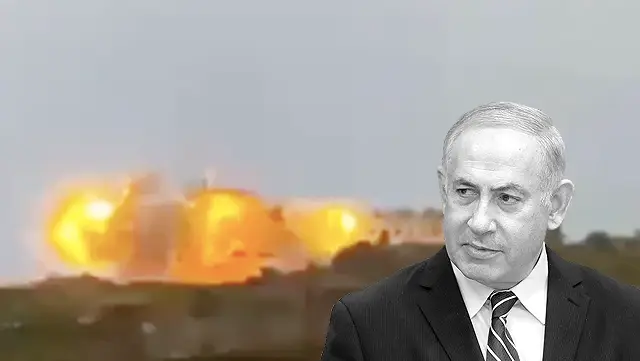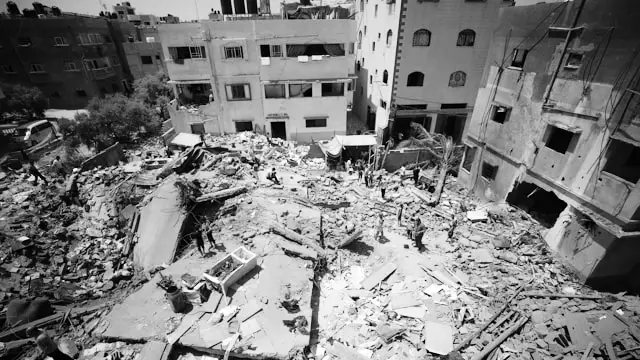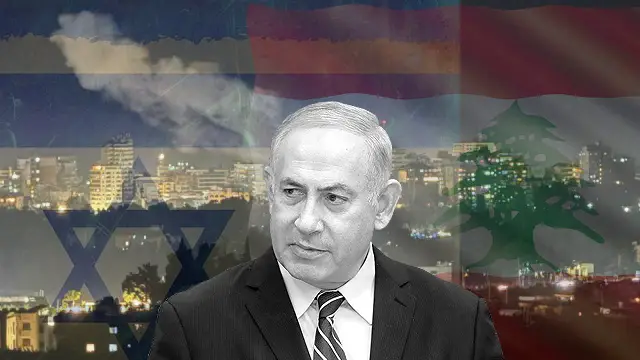
Southern Lebanon trembled under a barrage of Israeli airstrikes on Saturday, as the Israeli Defence Forces (IDF) mounted what observers are calling the largest aerial assault since the November ceasefire. The bombardment has claimed at least seven lives, including a child, and injured dozens more across multiple towns and villages—a disproportionate response, Lebanese officials argue, to what Israel describes as “three rockets” allegedly fired toward the settlement of Metulla.
Attack on southern Lebanon: A familiar pattern emerges
The renewed violence follows a troubling pattern that has characterised the months since September 2024, when Israel launched a full-scale attack on Lebanon after systematically eliminating Hezbollah’s leadership, including Hassan Nasrallah, through a series of precision device strikes. Though a ceasefire was eventually brokered in November, Israel has maintained military positions in parts of southern Lebanon and conducted sporadic strikes—actions that Lebanese authorities describe as flagrant violations of both the ceasefire agreement and UN Resolution 1701.
“Israel is using these events as a pretext to attack Lebanese territory,” declared Paul Morcos, Lebanon’s Minister of Information. “It is the one that preempted its occupation and violates Resolution 1701 daily. It does not hesitate to target our territory with airstrikes without justification.”
Who fired the rockets?
The missile launches that ostensibly triggered Saturday’s Israeli response remain shrouded in mystery. No organisation has claimed responsibility, and Hezbollah has categorically denied involvement.
“Hezbollah denies any involvement in the rocket fire from southern Lebanon into the occupied Palestinian territories, stressing that the Israeli enemy’s allegations are merely pretexts for its continued attacks on Lebanon, which have not ceased since the ceasefire was announced,” the group stated on Saturday. “Hezbollah reiterates its commitment to the ceasefire agreement and stands behind the Lebanese state in addressing this dangerous Zionist escalation against Lebanon.”
A Lebanese military source told Al Jazeera that preliminary investigations indicate the missiles were “an older model,” while sources speaking to Al-Mayadeen noted that the “primitive launch method confirms Hezbollah had no involvement.” These assessments align with UN observations: the United Nations Interim Force in Lebanon (UNIFIL) confirmed it “has not detected any Hezbollah military activity south of the Litani River”—the boundary established in previous agreements.
The Eagles of the Whirlwind, the military wing of the Syrian Social Nationalist Party, also issued a denial after rumours circulated that they might be responsible, calling such reports “fabricated and false.”
Disproportionate response
By Saturday evening, the Lebanese Ministry of Health reported six people killed and 31 injured. The toll would later rise as Israeli jets continued pounding areas across southern Lebanon, including Iqlim Al-Tuffah, Toulin, Zebqin, and the coastal city of Tyre. Strikes also reached Nabichit in the eastern Bekaa region, suggesting a broader campaign than mere retaliation for border incidents.
In Toulin alone, four people were reported killed, including one child. Other casualties were documented in Tyre, Qlayleh, and elsewhere, with numerous homes damaged or destroyed.
The attacks come despite Lebanon’s compliance with the ceasefire terms. According to various sources, Hezbollah has largely disarmed south of the Litani River and ceded key positions to the Lebanese state. US officials have confirmed that the Lebanese army has destroyed “countless Hezbollah rockets,” while the UN verified that Hezbollah has not attempted any military movement in the border area since the November ceasefire.
“The Lebanese army claims to have dismantled more than 400 infrastructure assets owned by Hezbollah,” one report noted.
A doctrine of dominance
Military analysts suggest Israel’s actions reflect a strategic shift rather than genuine security concerns. “In the IDF’s doctrine now, Hezbollah was defeated and after this defeat, Hezbollah should not be allowed to establish itself again even if Hezbollah and Lebanon adhere strictly to the ceasefire agreement,” one Lebanese geopolitical observer noted on Telegram.
“It does not matter if Hezbollah disarmed south of the Litani river and it does not matter if Hezbollah is not threatening to attack Israel. As long as there is a Hezbollah who carries an anti-Israel ideology, Israel will continue to see them as the historic threat they were and act based on that,” the observer added.
The attacks appear calculated to maintain Israel’s regional dominance while exploiting Lebanon’s currently weakened position. Israel has not only demolished border towns during the ceasefire period but also occupied strategic hills in southern Lebanon, creating a buffer zone that directly contravenes the agreement’s stipulation for a full withdrawal.
International reactions split along familiar lines
The international community’s response has fallen along predictable geopolitical fault lines. The United States offered unwavering support for Israel’s actions. Brian Hughes, Deputy National Security Advisor, stated: “We fully support Israel in its response to terrorists launching rockets into Israeli territory. It is the Lebanese government’s responsibility to prevent terrorists from attacking Lebanon’s neighbors from Lebanese territory (sic).”
Hughes added: “These terrorists have ruined Lebanon for far too long, and we urge the Lebanese government to take the appropriate steps to take its country back. The US will judge the Lebanese government based on how it responds to these terrorists.”
In stark contrast, Yemen’s Ansarallah movement condemned what it called “Zionist airstrikes on Lebanon, a continuing violation of the ceasefire agreement with US support.” The group linked Israel’s actions to broader regional tensions, noting that “the enemy’s escalation of its raids in Lebanon and Syria, and the murders in Gaza and the West Bank, underscore the need for an equal response.”
Hamas also issued a statement condemning “the brutal Zionist aggression against our brotherly Arab countries Lebanon and Syria,” calling for “a unified Arab and Islamic stance that rises to the level of this aggression and puts an end to the enemy’s arrogance and ongoing crimes.”
Lebanon’s diplomatic push
Lebanon’s foreign minister has initiated diplomatic efforts to contain the escalation, contacting counterparts in Jordan and Egypt, as well as officials from the European Union, France and the United States. He “called for pressure on Israel to halt the aggression and escalation and contain the dangerous situation on the southern border.”
However, critics within Lebanon argue that their government has not responded forcefully enough to Israeli provocations. “Our Lebanese government and president still fail to issue a single condemnation and fail to show they can be responsible for our security,” one Lebanese observer noted on the social media platform Telegram.
As night fell over Lebanon’s smoking southern villages on Saturday, the ceasefire—already fragile—appeared increasingly meaningless. With Israel maintaining positions on Lebanese soil and continuing to strike with impunity, the fundamental question remains: what is the value of agreements that one party can violate without consequence?
For the residents of southern Lebanon, picking through the rubble of their homes once again, the answer seems painfully clear.
East Post is an independent geopolitical analysis portal covering South Asia and global power dynamics for international audiences. Views expressed are analytical and do not constitute endorsement of any state or non-state actor.
Join our channels on Telegram and WhatsApp to receive geopolitical updates, videos and more.