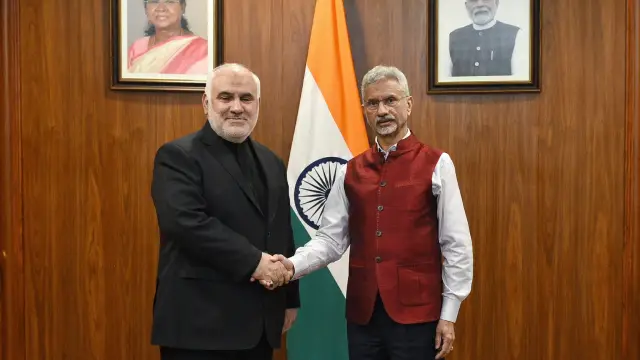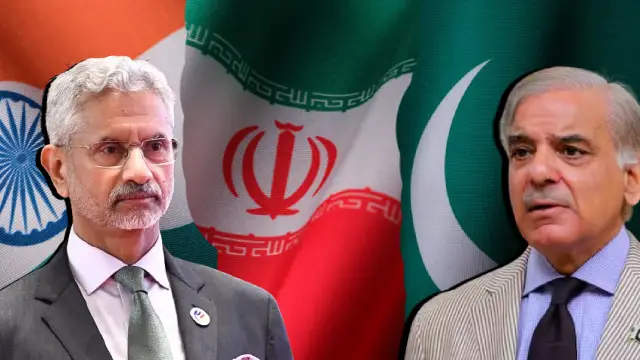
Subrahmanyam Jaishankar, India’s external affairs minister, described Pakistan as a “broker” (dalal in Hindi) during an all-party briefing on March 25th. The remark came as Islamabad signalled its willingness to mediate between the United States and Iran in the ongoing conflict.
Opposition leaders questioned how Pakistan had positioned itself as a mediator while India—despite its ties with Washington, Tehran and Gulf monarchies—had chosen not to act. Mr Jaishankar dismissed the comparison, labelling Pakistan a “broker nation” and sidestepping the broader question.
India says it is managing the Iran conflict through diplomacy, securing energy flows while maintaining strategic autonomy. Yet as Pakistan hosts mediation efforts with regional backing, New Delhi’s restraint looks less like balance and more like absence.
India could have used its ties across rival blocs to shape the outcome of the Iran conflict. Instead, it has stayed on the sidelines as Pakistan takes the diplomatic initiative.
Pakistan’s mediation and India’s restraint amid Iran conflict
Pakistan, a long-standing American partner, has hosted meetings with regional powers aimed at initiating mediation. Pakistani media reports that Foreign Minister Ishaq Dar met his Turkish and Egyptian counterparts in Islamabad on Sunday, March 29th.
Saudi Arabia’s foreign minister, Prince Faisal bin Farhan Al Saud, also travelled to Islamabad the same day to join discussions focused on ending the Iran conflict.
Analysts suggest that Pakistan’s initiative has tacit American backing. Rather than a spontaneous diplomatic move, it appears to offer Washington a channel to explore de-escalation without direct concessions under pressure from Tehran.
Pakistan’s positioning is not accidental. It maintains working ties with Iran, holds a defence relationship with Saudi Arabia, and remains the only Muslim-majority nuclear power. These factors make it a viable intermediary for multiple sides.
As Pakistan activates these relationships, India faces a dilemma. New Delhi has a stronger economic weight and established ties with the US, Israel and Iran. Yet it has declined to play a mediating role, even as it criticises Pakistan’s efforts.
What appears to be a missed opportunity reflects a policy choice. India has opted to avoid any role that could disrupt its balancing strategy or strain its deepening ties with the US and Israel.
Energy, diplomacy, credibility
India’s approach to the Iran conflict carries immediate risks. The Strait of Hormuz remains central to its energy security, and disruptions have already exposed its dependence on external supplies of fuel and fertilisers.
Despite this, India has maintained a cautious silence. Following the initial US-Israeli attacks on Iran on February 28th, New Delhi avoided direct criticism while calling for de-escalation in general terms.
India did not publicly respond to several reported strikes inside Iran, including attacks on senior leadership figures and civilian infrastructure, claims that have circulated in regional media and require careful verification. Its statements became more pointed only after Iran retaliated against American and Israeli targets.
Prime Minister Narendra Modi, since the beginning of Iran’s retaliation, spoke with only Gulf monarchs and expressed solidarity with them. When he finally, out of compulsion, spoke with Iranian President Dr Massoud Pezeshkian, he refrained from condemning the US-Israeli aggression and used vague terms.
Pakistan, by contrast, has pursued a more active, if carefully balanced, approach. While maintaining close ties with Washington, it has criticised Israeli strikes on Iran, condemned the murder of Ayatollah Saeed Ali Khamenei and, at the same time, condemned Iranian attacks on Gulf states hosting American military bases, including the United Arab Emirates.
This dual posture reflects an attempt to remain relevant to all sides. It also explains Islamabad’s willingness to step forward as a mediator.
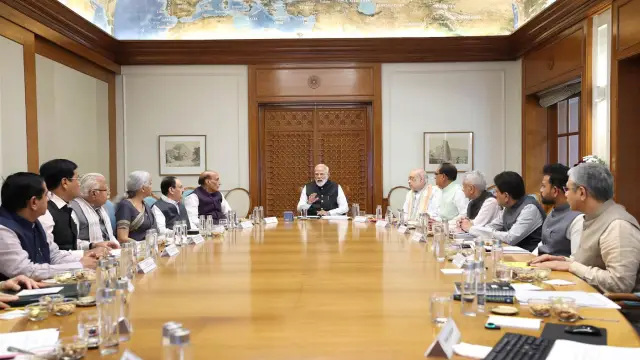
India’s decision not to do so has drawn domestic criticism. Opposition leaders questioned the government’s stance during the March 25th briefing, particularly its reluctance to engage diplomatically in the Iran conflict.
Mr Modi did not attend that meeting. It followed a phone call with Donald Trump, during which the Indian prime minister emphasised the importance of keeping the Strait of Hormuz open and reiterated support for dialogue.
“Received a call from President Trump and had a useful exchange of views on the situation in West Asia. India supports de-escalation and restoration of peace at the earliest. Ensuring that the Strait of Hormuz remains open, secure and accessible is essential for the whole world,” Mr Modi wrote on social media platform X (formerly Twitter).
India’s emphasis on stability reflects two pressures. First, early expectations of a rapid collapse in Iran have not materialised, forcing a recalibration. Second, disruptions to maritime trade routes have exposed vulnerabilities in India’s economic model.
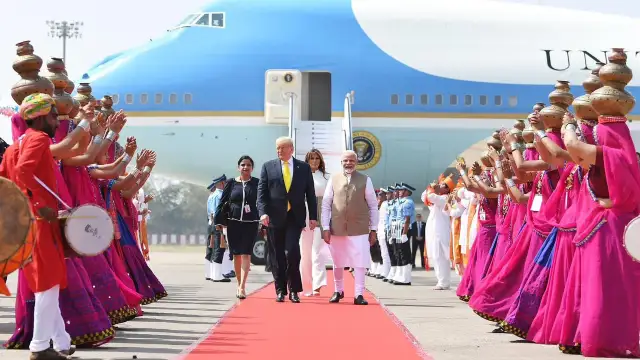
Even so, India did not advocate dialogue before the conflict escalated. Mr Modi visited Israel days before the attacks began, but did not publicly call for restraint or diplomatic engagement in the region during that visit.
Only after the conflict intensified—and its economic consequences became clearer—did New Delhi shift towards emphasising de-escalation.
India’s alliances, Iran and the limits of autonomy in conflict
India’s reluctance to mediate is rooted in its evolving geopolitical alignments. It is part of the India-Israel-US-UAE (I2U2) grouping and has invested in the India-Middle East-Europe Economic Corridor (IMEEC), designed as an alternative to China’s Belt and Road Initiative.
These frameworks align India more closely with American and Gulf partners. The IMEEC, in particular, aims to reduce vulnerabilities in global trade routes, including those linked to the Strait of Hormuz and the Bab el-Mandeb.
Over time, this alignment has reshaped India’s relationship with Iran. New Delhi has scaled back engagement with Tehran under American pressure, including slowing investment in the Chabahar port project, a key link to Central Asia.
At the same time, India has deepened defence and technology ties with Israel and expanded cooperation with the United States. Washington’s willingness to share advanced defence capabilities, including discussions around jet engine production, has reinforced this partnership.
India has also strengthened defence ties with the United Arab Emirates. While framed as regional cooperation, such moves are viewed in Tehran as part of a broader alignment that limits India’s credibility as an independent actor.
This perception matters. In a conflict where trust is scarce, mediation depends on being seen as neutral. Iran is unlikely to view India as such under current conditions.
Pakistan, despite its own contradictions, presents a different profile. It does not recognise Israel, maintains ties with Iran, and retains close links with Washington. That combination allows it to position itself as an intermediary.
Islamabad has also regained diplomatic space after tensions with India following the Pahalgam attack in April 2025 and subsequent military escalation in May. Its engagement in the Iran conflict reflects an attempt to convert that space into influence.
Economic constraints and strategic choices
Economic realities also shape India’s response. The US remains India’s largest export market, and recent tariff disputes have exposed New Delhi’s vulnerabilities.
A 50% tariff imposed by Mr Trump on Indian imports linked to Russian oil purchases disrupted trade flows. Subsequent negotiations reduced tariffs to 18%, a level lower than that faced by regional competitors such as Bangladesh and Pakistan.
This agreement, which remains to be finalised, has been presented domestically as a diplomatic success. It also creates incentives for caution. Acting as a mediator in the Iran conflict—particularly in ways that might be seen as favouring Tehran—could complicate access to American markets.
India faces rising inflation risks linked to energy prices and shipping disruptions. Yet policymakers appear to calculate that these pressures can be managed through negotiation, including via intermediaries such as Russia.
The broader impact of the Iran conflict is global, allowing New Delhi to diffuse domestic accountability. Trade exposure to the United States, however, is immediate and politically sensitive.
This shapes India’s approach. Rather than intervening diplomatically, it has adopted a wait-and-watch stance—preserving ties with all sides while avoiding commitments that could carry economic or strategic costs.
Pakistan’s gains vs India’s losses in Iran conflict
Pakistan’s mediation efforts in the Iran conflict highlight a shift in regional diplomacy. Where India might once have leveraged its cross-cutting ties, it has chosen restraint.
That choice reflects structural constraints as much as strategy. Closer alignment with the US, Israel and their partners has expanded India’s global reach on paper, but narrowed its room for manoeuvre in crises where neutrality is an asset.
Whether India can recover from this stage in the future remains to be seen. However, what’s problematic for New Delhi’s foreign policymakers is that in a conflict reshaping West Asia, India’s absence is as telling as Pakistan’s presence.
East Post is an independent geopolitical analysis portal covering South Asia and global power dynamics for international audiences. Views expressed are analytical and do not constitute endorsement of any state or non-state actor.
Join our channels on Telegram and WhatsApp to receive geopolitical updates, videos and more.