On May 28th, as Israeli aircraft struck Beirut’s southern suburbs for the first time in weeks and reports emerged of fresh civilian deaths in Gaza during Eid celebrations, Prime Minister Benjamin Netanyahu was speaking hundreds of kilometres away in the occupied Jordan Valley — not about fragile ceasefires, nor about mounting international criticism of Israel’s military campaigns.
He was talking about India.
“In India, there is an absolutely crazy love for Israel,” he declared. “I think I have more followers from India than from anywhere else.”
The remark immediately travelled across Indian television studios, social-media feeds and newspaper pages. Most mainstream Indian outlets reproduced it almost verbatim. It was presented as yet another sign of the deepening strategic intimacy between Israel and India — a relationship that has expanded dramatically over the past decade through defence cooperation, intelligence exchanges, technology partnerships and diplomatic coordination.
Netanyahu:
— Clash Report (@clashreport) May 28, 2026
I’ll say this: we face delegitimization in much of the world — but not in India.
In India, there is an absolutely crazy love for Israel, truly crazy.
I think I have more followers from India than from anywhere else. pic.twitter.com/FRIo2cdVb3
But the significance of Mr Netanyahu’s statement lies not in whether India truly harbours exceptional warmth for Israel. The real question is why he felt compelled to say it at all — and under what circumstances.
Because beneath the flattery lies a precise geopolitical calculation.
India was expected to be a reliable Global South voice for Palestinian statehood. Instead, Mr Netanyahu has turned the strategic partnership between Israel and India into a talking point for his government’s international rehabilitation — while Indian Prime Minister Narendra Modi’s ruling far-right dispensation quietly allows it.
Strategy: Israel’s legitimacy problem and India dividend
For much of its modern history, Israel’s international standing rested upon Western political support. The United States remained its principal military backer. European powers provided diplomatic cover, economic engagement and political recognition. Even when criticism emerged, the core architecture of that support largely held.
Today, that architecture is under pressure.
Israeli aggressions in Gaza and Lebanon have generated unprecedented censure across large parts of Asia, Africa and Latin America. Human rights organisations, United Nations officials and multiple governments have accused Israel of violating international humanitarian law through repeated strikes on civilian areas, blockades and operations that have produced mass civilian casualties.
According to the Palestinian Ministry of Health in Gaza, 932 civilians have been killed in the enclave since the October 11th 2025 ceasefire. During the same period, Israeli attacks have wounded 2,859 people. While only four Israeli soldiers have been killed during the same period.
Israeli officials argue that operations continue against Hamas infrastructure and leadership. Palestinian officials and humanitarian organisations accuse Israel of systematically undermining ceasefire arrangements through near-daily attacks and restrictions on aid access.
From October 7th 2023, until May 31st 2026, Israeli aggression has killed 72,941 people in Gaza, wounding 172,967. Hundreds of thousands remain displaced, and the public healthcare system has collapsed.
These optics have stirred global anger against the Zionist occupation project. Yet, the US and the West’s unconditional support helps buttress Mr Netanyahu’s regime. Across the Global South, a very few states stand in support of Israel.
This is the context in which India becomes strategically valuable for the Israelis — not merely as a partner, but as political evidence.
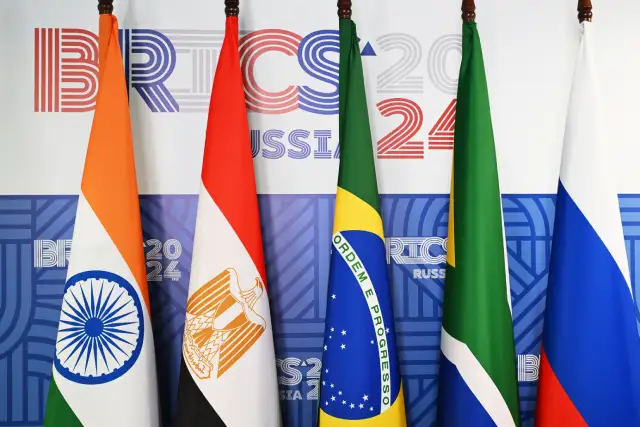
India is the world’s most populous country, a major emerging economy, a leading member of BRICS, the Shanghai Cooperation Organization (SCO) and an influential voice across the developing world. When Mr Netanyahu praises India, he is not simply complimenting a friendly government. He is signalling to domestic and international audiences that Israel retains meaningful partnerships among major non-Western powers, despite mounting global criticism.
That symbolism is precisely the point.
Yet Mr Netanyahu’s portrayal of India as uniquely and uniformly supportive is, at best, a selective reading of a far more complicated reality. It is a reading made possible, in no small part, by the Indian media’s amplification of pro-Israel sentiment — an amplification that serves the political interests of Mr Modi’s Hindu nationalist Bharatiya Janata Party (BJP) rather than India’s stated foreign policy positions and larger public sentiments.
Economic and political impact: BJP’s Israel alignment and its costs
The transformation of India-Israel relations accelerated under Mr Modi.
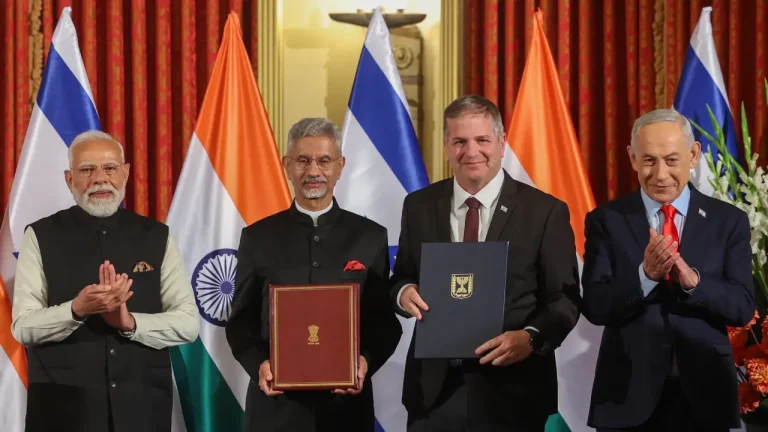
Since Mr Modi came to power in 2014, high-level visits have multiplied, defence cooperation has expanded, agricultural and technology partnerships have deepened, and intelligence coordination has intensified between India and Israel.
Mr Modi’s February 2026 visit to Israel, before the deadly strikes on Iran, elevated bilateral ties to what both governments described as a “Special Strategic Partnership.”
What India’s mainstream media has presented as a national consensus, however, is largely a projection of one political constituency.
It is worth recalling that the BJP failed to cross the 280-seat threshold in the 2024 Lok Sabha (general parliamentary) elections. The BJP scored its worst in the federal elections in 2024 since Mr Modi became the prime minister in 2014. One of the remarkable facts regarding the 2024 Lok Sabha elections was that it took place amid Israel’s genocidal attacks on Gaza.
Following the October 7th 2023 resistance attacks on the Israeli military, Mr Modi declared unconditional support for Israeli actions. It encouraged his far-right followers to amplify Israeli narratives and hail the attacks on Gaza. The trend continued during the election campaigns.
Senior BJP leaders’ public endorsements of Israel’s military operations, amplified uncritically by large sections of the Indian media, alienated significant portions of the electorate, particularly among Muslim voters and those with traditional sympathies for Palestinian self-determination.
The Indian media, operating in many cases as a partisan echo chamber for the ruling dispensation, has systematically overstated the breadth and depth of pro-Israel sentiment in India. It is upon this distorted picture that Mr Netanyahu now constructs his propaganda.
India’s public opinion is, in fact, markedly divided. While sections of the Hindu nationalist right support Israel — often viewing it through the lens of counterterrorism and civilisational solidarity — substantial segments of Indian society remain sympathetic to Palestine.
Opposition Indian National Congress leaders have repeatedly accused the Modi government of abandoning India’s traditional diplomatic commitments regarding Palestinian statehood. Communist parties, student and youth organisations, civil society groups and activists have organised solidarity campaigns condemning Israeli military operations.
Public discourse on Israel remains fragmented rather than uniform.
What Mr Netanyahu may be observing is not Indian national opinion but the enthusiasm of specific political constituencies whose visibility has been amplified by social media and a compliant press corps.
Geopolitics: BRICS contradiction and India’s compromised leadership
The deeper problem for India is not merely domestic political optics. It is strategic.
India has invested heavily in positioning itself as the authentic voice of the Global South — championing reforms in global governance, advocating multipolarity and cultivating influence across Asia, Africa and Latin America. That ambition rests upon a claim of principled independence from Western-led alliance politics.
The Gaza war has become one of the defining political tests of that claim.
In May 2026, BRICS foreign ministers, meeting under India’s chairship, reiterated support for Palestinian statehood and expressed grave concern over Israeli attacks in Gaza. The official communiqué called for adherence to international humanitarian law and condemned obstruction of humanitarian assistance. Those positions are difficult to reconcile with Mr Netanyahu’s characterisation of India as a uniquely sympathetic partner — or with the Modi government’s willingness to be used as such.
India’s simultaneous membership of BRICS and the SCO, both of which include states openly hostile to Israeli policy, makes Mr Modi’s proximity to Mr Netanyahu a strategic liability. When India appears too closely aligned with Israel during periods of acute military escalation, it undermines its credibility as an honest broker and a Global South leader in the eyes of precisely those governments and societies it seeks to lead.
The Indian state does continue to maintain an official balancing posture. Statements from New Delhi emphasise humanitarian concerns, ceasefires and a two-state solution. Strategic cooperation with Israel continues largely uninterrupted. This reflects the logic of strategic autonomy — India simultaneously maintains relations with the United States, Russia, Iran, Saudi Arabia, the United Arab Emirates and China despite deep tensions among those actors
But there is a difference between principled multi-alignment and being co-opted into another state’s legitimacy project. Mr Netanyahu’s “crazy love” remark moved squarely in the latter direction. By transforming a strategic partnership into a symbolic political endorsement, he has handed India’s critics a ready-made argument that New Delhi’s Global South leadership aspirations are compromised by its ruling party’s ideological affinity with the Israeli right.
Whether Mr Modi’s government pushes back against that framing — or continues to permit Indian media to function as its amplifier — will shape how India’s foreign policy credibility is read across the multipolar world.
Netanyahu’s remarks on India aren’t accidental
Mr Netanyahu did not stumble upon India’s name by accident in the Jordan Valley. He reached for it because it serves a precise purpose: to demonstrate that Israel retains friends beyond Washington at a moment when its military conduct is generating historic levels of international condemnation. That India’s ruling dispensation has made itself available for that role — and that much of the Indian press has celebrated rather than interrogated it — is not evidence of Indian national sentiment. It is evidence of a government willing to subordinate India’s strategic narrative to its own ideological preferences. The costs of that subordination, for India’s Global South ambitions and its diplomatic credibility, may take years to calculate fully.
East Post is an independent geopolitical analysis portal covering South Asia and global power dynamics for international audiences. Views expressed are analytical and do not constitute endorsement of any state or non-state actor.
Join our channels on Telegram and WhatsApp to receive geopolitical updates, videos and more.