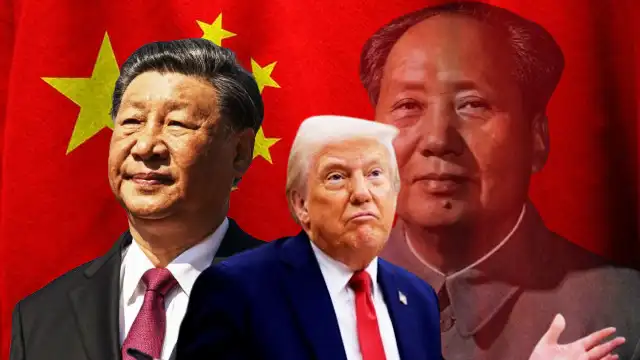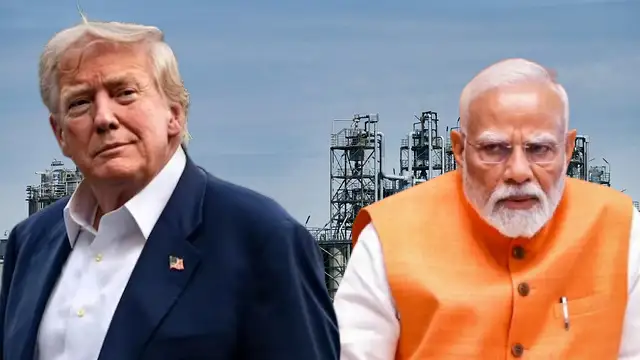
The US has finalised trade agreements with two countries in South Asia within the first fortnight of February. Following the release of a joint statement on February 6th regarding an interim trade deal with India, the White House has also issued a joint statement on a bilateral trade deal with Bangladesh on February 9th.
While Donald Trump’s trade deal with India has stoked political tensions in New Delhi, from the left to the centre-left bashing Prime Minister Narendra Modi and his federally ruling, far-right Bharatiya Janata Party (BJP) for trading off sovereignty, there is not much noise in Bangladesh, as the political landscape remains captivated by the ongoing canvassing for the general elections scheduled on Thursday.
US trade agreements don’t benefit South Asia
Although both countries are celebrating their agreement as diplomatic victories, the fine print says otherwise. While it’s remarkable for countries to have the US agree to a trade deal with them by reducing Mr Trump’s previous tariffs on South Asia, an overall assessment shows that in both cases, Washington is bulldozing these countries.
After the interim trade deal with India came under severe attack from the Opposition in India over its opaque nature and Mr Modi’s overall capitulation to American bullying, Washington has made amendments to the text to remove pulses from one of the agricultural exports that it wants to flood the Indian markets with. Moreover, from compelling India to purchase $500bn worth of American goods in a period of over five years, the new text has mentioned that New Delhi “intends” to buy them. However, Bangladesh has not been that lucky.
The US trade deals with these countries in South Asia show that Mr Trump is using the deal bait as an instrument designed to discipline weaker countries, reward compliance and preserve US hegemony and discretion. Washington speaks of partnership, but the structures of the trade deals narrate a different, contrasting story.
US trade deals for South Asia exhibit asymmetry
Compared to India, which is a major military power in the subcontinent and an American partner in the Pentagon’s military endeavours to contain China in the so-called “Indo-Pacific war theatre”, Mr Trump has harshly dealt with Bangladesh, despite its leadership showing excessive flexibility—critics call servility.
According to the fine print, the US trade deal with Bangladesh will force the South Asian country to provide the former with greater market access. The US-Bangladesh joint statement says, “Bangladesh has committed to provide significant preferential market access for U.S. industrial and agricultural goods, including: chemicals; medical devices; machinery and motor vehicles and parts; information and communicational technology (ICT) equipment; energy products; soy products; dairy products; beef; poultry; and tree nuts and fruit (sic).”
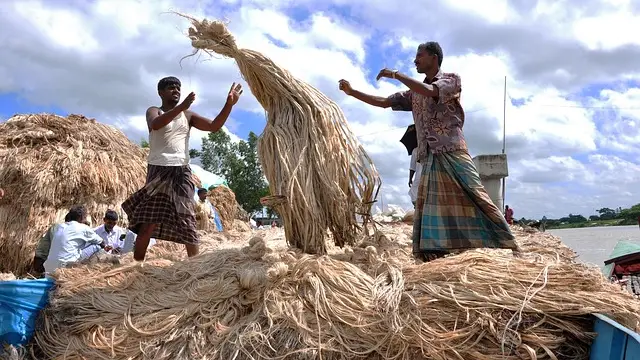
In Bangladesh, the agriculture sector employs 38% to 40% of the population, while contributing only 11.11% to the GDP. It approximately contributed $50.25bn to the national economy in the financial year (FY) 2024-25. The total subsidy that the Bangladesh government had allocated for the sector through subsidised fertilisers and irrigation costs in the FY 2024-25 was up to $1.5bn. Now, when these figures are compared to the mammoth $42.4bn that the US government pays as cash subsidy to its farmers, they display a huge asymmetry, which is also reflected in this trade deal agreement.
If the dairy products, poultry and beef from the US flood the Bangladeshi market, then the South Asian country’s economy can suffer a major shock. Over 70,000 poultry in Bangladesh employs nearly eight million people. Over 500,000 people are employed in the livestock industry to raise cattle for beef production, and the sector has been suffering in Bangladesh for quite some time. Among all sectors, Bangladesh has a 91%-95% self-sufficiency in dairy production and employs anywhere between 1.4m to 1.5m people.
The opening of these sectors to heavily subsidised and mechanised US corporations will further deepen the crisis and impact Bangladesh’s agricultural sovereignty.
In return, the US has assured that it “will reduce the reciprocal tariff rate” to 19% and will “identify products” for 0% tariffs. There is no commitment regarding the number of products among the 5,700+ items that Bangladesh has been exporting to the US over the years.
Meanwhile, the Bangladeshi authorities are rejoicing over the US assurance for 0% tariff on Bangladesh’s life-line industry—the ready-made garments (RMG) sector. However, what they are covering up is that the US has particularly mentioned that it’s subject to the US setting up a mechanism. What does the joint statement mention about such a mechanism?
“This mechanism will provide that a to-be-specified volume of apparel and textile imports from Bangladesh can enter the United States at this reduced tariff rate, but this volume shall be determined in relation to the quantity of exports of textiles, e.g. U.S. produced cotton and man-made fiber textile inputs, from the United States (sic),” the agreement mentions.
This indicates that the RMG sector will have to heavily depend on US cotton and man-made fibre textile inputs, which are relatively costly and can increase the manufacturing cost. In that case, despite having a 0% tariff, the Bangladeshi RMG sector will lose to its competitors in the US market, especially from China and Vietnam.
The ordeal doesn’t end here.
Withering trade sovereignty
To ensure that Bangladesh doesn’t have many options to deepen its ties with China and to stop Beijing’s investments in the South Asian country that aim at bypassing Western sanctions, the US has ensured clauses that will bind Dhaka to disclose all details on investments to Washington.
“The United States and Bangladesh are committed to strengthening economic and national security alignment to enhance supply chain resilience and innovation through complementary actions to address unfair trade practices worldwide, as well as by combatting duty evasion, cooperating on export controls, and sharing information on inbound investment in our respective territories (sic),” the US-Bangladesh joint agreement says.
It indicates that the US will be pressurising future Bangladesh governments to align with it in combating the Chinese influence in what’s called the “Indo-Pacific war theatre” and also to ensure that all countries are investing in Bangladesh. This will limit Bangladesh’s sovereign rights to not disclose its foreign investment status to third parties.
It’s not merely these that can adversely affect Bangladesh’s sovereignty. The neo-colonial terms mentioned in the joint statement have the potential to cripple the Bangladeshi economy in return for nothing substantial.
Bangladesh gulps bitter pill
The US has imposed harsher conditions to ensure Bangladesh can’t enjoy a higher trade surplus. Like India, the US trade deal with Bangladesh shows how Mr Trump is keen on bullying South Asia and maximising profits using neo-colonial mechanisms.
In the joint statement, the US has mentioned what Bangladesh has to do to have a 19% tariff rate—which is manifold higher than the previous rates Dhaka enjoyed—on its goods.
Under the US trade deal, Bangladesh commits to sweeping regulatory changes. It accepts American vehicle standards, recognises approvals by the US Food and Drug Administration, allows unrestricted cross-border data flows, strengthens intellectual-property enforcement and amends labour laws to meet Washington’s preferences. These are not marginal adjustments. These terms reshape how the US coerce South Asian countries to accept its demands.
The US demands that Bangladesh procures aircrafts from it. Washington demands that Bangladesh purchase American agricultural commodities, including wheat, soy, cotton, and corn, worth $3.5bn. It’s nearly 6.9% of the South Asian country’s total agricultural output in 2024-25.
Moreover, the US demands that Bangladesh purchase energy products worth over $15bn from it in 15 years. It means a $1bn worth of American crude oil or that of Venezuela managed by Mr Trump.
In return, the US gives no concrete guarantee to Bangladesh, exhibiting a deal that’s highly tilted in Washington’s favour.
Problem spot for Bangladesh
As a new government will be formed following the February 12th general elections in Dhaka. However, before a government with a popular mandate is formed, the interim government has endorsed the joint statement, following an opaque negotiation with Mr Trump’s administration.
While the outgoing interim government’s chief, Muhammad Yunus, has hailed the conclusion of negotiations, the onus of signing the agreement falls on an elected government.
Bangladesh, US sign reciprocal tariff agreement
— Chief Adviser of the Government of Bangladesh (@ChiefAdviserGoB) February 9, 2026
WASHINGTON DC, February 9: The Agreement on Reciprocal Tariff between Bangladesh and the United States was signed on Monday. On the Bangladesh side, the signatories were Commerce Adviser Sheikh Bashir Uddin and National Security…
This is a reason that the US has been trying to bring all political players in Bangladesh, including the banned Awami League, under its aegis. Thus, apart from the Communist Party of Bangladesh-led left bloc, none of the parties opposed the Washington-dictated terms.
It remains to be seen how an elected government manages to navigate through this complex landscape.
East Post is an independent geopolitical analysis portal covering South Asia and global power dynamics for international audiences. Views expressed are analytical and do not constitute endorsement of any state or non-state actor.
Join our channels on Telegram and WhatsApp to receive geopolitical updates, videos and more.