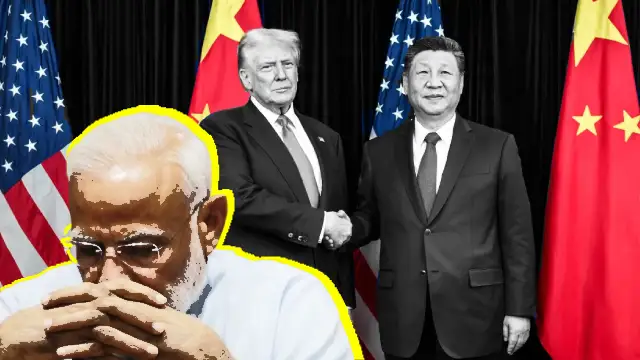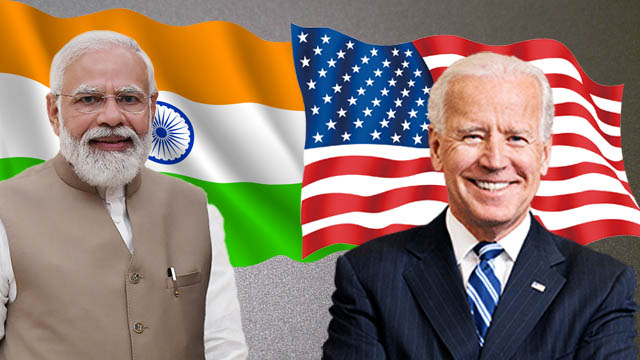
Recent developments show that the bilateral relations between India and the US have been going through a precarious stage. On the one hand, the US has been criticising India for its stronger ties with Russia, and, on the other, it has been using it to contain China’s rise in the so-called “Indo-Pacific” war theatre and in the Middle East.
Despite its reluctance to be counted as a western ally, India’s diplomacy continues to be propelled by its coveted anti-China standpoint. This is why, India has now joined hands with the US in preventing the Chinese in the Middle East, although US President Joe Biden’s administration has been continuously nagging about Indian Prime Minister Narendra Modi’s government.
It’s important to understand how the bilateral relations between India and the US have the potential to do more damage to India’s interests in the world arena in general and its immediate neighbourhood.
Outages in the Middle East
A few days ago, the Chinese government mediated between Iran and Saudi Arabia and arranged to bring these two warring camps together in the Middle East and held a meeting of their foreign ministers. China also arranged for both countries to open their closed embassies in each other’s countries.
This marked a thaw in a long-standing bitterness in the Middle East. In the meantime, the Chinese disclosed that they have been trying to resolve the Syria and Israel–Palestine conflicts, but since these conflicts are not bilateral, and many powers are involved, it is not possible to solve them quickly like the Saudi and Iranian conflicts.
Since the start of Russia’s special military operation in Ukraine, the sanctions imposed by the US-led western coalition on the government of Russian President Vladimir Putin have made Moscow expand its influence in the Middle Eastern countries, long known as the US’s new colonies.
Along with expanding its influence, Moscow also began to pull the governments of Middle Eastern countries, such as Saudi Arabia, UAE, etc, out of the influence of the crisis-ridden US-led bloc, which alarmed Washington, according to leaked Pentagon documents.
Russia and China’s initiative to defeat the US-led multinational attack on Syria has re-aligned the Arab world. The Middle Eastern monarchies that isolated Syria have been trying to bring it back into the Arab League. Efforts to improve relations between Damascus and Riyadh have also started, while Syria is also improving its bilateral relations with the UAE.
As a part of the recent developments, many Arab countries have repeatedly opposed Israeli airstrikes in Syria, especially after the devastating earthquake. On the other hand, a long-running conflict is also coming to an end through the Yemeni peace process.
In this scenario, the Biden administration has employed India to retain Washington’s hegemonic control over the Middle East. The US is using India’s goodwill and long-standing relationship with the Arab countries to contain the influence of China, especially in the region’s economy and diplomacy, which can be counterproductive for New Delhi in the long run.
Indo-US rail strategy in the Middle East
The US has been mobilising India to be its face-saver in the Middle East. Although India’s intention is not to hurt Russia’s growing interests in the region, New Delhi is using its influence to help the US in the Middle East countries to stop China’s proposed Belt Road Initiative (BRI).
A few days ago, the US, through India’s National Security Advisor Ajit Doval, proposed to build railways in the UAE and Saudi Arabia and connect their crucial ports. In this US brainchild project, India and the US together want to build railway infrastructure in these countries to keep them away from China’s BRI.
Can India beat China in terms of railways?
At present, India’s railway infrastructure lags behind China’s in many areas. It’s difficult for the Indian Railways to run trains at an average speed of 100 km per hour (kmph) on most routes. The fastest train in India is Vande Bharat, which has a maximum speed of 180 kmph. The total length of railways in India is 68,043 km, of which 58,812 km have been electrified till April 2023.
On the other hand, the US has a total of 220,480 km of railways, the largest in the world, but only 2,025 km of them are electrified. American Amtrak company Acel trains travel between Connecticut and Rhode Island at a maximum speed of 225 kmph. Most of the privately owned railroads in the US do not operate electric, high-speed trains, as they are still running diesel locomotives.
In comparison to these two, the length of Chinese railways is the second largest in the world – 150,000 km, of which 100,000 km of routes have already been electrified, which is 66.67% of the total railways. The fastest train in China is the Shanghai Maglev which runs at a maximum speed of 431 kmph. China’s standard-class high-speed trains run at an average speed of 200 to 350 kmph, much faster than the railways in India and the US.
In this situation, without currently reforming and improving the infrastructure of the country’s railways, and without increasing the average speed of trains, if India now competes with China to build railways in the Middle East or Africa, it will be behind in terms of speed and technology. The US itself has had no great success in this regard. As a result, India’s reputation in the Middle East can suffer and its other businesses may be affected.
Trouble with quads
Modi-led India, on the one hand, has been increasing bilateral trade with China at a massive rate and, on the other, is also a member of the anti-China military alliance QUAD, led by the US due to its fear of Beijing’s rising clout in the neighbourhood.
The US has formed the QUAD with India, Japan and Australia to reduce China’s influence in the Indo-Pacific or the Indian and Pacific Oceans and to surround China militarily. But here too, India and the US continue to disagree.
India’s foreign policy has been against taking part in any kind of war alliance. So, India has repeatedly asserted that the QUAD is not a military alliance against any power (read against China), but rather a platform to protect the common interests of its member countries and for regional security.
However, China has repeatedly opposed the QUAD as a military clique. Russia, which has upset the West over the Ukraine issue, has also opposed the QUAD recently without naming India. Hence, India has remained silent on the issue despite the US repeatedly insisting that the QUAD is an anti-China military alliance.
Meanwhile, this year’s QUAD Summit was supposed to be held in Australia. But the embattled Biden administration has yet to raise the government’s debt ceiling limit to run its expenses from June, leaving the country reeling and the economy facing an uncertain future. In this situation, it’s even difficult for the US to pour money into the Ukraine war. As a result, the upcoming meeting of the QUAD, where Modi and Biden were to attend, has been cancelled.
In such a situation, where the US is on the verge of turning bankrupt, India’s participation in a military alliance like the QUAD to sour relations with its neighbours and undermine an old friend like Russia could create problems diplomatically.
At a time when US influence is waning around the world and Washington’s belligerent attitude is not tolerated by countries in Asia, Africa and Latin America, an alliance with a financially troubled country, even against its neighbour, could create long-term problems for India’s interests.
The US-India conflict
From buying oil from Russia to taking a neutral stance on Ukraine, India has been repeatedly criticised by the US. The US State Department’s recent report on religious freedom has criticised New Delhi for interfering with the freedom of religious beliefs and practices of the Muslim minority due to Modi’s Hindutva policies, which have led to growing communal polarisation within the country. This has stirred a major outrage in India’s Ministry of External Affairs (MEA).
MEA spokesperson Arindam Bagchi criticised the US report on religious freedom in New Delhi’s South Block, terming it as politically motivated and stating that the Government of India does not accept its validity. The report comes at a time when Modi’s visit to the US in June has been announced and Biden is reportedly ready to host him.
India’s pro-western opposition has increased the government’s ignominy by campaigning against the Modi government’s alleged communal policies, citing the US report. Although the bilateral relations between the US and India will not be affected right now due to this report, it is understood that India will continue to face inconvenience in its bilateral relations with the US, due to the latter’s intention to use it as a pawn.
India’s way
Reports published by Oxfam show that the liberalisation of India’s economy in the era of globalisation has not benefited anyone except the rich and the urban upper-middle class. As India’s income inequality has increased rapidly, so many people have fallen into the quagmire of poverty after the Covid-19 pandemic.
The economic development model adopted by India’s various ruling parties, such as the Indian National Congress or Modi’s Bharatiya Janata Party (BJP), has not resulted in overall economic development and employment growth for the poor people.
In such a situation, there is no long-term benefit for India in expanding its influence abroad and escalating disputes with other countries for the sake of western powers. Rather, India should now focus on improving the quality of life of the masses as a whole and adopt financial and diplomatic policies in that regard.
Rather than opposing any country’s independent development model, India should engage other emerging powers in its economic development to rapidly improve people’s living standards and become technologically free from western influence. Modi’s agenda of building a “self-reliant India” will turn out to be a farce in the long run unless India can develop its independent operating systems, hardware and indigenous technology free of foreign influence.
There is a trend of de-dollarisation going on around the world. Different countries have taken the initiative to conduct their foreign trade using their respective national currencies outside the traditional system of doing so using the US dollar. In that case, a stable and internationally compliant country like India should also emphasise foreign trade in its currency to reduce its long-term dependence on the US and become financially self-sufficient.
In the long run, a foreign policy that’s independent and forward-looking can help India achieve its economic goals and build a self-reliant economy. Decoupling itself from the US-led western bloc, which is on the verge of a total collapse due to internal and external crises, will help India sustain itself from major global shocks. Whether South Bloc can read the writings on the wall on time will decide India’s fate in the fast-changing world.
East Post is an independent geopolitical analysis portal covering South Asia and global power dynamics for international audiences. Views expressed are analytical and do not constitute endorsement of any state or non-state actor.
Join our channels on Telegram and WhatsApp to receive geopolitical updates, videos and more.