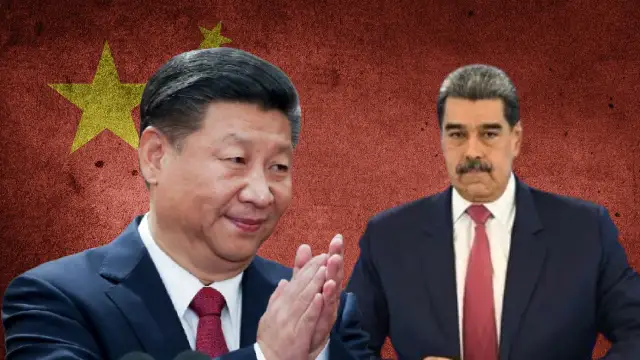
The US military operation that seized Nicolás Maduro and his wife, Cilia Flores, from Venezuelan soil on January 3rd represented an extraordinary breach of international norms. Delta Force operatives, acting on orders from US President Donald Trump‘s administration, violated the sovereignty of a United Nations member state to extract its sitting head of government. The couple now await trial in New York on narcotics-trafficking charges, while protests erupt across Latin America, Africa and parts of Asia denouncing what many term an act of state terrorism.
European capitals moved swiftly to distance themselves from Washington’s unilateral action. Britain claimed ignorance of the operation beforehand, while Spain, Venezuela’s former colonial ruler, expressed dismay at the breach of international law. Israel and Argentina, both aligned with Mr Trump’s worldview, offered their endorsement. So did the self-styled opposition leader, Nobel laureate Maria Corina Machado. Yet amid the global outcry and diplomatic manoeuvring, attention has increasingly turned towards Beijing and Moscow, the two great powers that have sustained Mr Maduro’s elected government through financial support, oil purchases and diplomatic cover. With Russia preoccupied by its grinding war in Ukraine, expectations have centred on China to mount some form of robust response.
Those expectations are likely to be disappointed. Beyond predictable denunciations at the United Nations Security Council, China will not intervene militarily in Venezuela’s affairs, nor will it undertake any significant action to restore Mr Maduro to power. The reasons lie not in any lack of capability, but in a fundamental calculation of interests that reveals much about how Beijing views the world in 2026.
Chinese experts suggest that the abduction of Mr Maduro carries three distinct implications for Beijing’s strategic calculus, none of which point towards military intervention thousands of miles from China’s shores.
The first concerns Taiwan. Mr Trump’s brazen assertion of hemispheric dominance through military force may paradoxically strengthen Beijing’s hand in its own sphere of influence. Chinese analysts interpret the Caracas raid as Washington’s effective acknowledgement that global politics has become increasingly tribal, with great powers operating freely within their recognised zones of control. If America can dispatch special forces to seize a Latin American president with impunity, Beijing reasons, then its own options for dealing with Taiwan have expanded accordingly.
This logic has already manifested in Chinese social media, where nationalist voices have grown louder in calling for similar “decapitation operations” against Taiwan’s president, Lai Ching-te. Yet Chinese experts caution that policymakers in Zhongnanhai are likely to exercise restraint for some time yet. The gradual escalation of pressure through military exercises edging ever closer to the island remains the preferred approach. Nevertheless, the experts acknowledge that Beijing’s patient salami-slicing tactics may eventually give way to a more sudden resolution, perhaps disguised within routine exercises. The Venezuela precedent, in this reading, becomes a permission structure rather than a provocation.
The second implication relates to China’s economic interests in Venezuela itself. Western analysts have rushed to point out that Beijing stands to lose access to up to 4% of its oil imports should Mr Maduro’s regime collapse. This calculation, Chinese experts argue, misunderstands how Beijing approaches such situations. China is, above all, a pragmatic trading power in the 21st century. Ideology matters far less than predictability and commercial opportunity.
History offers instructive examples. After Saddam Hussein’s fall in Iraq, a Chinese state-owned company secured the first major oil contract with the new government. In Myanmar, economic cooperation with Beijing actually flourished more under Aung San Suu Kyi, once celebrated in the West as a champion of liberal values, than under the military junta that preceded and succeeded her. The pattern is clear—China does business with whoever holds power, provided that power is stable and open to commerce.
What troubles Beijing about Venezuela is not the prospect of regime change, but rather the current state of limbo. Uncertainty is anathema to long-term commercial planning. A predictable post-Maduro government, even one initially hostile to Beijing, could well prove a more attractive partner than the chaos that might follow the president’s removal. Chinese experts suggest that Beijing’s concerns centre less on losing Mr Maduro than on navigating the transitional period that follows his departure. Once a new order establishes itself in Caracas, China will be among the first to seek accommodation. Moreover, as Venezuelan Vice President Delcy Rodriguez, a staunch socialist and follower of Hugo Chavez, has taken over the state’s reins, nothing much has changed on the ground for Beijing. Rather, the situation is still better for Beijing, which won’t lose its investments in the country overnight.
The third implication concerns the transatlantic alliance, where Beijing perceives growing fissures. Britain’s hasty claim of ignorance and Spain’s vocal disapproval signal to Chinese observers that Washington’s unilateral action has strained its relationships with key European partners. The experts draw parallels to the Venezuela Crisis of 1902-03, when European powers blockaded Venezuelan ports to collect debts, prompting President Theodore Roosevelt to assert the Monroe Doctrine. Then, as now, the dispute centred not merely on methods but on fundamental strategic priorities.
China views this division within the Western alliance as an asset to be cultivated rather than a crisis requiring intervention. A more isolated America, at odds with its European partners over both tactics and strategy, serves Beijing’s interests far better than any quixotic military adventure in Latin America could achieve. The experts suggest that China will seek to deepen these divisions through diplomatic engagement with European capitals, positioning itself as a more reliable and predictable partner than an increasingly erratic Washington.
These calculations reflect a broader truth about contemporary geopolitics that distinguishes the present era from the Cold War. The ideological certainties that once drove Soviet support for revolutionary governments from Havana to Hanoi have given way to a more transactional approach. Beijing’s foreign policy, while still cloaked in the rhetoric of anti-imperialism and South-South solidarity, operates according to commercial logic. The question is not whether a government shares China’s political values, but whether it can deliver stable conditions for investment and trade.
This represents a profound shift from the Brezhnev era, when Moscow poured resources into distant allies as a matter of ideological principle, often with scant regard for economic return. China learned from the Soviet Union’s collapse that such commitments are unsustainable. Today’s Beijing pursues influence through infrastructure investment, trade agreements and financial arrangements that generate returns. When those returns are threatened, China adjusts its position accordingly. Sentiment yields to calculation.
The loss of Mr Maduro, in this light, becomes manageable. Venezuela’s oil reserves remain in the ground regardless of who controls the presidential palace. China’s investments in Venezuelan infrastructure and energy sectors are embedded in contracts that any successor government will struggle to unwind without compensation. Beijing has positioned itself not as an ideological patron but as an indispensable commercial partner, a role that transcends individual leaders.
Moreover, Chinese experts note that Mr Maduro’s government had become an increasingly unreliable partner. Corruption, mismanagement and political instability made Venezuela a difficult environment for long-term planning. A more competent government, even one initially critical of Beijing, might ultimately serve China’s interests better. The experts suggest that Beijing has likely gamed out various succession scenarios and identified potential interlocutors across Venezuela’s political spectrum.
This pragmatism extends to China’s broader approach to Latin America. Beijing has cultivated relationships with governments across the ideological spectrum, from leftists to right-wing governments. The common denominator is not political alignment but economic complementarity. Latin America provides commodities and markets; China provides investment and manufactured goods. This formula works regardless of who sits in Caracas.
The American action, however illegal and destabilising, does not fundamentally threaten this arrangement. If anything, it may enhance China’s position by demonstrating Washington’s willingness to disregard international law and alienate its traditional allies. European frustration with American unilateralism creates opportunities for Beijing to present itself as a more measured alternative. Chinese experts believe that the immediate crisis will pass. Either Ms Rodriguez will continue with the Maduro era policies, overlooking Mr Trump’s threats, or a new order will emerge in Venezuela, and commercial relationships will resume, possibly on terms more favourable to Beijing than those negotiated with Mr Maduro’s administration.
This is not to suggest that China welcomes the abduction of foreign heads of state or the violation of sovereignty. Beijing’s statements at the United Nations will be genuine in their condemnation. But condemnation costs nothing and changes little. Military intervention, by contrast, would be enormously costly and achieve questionable objectives. Chinese experts are candid in their assessment: Venezuela is too distant, too unpredictable and, ultimately, too peripheral to China’s core interests to justify significant military risk.
The Taiwan parallel is instructive here as well. Chinese analysts may draw lessons from the Caracas raid about operating within one’s sphere of influence, but they also understand the vast difference between acting across the Taiwan Strait and projecting force to South America. The former is achievable; the latter would strain China’s military capabilities while offering negligible strategic return. Beijing thinks in terms of decades and centuries, not the news cycle. Patience remains its greatest weapon.
What emerges from this episode is a portrait of Chinese statecraft fundamentally different from Cold War paradigms. This is not a power driven by revolutionary solidarity or ideological commitment to distant allies. It is a commercial empire that calculates interests, manages relationships transactionally and subordinates sentiment to strategy. The loss of an ally is unfortunate; the loss of a market is intolerable. But even markets, Chinese experts suggest, can be preserved through adaptation.
As protests continue across the Global South and diplomatic tensions simmer within the Western alliance, China will watch, calculate and position itself for whatever order emerges from the chaos. It will not rush to Mr Maduro’s defence because doing so would be expensive, risky and, most importantly, unnecessary. Ms Rodriguez is still leading Venezuela. The oil will still need buyers. The infrastructure will still need operators. And China will still be there, chequebook in hand, ready to do business with whoever ultimately prevails.
This is the reality of geopolitics in 2026—not a clash of ideologies but a competition of interests, not a struggle for hearts and minds but a negotiation over terms of trade. China has adapted to this reality with ruthless efficiency. Whether that represents progress or mere cynicism depends largely on one’s perspective. What remains indisputable is that Beijing will not sacrifice its carefully cultivated pragmatism on the altar of solidarity with a fallen ally thousands of miles away.
The dragon, it seems, has learned to count its coins before committing to battle.
Join our channels on Telegram and WhatsApp to receive geopolitical updates, videos and more.