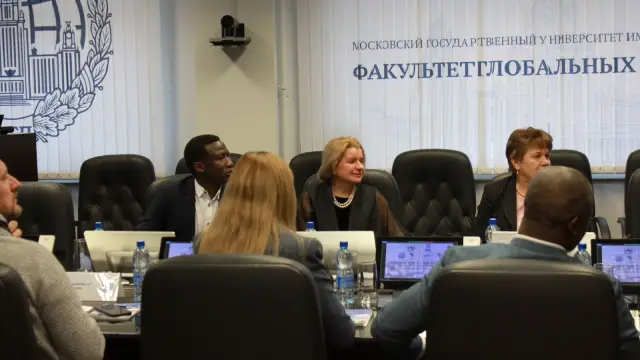
In a world increasingly defined by multipolarity, the intellectual elites of the Global South are forging new alliances to address shared challenges. On January 23rd, 2025, the Faculty of Global Studies at Lomonosov Moscow State University hosted an international scientific and practical conference, “Russia, Brazil and Africa: Strengthening Cooperation of the Global South”. The event, held in a hybrid format, brought together over 110 scholars, experts, and analysts from 25 countries, marking a significant step towards consolidating the Global South’s voice on the global stage.
The conference, co-organised by institutions such as the Federal University of Rio de Janeiro and the Russian-African Network University, aimed to tackle pressing global issues, from climate change to monetary asymmetry, while fostering educational and cultural ties. As the Dean of the Faculty of Global Studies, Professor Ilya Ilyin, aptly noted, “The scale of cooperation achieved with African countries is impressive, and this conference is a testament to the growing intellectual solidarity of the Global South.”
A call for equality in a multipolar world
The opening remarks set the tone for the conference, with speakers emphasising the need to move beyond Western-dominated decision-making. Federal University of Rio de Janeiro’s Rector Roberto de Andrade Medroño, argued that the West’s self-appointed role as the global arbiter no longer aligns with contemporary realities. “We must create conditions based on equality, mutual respect, and sovereignty,” he declared, highlighting the potential of BRICS and broader Global South collaborations to reshape the international order.
This sentiment was echoed by Egyptian University of Distance Learning’s Hisham Mohamed Abdelsalam, who underscored the historical ties between Russia and Egypt. “Our shared vision of global events,” he said, “is a foundation for deeper cooperation.” Meanwhile, Nadia Mzugi of the University of Carthage in Tunisia stressed the importance of educational projects in fostering comprehensive state-to-state and people-to-people ties.
Education as a catalyst for change
A recurring theme throughout the conference was the transformative power of education. Richard Silumbe, the director of the Center for Research and Development of Zambia, highlighted the role of collective efforts in addressing global challenges like climate change and health crises. “Complex problems require unified solutions,” he noted, pointing to the need for enhanced educational collaboration.
Russian-African Network University’s Project Office chief Maxim Zalyvsky elaborated on this idea, describing network-based educational interactions as a “crucial tool of international diplomacy”. Similarly, Algeria’s National School of Nanoscience and Nanotechnology’s Hassen Mahmoudi emphasised the importance of training specialists capable of driving socio-economic development across Africa.
The commitment to education was further demonstrated by Ilias Maidulin of Morocco’s International University of Agadir, who shared insights into a non-governmental organisation providing affordable education to over 94,000 women in impoverished rural areas. “Education is not just a tool for development,” he said, “it is a means of empowerment.”
BRICS and beyond: A platform for progress
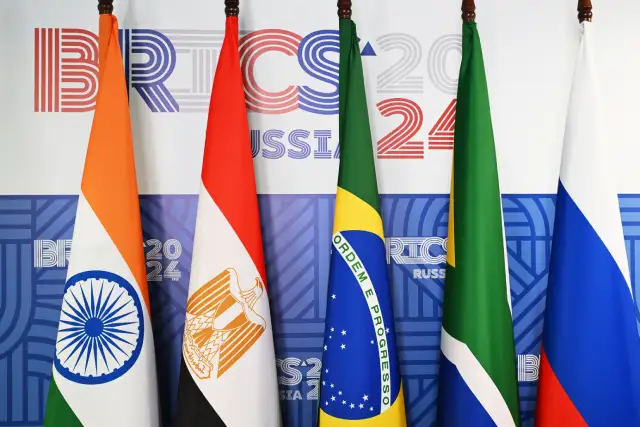
The conference also delved into the role of BRICS as a catalyst for Global South cooperation. Academician Askar Akaev, the former president of Kyrgyzstan, argued that BRICS exists to advance human civilisation on the path of progress. “Cooperation based on equality and mutual respect,” he asserted, “will enable us to confront political, climatic, and other challenges.”
Rasigan Maharaj of South Africa’s Zwana University of Technology expanded on this, describing BRICS Plus as an “extended family of nations” representing 64% of the world’s population. “We must address global issues collectively,” he said, “by creating an environment that respects the interests of all peoples.”
Marina Amurskaya of Russia’s Finance University highlighted the practical significance of BRICS initiatives in combating climate change, particularly through low-carbon development strategies. “These agreements,” she noted, “are not just theoretical; they lay the groundwork for real action.”
Cultural and economic bridges
The conference also explored the cultural and economic dimensions of Global South cooperation. Associate Professor Olga Ignatova of the Financial University under the Government of the Russian Federation called for diversifying trade relations between Russia and Brazil, particularly by increasing high-tech exports. Meanwhile, Lubinda Haabazoka of the University of Zambia emphasised the need for better information sharing between Africa and Russia to unlock investment potential.
Cultural cooperation was another focal point. Associate Professor Sergey Belyaev of Lomonosov Moscow State University highlighted the role of humanitarian and cultural ties in strengthening relations with the Global South. “Religious and cultural factors,” he said, “are vital to fostering mutual understanding”.
Youth: The vanguard of the Global South
The conference concluded with a youth session, “The Tribune of Young Scientists”, moderated by Inga Koryagina of the Russian-African Club. Young scholars from Russia, Brazil, and Africa presented innovative solutions to global challenges, showcasing the emerging intellectual elite of the Global South. Basi Hafiz, the chairman of the Youth Policy Commission, underscored the importance of youth initiatives in education as a driver of cooperation.
A foundation for the future
The conference was widely hailed as a milestone in strengthening international ties and fostering joint initiatives among Global South nations. As Ruslan Grebnev, the deputy dean of the Faculty of Global Studies, noted, “In a multipolar world, the concept of a ‘pole’ means a state pursuing an independent foreign policy. Such poles are emerging more and more.”
The organisers expressed hope that such gatherings would become regular, laying the groundwork for new initiatives in international cooperation. By bridging divides and fostering mutual understanding, the Global South is not just rising—it is uniting.
East Post is an independent geopolitical analysis portal covering South Asia and global power dynamics for international audiences. Views expressed are analytical and do not constitute endorsement of any state or non-state actor.
Join our channels on Telegram and WhatsApp to receive geopolitical updates, videos and more.