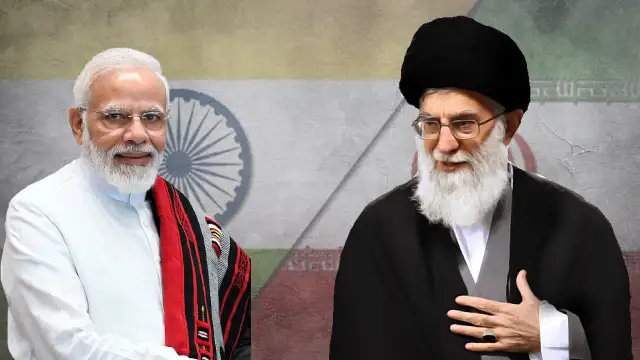
For years, India has maintained friendly relations with Iran, except for the period when it received warnings from the US. However, Iran’s supreme leader, Ayatollah Seyyed Ali Hosseini Khamenei equated the plight of India’s minority Muslims with those of Gaza and Myanmar on micro-blogging platform X (formerly Twitter). Mr Khamenei’s tweet on Indian Muslims has sparked a controversy in India.
The Ayatollah highlighted the importance of “Islamic Ummah” while celebrating Islamic Unity Week with a series of tweets on Tuesday, where he highlighted the plight of Indian Muslims and compared them with those of Myanmar and Palestine.
Mr Khamenei’s tweet on Indian Muslims brought strong condemnation from India’s Ministry of External Affairs (MEA). The Ayatollah’s comment also unleashed a wave of trolling by the far-right Hindutva-incensed fanatics.
The tweet war launched by the Hindutva activists, mostly associated with Prime Minister Narendra Modi’s Bharatiya Janata Party (BJP), failed to achieve any response from the Iranian side.
The Iranian Ministry of Foreign Affairs also didn’t respond to India’s bitter condemnation of Mr Khamenei’s statement and maintained radio silence on the issue.
Although the Indian far-right has been accusing the Ayatollah of meddling in India’s internal affairs and using Islamophobic slurs, a careful analysis of Mr Khamenei’s tweets, which are handled by his office, shows that Tehran didn’t plan to poke India.
Different messages
Mr Khamenei’s controversial tweet highlighting the plight of India’s minority Muslims has been written in most languages his account is operated in, including Bengali, but the reference is not mentioned in his Hindi tweets.
However, in Bengali, which is used for his Shiite followers in Bangladesh and other countries, Mr Khamenei’s office retained the reference to India’s Muslims.
The same thing has been mentioned in German, Spanish and Russian tweets.
The Spanish tweet shows the part of the video where Mr Khamenei mentioned the name of India.
Why the hypocrisy?
The reason the reference is missing from his Hindi X handle is because of Tehran’s reluctance to provoke Indians, as the two countries have been maintaining cordial ties. The India-Iran ties are crucial for both parties, especially after India got a contract to run the Chabahar Port for ten years.
Iran’s concessions to India, despite its strong ties with Israel and the US, have been generous and the cultural ties between the two countries have been strong as well.
Despite Mr Modi’s bonhomie with Israel, the Indian government sent a high-level delegate to the funeral of former president Ebrahim Raisi and his comrades, which was also attended by top Hamas and Hezbollah officials. Despite India’s reluctance to accept Hamas or Hezbollah as legitimate resistance outlets, Indian officials visited the funeral.
In these circumstances, sharing the Ayatollah’s views on the plight of Muslims in the region remains a compulsion for Tehran. However, it was mindful of Mr Modi’s government and refrained from publishing the content in Hindi.
What would happen to India-Iran ties?
The criticism of India’s treatment of minority Muslims by the Iranian supreme leader may be a fodder for Islamophobic ranting on social media, the Government of India won’t drag the matter beyond its condemnation. One of the reasons behind this is India’s positive balance of trade with Iran.
In the financial year (FY) 2022-23, India had a trade surplus of $987.9m with Iran. India’s exports to Iran were $1.66bn, a growth of 14.34% compared to FY 2021-22, and India’s import from Iran was $672.12m, which was also a growth of 45.05% compared to FY 2021-22.
However, the trade between the two countries fell to $1.22bn, by 26.33% in 2023-24, according to data from the Directorate General of Foreign Trade.
During Mr Raisi’s tenure, Tehran emphasised bilateral relations with India, despite its ties with Israel and the US. Before his demise, during India’s External Affairs Minister S Jaishankar’s Tehran visit in January 2024, the MEA mooted the idea of importing crude oil from Iran in the face of supply disruption caused by the Houthi rebels at the Red Sea and Gulf of Aden regions off the coast of Yemen. However, the idea was put on hold due to the intense tension in West Asia during April 2024.
Crude oil import from Iran was stopped due to US pressure, and the idea to restart it displayed the changing geopolitical realities of the region.
With the growing engagements, it’s not quite easy for India to let its ties with Iran get affected by Mr Khamenei’s tweet on Indian Muslims. Despite the usual rage of the Hindutva camp, the India-Iran ties won’t be affected in the long run.
East Post is an independent geopolitical analysis portal covering South Asia and global power dynamics for international audiences. Views expressed are analytical and do not constitute endorsement of any state or non-state actor.
Join our channels on Telegram and WhatsApp to receive geopolitical updates, videos and more.