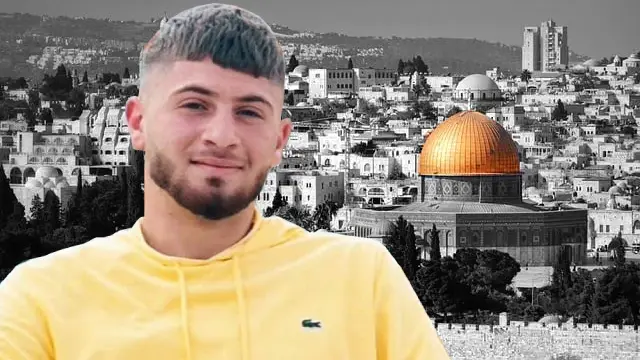
Walid Khaled Ahmed was 17 when he was killed under Israeli captivity in the Megiddo prison. The Israeli authorities held the teenager from Silwad, a village east of Ramallah in the central West Bank, hostage since September 30th 2024. On March 24th, Palestinian officials were informed of his death—the circumstances obscured by what the Palestinian Prisoner’s Society (PPS) calls “the information blackout imposed by occupation authorities.” Walid joins several other Palestinian hostages killed by Israel for years.
Walid’s story encapsulates a broader humanitarian crisis largely overshadowed by the recent collapse of the January 2025 ceasefire agreement and renewed Israeli bombardment of Gaza. His death adds to a grim statistic: the 63rd Palestinian hostage to die in Israeli captivity since October 2023. However, it can also be called, as Palestinian rights groups highlight, “murder” by the colonial project.
‘An unprecedented rate’
“The rate and frequency of killings of Palestinian detainees is unprecedented, particularly since the genocide in Gaza,” states the joint release from the Commission of Detainees’ Affairs and the PPS. “The Israeli occupation holds full responsibility for the murder of Walid and dozens of other detainees in its custody—some of whom were tortured to death—and must be held accountable for these crimes.”
Of the 63 murders of Palestinian hostages in Israeli captivity since October 2023, at least 40 were people abducted from the Gaza Strip. Most of their bodies remain withheld from families, with only two returned for burial. Officials suggest there are “many more unidentified martyred detainees” from Gaza whose bodies remain “forcibly disappeared.”
Since Israel’s occupation began in 1967, the identified death toll in detention stands at 300 Palestinians, with at least 72 bodies still withheld by the colonial forces.
A system under strain
While Israel publicly campaigns for the return of Israeli prisoners held by Hamas—many of whom were being gradually released through the now-abandoned ceasefire agreement—the condition of thousands of Palestinian hostages in Israeli captivity has received far less international attention.
There has been less global advocacy for the release of Palestinian hostages from Israeli captivity, and a narrative has been built by the West’s mainstream, pro-Israel media, which called anyone under Zionist captivity a prisoner but labelled anyone detained by Palestinian resistance as a “hostage” to legitimise Israel’s colonial occupation.
Israel’s renewed genocidal violence since March 18th has further dimmed prospects for the prisoner exchanges that formed a central pillar of the January ceasefire. Before the agreement collapsed, both sides had been engaged in releasing captives—Israeli prisoners seized during Hamas’s October 7th 2023 attack in exchange for Palestinian hostages.
‘Human slaughterhouses’ for Palestinian hostages
Former Palestinian hostages in Israeli captivity describe being subjected to torture methods such as “shabah,” where prisoners are suspended for hours or days with hands and feet bound. Sleep deprivation, constant lighting and unbearable noise are reported as common techniques.
“These centres have turned into human slaughterhouses where the most brutal forms of repression and torture are committed against detainees, in the complete absence of oversight and accountability, leaving the walls as silent witnesses to the unspeakable,” according to testimonies from former prisoners at Al-Junaid and Areeha detention facilities.
The accounts detail a systematic degradation aimed at breaking both body and spirit. “Severe beatings were not the only method of humiliation; insults and spitting were also routine,” one report states. “Detainees were continuously subjected to verbal abuse targeting their mothers and sisters, in blatant violation of all national, religious, and moral values,” it highlighted.
Medical neglect of Palestinian hostages
The case of Muhammad Saleh Hamdan, 32, from Nablus, illustrates the medical neglect reported throughout the system. Held captive by the Zionist forces in Jelboa prison, he suffers from three untreated gunshot wounds to his legs resulting in nerve damage.
More critically, Mr Hamdan relies on a heart pacemaker that requires replacement every five years. His last scheduled procedure was on June 18th 2024. The Commission of Detainees’ Affairs describes the replacement process as “extremely exhausting”, with Mr Hamdan transferred to Afula Hospital at 10am, undergoing the procedure, then returned to prison by 11am the following day, “shackled throughout the entire period”.
Mr Hamdan has also contracted scabies, suffering “continuous itching without receiving any treatment”, and has lost 15kg during his captivity.
The commission reports that scabies are spreading among Palestinian hostages held in Jelboa prison amid “deliberate medical neglect”, claiming that “the administration of prison intended to keep detainees infected with scabies unseparated from other detainees.”
Coerced confessions from Palestinian hostages
Beyond physical abuse, former Palestinian hostages report psychological tactics designed by Israel to destroy reputations and community standing.
“Many political detainees were coerced into making false confessions under torture, aimed at tarnishing their reputation before the public and destroying their standing in their communities,” the committee claims based on testimony from recently released Palestinian hostages. “As if physical suffering alone were not enough, their reputations had to be assassinated as well,” the committee informed in its findings.
The cycle culminates in Palestinian hostages being forced to sign falsified statements declaring they were “treated well”—documents later used to shield perpetrators from accountability.
Palestinian children held hostage
Walid’s death at 17 highlights a particularly troubling aspect of the detention system: the captivity of minors. While the idea of having children as hostages is an act of terrorism itself in a rule-based world, for Israel, holding Palestinian children as hostages isn’t a crime. It’s an act that’s endorsed by the West through its conspicuous silence.
The PPS and the Commission of Detainees’ Affairs warn that “thousands of Palestinians are held behind bars undergoing a myriad of severe violations including torture, starvation, sexual assault, deprivation of medical treatment, unsanitary conditions leading [to] grave and infectious diseases.”
They emphasise that children are among those at risk, calling on “the international community [to] act now to save the lives of Palestinian political prisoners, including children, in Israeli custody.”
However, the so-called “international community” remains a mute spectator, ignoring the agony of Palestinian children held hostage.
A widening crisis
As Israel’s renewed assault on Gaza enters its second week, attention remains fixed on the escalating violence in the enclave, where 792 people have been killed since the ceasefire collapsed on March 18th. The Gaza health ministry reports the total death toll since October 2023 has now risen to 50,144.
Meanwhile, for families like Walid Khaled Ahmed’s, the pain extends beyond the bombardment to a detention system largely hidden from international scrutiny—one that has claimed the lives of at least 63 Palestinian hostages within 18 months.
“The rate of Palestinian detainees losing their lives is unprecedented and will only increase with time,” warn the Commission and the PPS, painting a bleak picture for those who remain behind bars as the broader conflict intensifies.
East Post is an independent geopolitical analysis portal covering South Asia and global power dynamics for international audiences. Views expressed are analytical and do not constitute endorsement of any state or non-state actor.
Join our channels on Telegram and WhatsApp to receive geopolitical updates, videos and more.