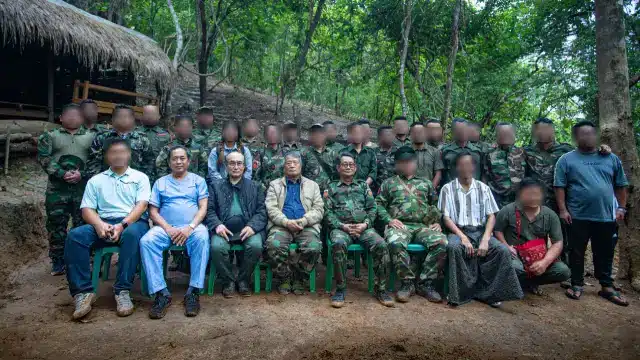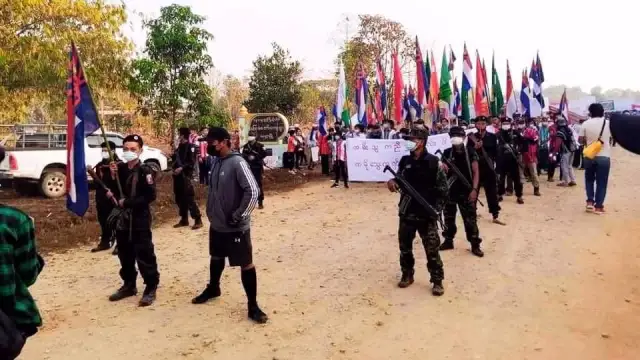
Karen Martyrs’ Day arrives with profound significance this year. The 75th anniversary on August 12th 2025, commemorates a pivotal moment that shaped Myanmar’s ethnic resistance movements. The National Unity Government (NUG) issued a tribute message honouring Karen National Union Chairman Saw Ba U Gyi and General Saw Sai Kay, who died fighting the military dictatorship in 1950. Karen Martyrs’ Day connects historical sacrifice to contemporary struggle against Myanmar’s ruling junta.
The commemoration carries special weight amid Myanmar’s ongoing “Spring Revolution”. Ethnic Karen forces continue fighting alongside the People’s Defence Forces and other revolutionary groups. Their shared goal remains ending military rule and establishing a federal democratic union. The 75-year legacy of Karen Martyrs’ Day provides inspiration for today’s resistance fighters, the NUG asserted.
Karen Martyrs’ Day born from ultimate sacrifice
The tragic events of August 12th 1950, created Karen Martyrs’ Day as a cornerstone of ethnic Karen identity. Chairman Saw Ba U Gyi and general Saw Sai Kay made their final stand in Kawkareik Township’s Kaw Koe village. They died while fighting bravely against what the NUG describes as “the violent military dictator and his associates”.
Their death represented a catastrophic loss for the Karen revolution. The NUG’s statement acknowledges this “tragic event” as marking “a great loss in the history of the Karen people’s revolution”. Yet their sacrifice transformed into enduring inspiration. Every August 12th since 1950 has witnessed Karen Martyrs’ Day observances marked by “great respect and dignity”.
The Karen National Union emerged from this foundational tragedy. Chairman Saw Ba U Gyi established four guiding principles before his death. These principles have guided Karen resistance for seven decades. The Karen National Liberation Army has maintained its struggle through multiple generations of conflict.
Karen Martyrs’ Day serves as both a mourning ritual and a revolutionary rallying point. The shadow government describes it as “a day of sorrow and remembrance that cannot be forgotten or dismissed in the national and revolutionary history of the Karen people”. This dual character—grief and determination—defines Karen’s political consciousness.
Enduring principles shape modern resistance
The four guiding principles established by Saw Ba U Gyi before Karen Martyrs’ Day in 1950 continue directing contemporary Karen strategy. The NUG expresses “great respect and honour” for the Karen National Union’s steadfast adherence to these founding precepts.
The Karen National Liberation Army has maintained its revolutionary struggle from Saw Ba U Gyi’s era through today’s Spring Revolution. Their commitment extends beyond ethnic Karen interests. The NUG notes their fight encompasses “not only for the end of the military dictatorship and the establishment of a federal democratic union in Myanmar, but also for the end of the military dictatorship” more broadly.
This expanded vision connects Karen Martyrs’ Day commemorations to Myanmar’s wider democratic movement. The Karen struggle has evolved from ethnic resistance to national liberation. Their experience fighting military rule provides crucial knowledge for other revolutionary forces.
The institutional continuity from 1950 to 2025 demonstrates remarkable organisational resilience as well. The Karen National Union has survived multiple military offensives while maintaining its political coherence. Karen Martyrs’ Day annually reinforces this institutional memory and revolutionary commitment.
Karen Martyrs’ Day intersects with Spring Revolution
Myanmar’s Spring Revolution began in February 2021 following the military coup against the elected government. The NUG’s statement notes that “more than four years after the Spring Revolution, the time has come to end the military dictatorship”. Karen forces have played crucial roles in this broader resistance movement.
The convergence of ethnic and pro-democracy forces marks a significant development in Myanmar’s political arena. The NUG identifies “allied Karen National Revolutionary Forces, the People’s Defence Forces (PDF) of the National Unity Government and all other ethnic revolutionary forces” as unified coalition partners.
This alliance transforms the meaning of Karen Martyrs’ Day from an ethnic commemoration to a national resistance symbol. The 75th anniversary occurs amid active military operations against the junta. Karen forces control significant territory while collaborating with other revolutionary groups.
The NUG expresses optimism about achieving “the common goals of the revolution in the not-too-distant future” through continued cooperation. Their assessment suggests that a unified resistance effort can achieve decisive success against military rule.
Unity message defines Karen Martyrs’ Day legacy
The NUG concludes its Karen Martyrs’ Day tribute with calls for sustained cooperation among resistance forces. The message emphasises that continued collaboration, unity and collective effort will achieve revolutionary objectives. This reflects the evolution from isolated ethnic struggle to coordinated national movement.
The statement pays tribute to “the great Karen martyrs, the Karen national people and all the Karen revolutionary comrades who have sacrificed their lives, blood and sweat for the attainment of democracy, the right to self-determination and the establishment of a federal democratic union”. This comprehensive acknowledgement encompasses both historical and contemporary sacrifices.
The NUG said it sends “best wishes to all Karen ethnic groups to unite and successfully realise the goals of the Karen revolution”. Their emphasis on unity reflects strategic necessities for defeating Myanmar’s military regime.
The 75th anniversary of Karen Martyrs’ Day arrives at a potentially decisive moment in Myanmar’s political transformation. Their legacy demonstrates how Karen Martyrs’ Day transcends ethnic boundaries to embody universal resistance against authoritarian rule. The 2025 observance marks both a historical milestone and a revolutionary catalyst for Myanmar’s ongoing struggle for democracy and federalism.
East Post is an independent geopolitical analysis portal covering South Asia and global power dynamics for international audiences. Views expressed are analytical and do not constitute endorsement of any state or non-state actor.
Join our channels on Telegram and WhatsApp to receive geopolitical updates, videos and more.