

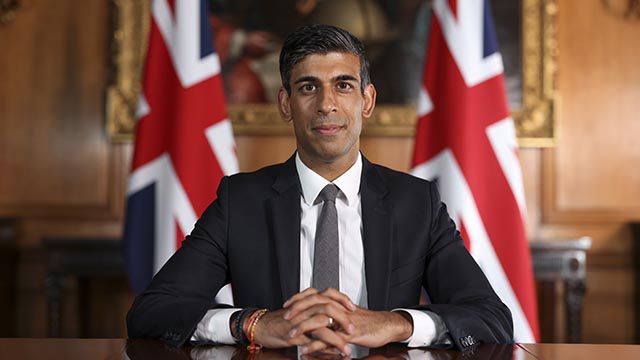
British Prime Minister Rishi Sunak’s government is set to announce new proposals to quell protests in Britain. The proposed Public Order Bill amendments will broaden the legal definition of ‘serious disruption’, providing more teeth to the Conservative-led police administration to intervene and stop protesters.
The new amendments to the Public Order Bill will allow the police to shut protests pre-emptively, treat a series of campaigns by the same group as one and act as per its total impact, and swiftly crackdown on long-running campaigns.
The government says that if the new amendments to the Public Order Bill are passed, the police can stop protests easily and prevent strikes.
Several left-wing parties, trade unions and human rights organisations have been protesting the new Public Order Bill amendments proposed by Sunak’s government. They accuse the British government of sabotaging people’s rights and freedom.
In a statement on Monday, January 16th, Sunak said, “The right to protest is a fundamental principle of our democracy, but this is not absolute.”
“We cannot have protests conducted by a small minority disrupting the lives of the ordinary public. It’s not acceptable and we’re going to bring it to an end.”, Sunak said.
Large parts of central London have recently been shut down, and traffic was blocked on key highways due to protests over environmental issues. This led to calls from the right-wing Tory camp for more police force to stop the ‘chaos’.
The Public Order Bill is being sponsored by far-right Member of the Parliament Preeti Patel and Lord Sharpe of Epsom on behalf of the ruling Tories. The Public Order Bill was released last year and is currently in the final stages of debate in the Parliament.
If passed, the Public Order Bill would allow criminal charges to be filed against protesters who attempt to lock themselves in a building or other locations. The court will also be allowed to restrict the freedom of some protesters so that they do not cause ‘serious disruption’.
Former Labour leader Jeremy Corbyn reacted sharply to this bill. He wrote in his blog, “The Public Order Bill will curtail so many of our freedoms that it’s hard to know where to start if one were to list them: freedom of expression, freedom of action, freedom of movement and freedom of speech, especially when people want to protest the exploitative nature of our unfair economic and social structures and are suffering from it so badly.”
Corbyn also wrote, “The bill is an attack on our democratic rights and clearly a strategic move by the Government to protect itself and our exploitative economic system, as it continues to make more draconian laws while it still has the chance.”
Although current Labour leader Keir Starmer had supported the Tories in their plan for stiff sentences for climate protesters who block roads, he has criticised Sunak’s plans to widen the scope of police powers through the Public Order Bill amendments.
Playing a centrist role, Starmer said, “If I was prime minister… what I would do instead of more headline-grabbing legislation, I would get the chief constables into a room, sit them down with me and say ‘right, what’s the problem?’.”
Sarah Jones, the Labour MP for Croydon Central and the Labour’s shadow minister for policing, said that the police “have powers to deal with dangerous, disruptive protests and Labour backs them to use those powers… But the Prime Minister has spent more time talking about protest than he has the epidemic of violence against women and girls or his government’s shameful record prosecuting criminals.”
“Our right to protest is fundamental, especially at a time when we are in the grip of a cost-of-living crisis, a climate crisis and our public health service is on its knees. Instead of helping people who are below the poverty line — people who are in work, including nurses — the government is wasting time crushing dissent”, Yasmine Ahmed, the director of the UK chapter of the Human Rights Watch (HRW), said.
While Sunak’s government face opposition at home over the proposed amendments to the Public Order Bill, it continues to allege that countries like China and Russia are violating human rights by allegedly cracking down on protests and dissent.
As the British economy continues shrinking and inflation spirals amid rising unemployment, it’s evident that the proposed amendments to the Public Order Bill are some of the last resorts for Sunak to not only crack the whip on climate protesters but also to curtail the growth of trade union movements against big corporations and his government’s policies.
East Post is an independent geopolitical analysis portal covering South Asia and global power dynamics for international audiences. Views expressed are analytical and do not constitute endorsement of any state or non-state actor.
Join our channels on Telegram and WhatsApp to receive geopolitical updates, videos and more.