

Pintu, a rickshaw puller in Kolkata hardly manages two square meals a day. Still, he had to tackle a lot of obstacles during his son’s marriage, which took place sometime back. Arranging the money for the wedding and coordinating the event, in its entirety, was a major challenge for him. He had to borrow from people and unofficial lenders promising to repay as soon as he would earn the amount, including the interest.
He has no idea how long it will take him to repay the money.
But what makes someone like Pintu borrow money on interest to fund a wedding?
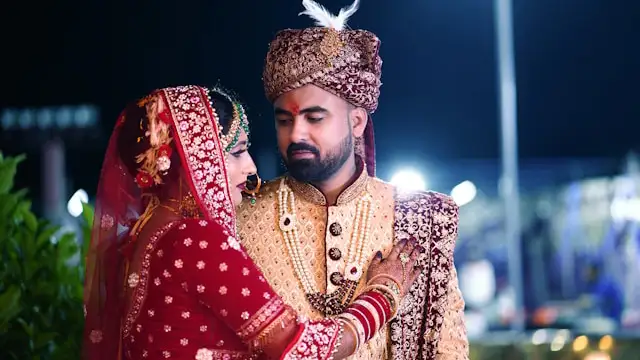
In India and the South Asian region, a wedding isn’t merely a ritual, but has evolved into a social compulsion where people have to, irrespective of their economic conditions, spend a huge sum to organise a feast and invite their close social connections.
Some even turn the event into a national spectacle as weddings are commonly used by the rich and the powerful to display their wealth and clout.
The big fat wedding
India’s national mainstream media and even social media have remained abuzz with the news of the lavish wedding of India’s richest man Mukesh Ambani’s youngest son Anant Ambani.
From Hollywood celebrities to Indian Prime Minister Narendra Modi, the Ambanis had them all at the wedding. Apart from the grotesque display of wealth by the groom and the bride, the flocking of the who’s who of Indian politics, business, sports, films, religious institutions and social sectors exemplified the clout of Mr Ambani.
The big fat wedding, which was preceded by spectacular pre-wedding functions across months, cost the owner of the petroleum-to-telecom conglomerate $600m! In 2018, his daughter Isha Ambani’s wedding cost him $100m!
The less fortunate’s wedding
Amala Maity, a domestic worker working in the residential area of southern Kolkata’s Golf Green, had no money to marry her daughter to the son of a real estate businessman, in South 24 Paraganas’ Canning. But marrying the daughter to a “well-off family” has been an all-time—and at times the only—aspiration of South Asian parents.
“It was always my dream that my daughter gets married to a well-off family than ours. We have tried to provide her with everything as much as we could but have always wanted a nice husband for her, Mrs Maity told East Post.
Her daughter got married last year. But that dream wedding came at a cost.
“I had to sell three of my gold accessories to arrange for the money. My husband doesn’t earn much and I have been incredibly grateful that all those owners whose houses I work in had given some extra amount of remuneration when my daughter got engaged,” Mrs Maity added, describing how she arranged the money.
While weddings are an immense burden on the poor in India, whose tally has been on the rise, especially after the pandemic, for the middle class, it’s aspirational.
An aspiration it was, an aspiration it’s
Social media updates of pre- and post-wedding photography at exotic locations, a theme wedding emulating the rich and a lot of videos exhibiting happiness at the occasion are what drive the middle-class’s sentiments.
Although with the advent of social media, exquisite wedding events have become something middle-class couples aspire for, the social compulsion drained people’s lifelong savings and drove them towards bankruptcy in many cases even before the digital era engulfed the society.
Just like the case of Mina Das.
Mrs Das works as a cook at the households in southern Kolkata’s Jadavpur area. She arranged for her daughter’s wedding back in 2006 by doing what Mrs Maity has done recently.
“I had to mortgage my gold ornaments at a local jewellery shop. I urgently needed the money to buy a bed, an almirah and a decent saree for my daughter because the reputation before the groom’s family matter a lot,” Mrs Das said.
Even selling her ornaments didn’t help Mrs Das, she had to approach a taxi drivers’ union, where her brother-in-law was an official, to seek a personal loan.
A contrasting culture
The much-discussed Ambani wedding saga lasted for months. It started with lavish pre-wedding rituals that also saw a galaxy of celebrities, from Indian to western, flocking to the spectacular locations. The electronic media’s cameras focused on the elephants that the Ambanis have as pets in Gujarat’s Jamnagar and their food.
Jamnagar has a tiny civilian airport beside the Indian Air Force’s (IAF) airbase. The airport used to cater to around five civilian flights a day. However, between February 23rd to March 4th this year, the airport handled traffic of 600 flights due to the pre-wedding celebrations. It has been alleged that Mr Ambani Sr used his clout to have the IAF manage the airport’s operations. With New Delhi’s directions, the IAF had to do it, jeopardising national security.
While the big fat Ambani wedding on July 12 in Mumbai and the lavish reception on July 14th caught the media frenzy, India’s wealth gap, which has been on the rise, according to the latest reports, didn’t get any attention.
The wealth gap
Speaking on the wealth gap, Neha Sharma, an associate professor of economics at the IIS (Deemed to be University), Jaipur, said, “Speaking from the perspective of the people it is understandable that they do like to invest their life-long earnings to fulfil the dream wedding for their son or daughter. But we should also keep into consideration that this is highly indicative of the wealth gap that persists in India.”
According to Oxfam’s “Survival of the Richest: The India Story”, published in January 2023, India has 228.9m people in abject poverty. At the same time, the number of billionaires increased from 102 in 2020 to 166 in 2022.
The Oxfam report shows that the top 1% of India’s rich own 40.6% of its wealth, the top 10% own nearly 72% of its total wealth, and the bottom 50% have been experiencing a fast erosion in their wealth.
Weddings in India push families, especially those of the brides’, to sheer poverty. Despite the 1961 law against dowry, the practice of paying cash, gold and other tangible assets to the groom is prevalent across the country and leads to situations that Mrs Das or Mrs Maity encountered.
Moreover, the economic condition of the bride’s family deteriorates due to the loans people take for weddings because in most of the cultures of India, married women aren’t allowed to work outside their homes, and even if they do, their incomes aren’t meant for their parents or siblings, but for the husband’s household.
The prevalence of dowry and other burdens, accompanied by the growing demand for social media endorsement by peer groups continue to make weddings an expensive affair for anyone who isn’t in the ilk of the Ambanis.
The show-off
“In today’s world, the significance of wedding seems to be lost. People tend to exaggerate the celebration of wedding festivities to such an extent that it seems they are celebrating the ceremony to show off their stature to the external world. But our religion has always emphasised a wedding as a harmonious unison of two souls and bonding of two families,” says Titia Mitra, a sociology teacher at GD Birla Centre for Education in Kolkata.
The show-off casts its burden on the less fortunate, who have the compulsion to match the expectations of society or get isolated.
“Certain rituals are mandatorily needed to be carried out but in a country like India where there is a noticeable contrast between the rich and the poor, it’s high time that people realise that there are still uncountable people who sleep on the streets without having a single loaf of bread for their meals,” Ms Mitra adds.
Where does the road lead?
With the unemployment rate in India touching 8.4% in July, according to the Centre for Monitoring Indian Economy, food inflation increased by 10.87%, industrial inflation increased by 1.43% and oil prices by 13%, the increasing social compulsion of having lavish weddings won’t merely continue to affect the middle class’s finances but also increase the burden on the poor.
“People should genuinely do something about those poor people who even struggle to meet their daily needs. It is good that God has bestowed on these people wholeheartedly with money and other amenities. Money is ‘Goddess Lakshmi’ and should never be disregarded on buying drinks and hosting pool parties and cocktail parties for weddings,” a local vegetable vendor in Jaipur told the author on the condition of anonymity when asked about the extravaganza visible in the rich people’s weddings.
Whether the rich and the social media-inspired generations will reverse the course of grotesque wealth show-offs and whether the government will take effective steps to reduce the wealth gap in the country are yet to be seen.
East Post is an independent geopolitical analysis portal covering South Asia and global power dynamics for international audiences. Views expressed are analytical and do not constitute endorsement of any state or non-state actor.
Join our channels on Telegram and WhatsApp to receive geopolitical updates, videos and more.