

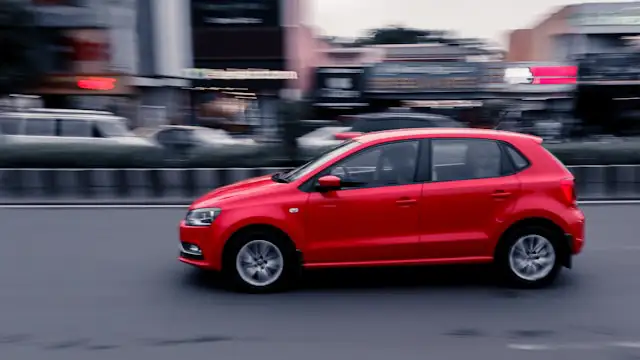
India’s benchmark Nifty index edged higher on January 27th after markets reopened following a long weekend. The auto sub-index, however, fell sharply, shedding nearly 1% by midday. Shares of major carmakers—including Tata Motors, Maruti Suzuki and Mahindra & Mahindra, as well as South Korea’s Hyundai—were among the worst performers, a weakness that persisted into the following trading session.
Investors appear to be reacting to the signing earlier that morning of a long-awaited free-trade agreement (FTA) between India and the European Union. Negotiations stretched over 18 years, reflecting how politically sensitive the automobile sector is for both sides. For India’s carmakers, the agreement represents a potential inflection point.
Under the FTA, India has agreed to cut import duties on European-built cars from a punitive 110% to 10%, subject to an annual quota of around 250,000 vehicles. To shield the mass market, only cars priced above €12,500 (around $15,000) will qualify. That effectively excludes European manufacturers from India’s budget segment, while granting them greater access to the mid-range, premium and luxury categories.
Even so, imported vehicles will remain expensive. Cars sold in India attract varying goods-and-services-tax rates: electric vehicles are taxed at 5%, small petrol and diesel cars at 18%, and luxury vehicles at rates that can approach 40%. Combined with the new import duty, European cars are likely to face total tax burdens of between 28% and 50%. Price sensitivity will therefore remain a constraint.
Yet the timing may favour European brands. India’s luxury and premium car market has expanded rapidly since the pandemic. Sales by brands such as Mercedes-Benz, Audi and Jaguar Land Rover in 2024–25 reportedly exceeded pre-covid levels. For European manufacturers that dominate these segments, India offers a rare bright spot at a time when growth has slowed in China, and American tariffs remain high.
The agreement also raises awkward questions for Narendra Modi’s flagship “Make in India” programme. Successive governments have promoted high tariff walls as a means of nurturing domestic manufacturing. By cutting duties so sharply in a sensitive sector, New Delhi is implicitly acknowledging the limits of that approach.
Indian manufacturers have long argued that steep tariff reductions would flood the domestic market with imports, discouraging investment and undermining local production. Although the quota is capped, 250,000 vehicles a year is not trivial. Many of those cars might otherwise have been assembled domestically, with consequences for jobs and supplier networks in an industry where Indian firms still command roughly two-thirds of the market.
Ratings agency Moody’s notes that the deal gives European carmakers easier access to the world’s third-largest automobile market, particularly for higher-end models. Some European firms with factories in India insist that the agreement will encourage them to expand local production. But it may also lead to a short-term surge in imports, especially of high-margin luxury vehicles.
More broadly, the automobile chapter of the FTA highlights the constraints on India’s negotiating leverage when dealing with advanced manufacturing blocs. In effect, India has traded tariff concessions in a capital-intensive, politically sensitive sector for improved access to European markets in labour-intensive industries—where demand exists, but technology transfer is limited.
The test case suggests that Make in India’s future may diverge from its original ambition. Rather than building domestic champions that dominate at home before expanding abroad, as South Korea and Japan once did, India appears increasingly willing to position itself as a manufacturing base within global—and particularly European—supply chains. That path offers growth, but with different implications for technological autonomy, profit retention and industrial strategy.
The automobile provisions of the FTA reveal an uncomfortable truth about India’s industrial strategy. When faced with a sophisticated manufacturing bloc, tariff walls have proved a weak negotiating chip.
In practice, Make in India is being rewritten. The ambition to build domestic champions is giving way to a more modest bargain: growth without control, factories without full ownership, and integration without technological sovereignty. For Mr Modi’s government, the slogan survives. Its original meaning may not.
East Post is an independent geopolitical analysis portal covering South Asia and global power dynamics for international audiences. Views expressed are analytical and do not constitute endorsement of any state or non-state actor.
Join our channels on Telegram and WhatsApp to receive geopolitical updates, videos and more.