At a time when the Western mainstream media remains busy broadcasting US President Donald Trump’s inconsistent statements and claims regarding the war against Iran, a slow and silent campaign is pushing the Israel Defense Forces (IDF) towards a total collapse. This isn’t a fantasy tale, but an apprehension expressed by a top Israeli military official a few days ago, which the West tries to conceal beneath Mr Trump’s eccentricities, which has turned a tragic war into meme material.
On March 25th 2026, IDF Chief of Staff Lieutenant General Eyal Zamir told a political-security cabinet meeting, “I’m raising 10 red flags,” adding, “The IDF is on the verge of collapse.” The remarks, later confirmed by Opposition leader Yair Lapid, pointed to internal strain within Israel’s military establishment.
The warning highlights a widening gap between Israel’s projected military strength and its operational realities. While global attention has shifted towards Mr Trump’s claims about Iran, developments along Israel’s northern front suggest sustained pressure is stretching the IDF’s capacity across multiple theatres.
Slowly and steadily, Lebanese resistance organisation Hezbollah is emerging from the shadows as an underdog, a game-changer in the month-long conflict that has engulfed West Asia.
Israel was expected to consolidate control after its attacks on Lebanon in late 2024. Instead, Hezbollah’s continued battlefield effectiveness is exposing structural and manpower limitations within the IDF, which Lt Gen Zamir believes can cause the force to collapse.
Hezbollah’s pressure, multi-front strain pushes IDF towards collapse
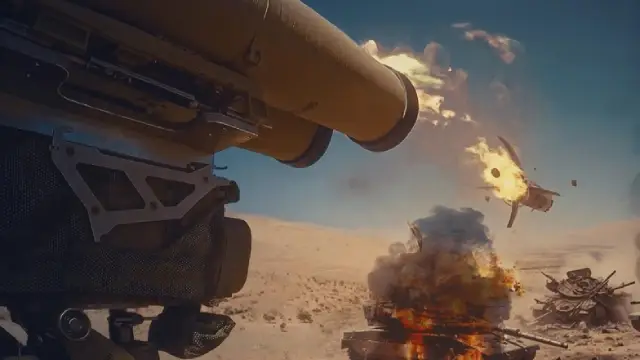
The IDF, long regarded for its operational flexibility, is facing sustained pressure in Lebanon. According to sources, Hezbollah has inflicted significant material losses, including the destruction of around 114 Israeli Merkava tanks, since early March, following Israel’s renewed ground operations in southern parts of Lebanon.
Although the news of Iran pounding Israel with ballistic and supersonic missiles, dodging its so-called impenetrable multi-layer air defence system, has gained currency globally, the news of Hezbollah destroying IDF tanks and killing soldiers in batches remains off the news. The IDF’s collapse appears real if the ground scenario in southern Lebanon is taken into account. Yet, the West avoids this topic as it shows the inherent weaknesses within the IDF’s ground troops when they face non-state actors. Such an approach of indifference basically helps retain the halo of invincibility around the IDF’s neck.
Hezbollah’s media wing has released footage showing the resistance’s drone attacks on Israeli armoured vehicles, including tanks and personnel carriers. The group has also claimed responsibility for multiple strikes targeting IDF positions using artillery and drone systems.
Israeli officials have acknowledged casualties, with several soldiers reported killed in March 2026, including four on March 31st.
At the same time, Israel has claimed the killing of Hezbollah’s southern front commander, Hajj Yusuf Ismail Hashem. However, sources in Beirut familiar with Hezbollah’s structure indicated that the organisation has decentralised its command system, granting operational autonomy to smaller units—mirroring adaptations seen in Iranian military doctrine. This helps Hezbollah override constraints created when Israel kills its commanders.
Technology, cost and strategic questions
The reported losses of Merkava tanks—estimated to cost between $6m and $8m each—have raised questions about the effectiveness of Israel’s Trophy Active Protection System.
According to officials, Hezbollah has deployed the Almas Anti-Tank Guided Missile System, described as a reverse-engineered variant of Israel’s Spike missile. Its reported ability to penetrate active protection systems suggests a shift in battlefield dynamics, where lower-cost systems challenge technologically advanced platforms.
These developments also carry implications beyond Lebanon. Concerns have emerged regarding the vulnerability of US ground forces in the event of a wider conflict with Iran, particularly if similar systems are deployed at scale.
With Mr Trump keeping the card of an American ground invasion of Iran, the latter’s ability to cause major harm to the ground armies remains a concern for the Pentagon.
Beyond Hezbollah: IDF’s collapse hastened by internal strain, political fractures
Mr Lapid’s statements provide further insight into the pressures facing Israel’s military.
“Our pilots, our fighters, are writing glorious chapters in the history of the State of Israel these days. We’re talking about a generation of lions doing phenomenal work, but the IDF is stretched to the limit and beyond. The government is leaving the army wounded in the field,” Mr Lapid had written on his X (formerly Twitter) handle.
ערב חג הפסח אני רוצה להזהיר את אזרחי ישראל. אנחנו עומדים בפני אסון בטחוני נוסף.
— יאיר לפיד – Yair Lapid (@yairlapid) March 26, 2026
13 שנים אני חבר בקבינטים בטחוניים ובפורומים הבטחוניים הרגישים ביותר של מדינת ישראל. כראש ממשלה, שר חוץ, שר אוצר, חבר ועדת החוץ והבטחון.
בכל 13 השנים האלה אני לא זוכר התראה דומה בחומרתה לזו שהזהיר… pic.twitter.com/QIDcIlf13c
According to him, “The Chief of Staff reported to the cabinet yesterday that he no longer has a way to continue mobilising reserves. He has reservists in their sixth and seventh rounds. These reservists are exhausted and worn out and can no longer respond to our security challenges (sic).”
He further highlights, “The army doesn’t have enough soldiers for its missions. The fact that the government continues to encourage Haredi draft evasion is a security danger and a severe blow to the army’s readiness.”
Haredi Jews are an orthodox sect that refuses mandatory military service. Their refusal creates a major rift within the Jewish communities living as settlers in the occupied territories. Benjamin Netanyahu’s far-right government has found itself in trouble due to the Haredi Jews’ refusal to serve in the IDF.
According to Mr Lapid, internal security challenges, caused by Zionist terrorism, are also diverting military resources.
“The Chief of Staff reported to the cabinet yesterday that he is forced to transfer more and more forces to Judea and Samaria because of Jewish terrorism,” Mr Lapid wrote.
“The Chief of Staff detailed to the cabinet a whole series of threats, most of which cannot be detailed on camera, but the bottom line is: The government is sending the army into a multi-arena war without a strategy, without resources, and with far too few soldiers,” he underscored.
“The government will not be able to say this time, ‘I didn’t know’. This is the Chief of Staff they appointed, and they won’t be able to politicise him and pin the blame on him,” the Opposition leader warned.
Multi-front war without strategic depth
The IDF is now operating across multiple fronts, including Lebanon, Gaza, internal security operations against Zionist terrorists, and heightened tensions with Iran. Hezbollah’s sustained rate of operations—estimated by sources at dozens of strikes per day—adds to the cumulative pressure.
At the same time, Israeli air defence systems have faced scrutiny following Iran’s recent retaliatory actions, further affecting troop morale.
The one thing that has kept Israeli morale high has been its air superiority in the region. However, as Iran has managed to hit an American F-35, causing it to force land, the IDF has lost that leverage. Its pilots, like the Americans, now know they have no halo of invincibility; they are no longer invisible. This can significantly affect the pilots’ morale.
Strain can’t be obscured
As diplomatic signalling around Iran intensifies, the operational picture suggests a different reality. The IDF is confronting a prolonged, multi-front conflict with finite manpower and increasing material losses. In this conflict, the Axis of Resistance, which the US and Israel believed they had decimated, resurfaced like a phoenix, and changed the equation like an underdog.
Hezbollah’s continued effectiveness, combined with internal political and structural challenges, indicates that Israel’s military strain is not episodic but systemic. The Hezbollah’s resilience also legitimises the concern raised by the IDF chief regarding its imminent collapse.
If current trends persist, the question is no longer whether pressure on the IDF will continue—but how long it can sustain operations at this scale without strategic recalibration.
East Post is an independent geopolitical analysis portal covering South Asia and global power dynamics for international audiences. Views expressed are analytical and do not constitute endorsement of any state or non-state actor.
Join our channels on Telegram and WhatsApp to receive geopolitical updates, videos and more.