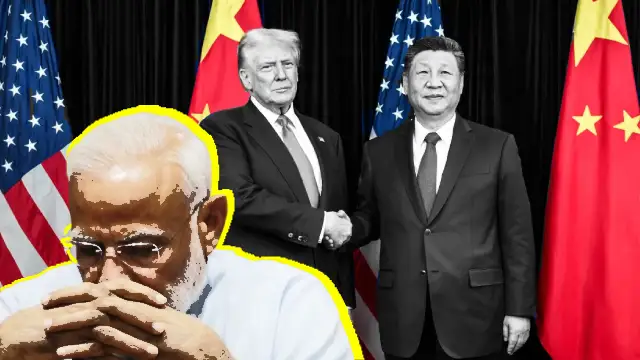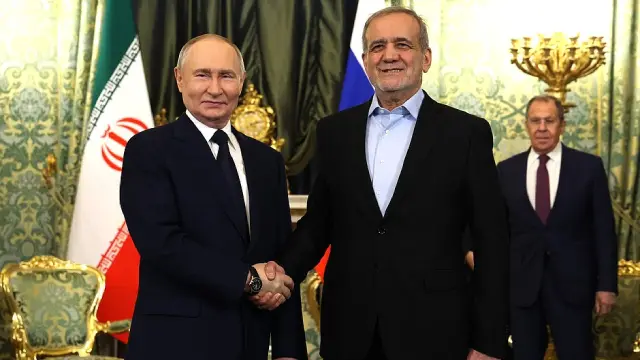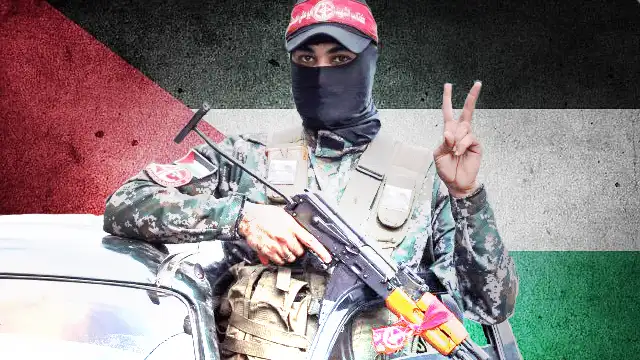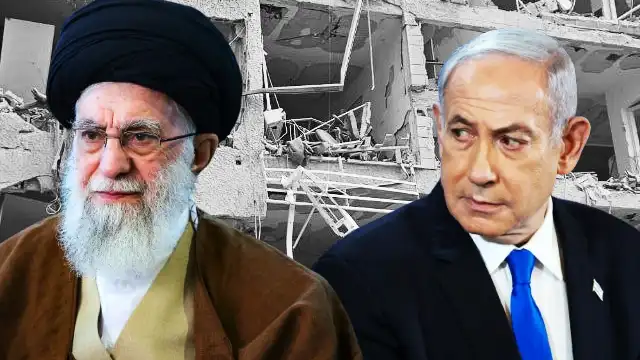
As tensions continue between Iran and the US-Israel alliance despite ongoing negotiations to convert the fragile ceasefire into a broader peace arrangement, India finds itself confronting the economic consequences of a conflict over which it has little influence. Rising fuel prices, disruptions to maritime trade routes, and uncertainty in energy markets have increased domestic pressure on Prime Minister Narendra Modi‘s government. Yet, according to a Russian foreign policy expert, India remains unlikely to play a meaningful diplomatic role in resolving the crisis.
India has spent years projecting itself as a power capable of balancing relations with Washington, Tehran, Israel and the Gulf monarchies while championing strategic autonomy. The latest crisis in West Asia, however, is testing the limits of that approach. As the conflict reshapes regional alignments, questions are emerging about India’s foreign policy priorities, its room for manoeuvre and its ability to influence developments that directly affect its economy.
India was expected to use its relationships across rival camps to play a constructive role in West Asia. Instead, the crisis has highlighted how limited New Delhi’s leverage remains despite its deep economic exposure to the region.
India’s foreign policy and limits of influence
Speaking to East Post, Oleg Glazunov, assistant professor at the Department of Political Analysis and Socio-Psychological Processes at the Plekhanov Russian University of Economics in Moscow, argued that India is unlikely to challenge the United States’ position in West Asia as long as Washington remains the dominant global power.
According to Mr Glazunov, “India will not interfere in West Asian conflicts as long as the US holds global hegemony. It is more beneficial for India to cooperate with Washington without picking a fight.”
His assessment comes at a time when disruptions in the Strait of Hormuz have affected India’s energy supply chains and contributed to rising fuel costs. Despite the economic consequences, Mr Glazunov believes New Delhi has little direct role to play in the conflict.
“A conflict with Iran holds no significance for India’s foreign or domestic policy,” he adds, speaking on the growing antagonisms between Iran and the UAE.
The Russian expert’s assessment challenges a narrative often promoted by the Modi government: that India’s growing diplomatic profile and strategic partnerships provide it with greater influence in major international crises. Instead, he argues that India’s calculations remain largely shaped by its relationship with Washington.
Iran-UAE tensions and search for mediator
The conflict in West Asia has also exposed tensions between Iran and the United Arab Emirates, both members of BRICS+.
The UAE and the Gulf Cooperation Council (GCC) criticised Iran’s retaliatory strikes against American military installations in Gulf countries. Tehran, meanwhile, accused the UAE and other GCC members of allowing the US and Israel to use military facilities and airspace in support of military operations against Iran.
As a signatory of the Abraham Accords brokered by US President Donald Trump, the UAE has steadily expanded ties with Israel. During the recent conflict, Israeli claims that Prime Minister Benjamin Netanyahu visited the UAE triggered further controversy. Although Abu Dhabi denied that any such visit took place, Iranian officials publicly criticised the Gulf monarchy.
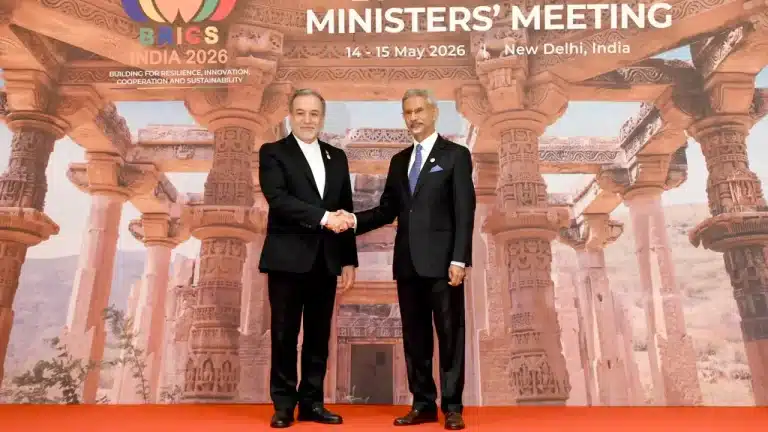
The issue surfaced during the BRICS+ foreign ministers’ meeting in New Delhi earlier this month. While Iranian Foreign Minister Abbas Araghchi and UAE representatives avoided public confrontation during the gathering, tensions resurfaced after the meeting. Mr Araghchi subsequently condemned the UAE for allegedly hosting Mr Netanyahu during the conflict, while Abu Dhabi reiterated that no such visit had occurred.
Against this backdrop, Mr Glazunov does not believe Moscow possesses sufficient influence to mediate between the two sides.
The Russian expert also believes that Moscow lacks the leverage to play a peacemaker’s role in the dispute between fellow BRICS+ members Iran and the UAE.
Mr Glazunov believes that Russia can’t resolve the differences between the two fellow BRICS+ members. He considers China a better fit to mediate between the two parties to resolve their antagonisms caused by the UAE’s ties to Israel.
“Russia does not have a strong enough position in the Middle East to mediate between Iran and the UAE. This mission may be taken on by China,” Mr Glazunov told East Post.
India, Russia and ‘strategic autonomy’
Despite growing cooperation between India and the United States, Mr Glazunov does not see New Delhi’s outreach to Washington as a source of friction with Moscow.
Even though India has been seeking to earn American trust and strengthen its strategic ties with Washington, Mr Glazunov asserts that Russia has no issue with these endeavours.
Recent tensions over Russian oil purchases and American pressure on India have renewed debate over whether New Delhi’s foreign policy still reflects the strategic autonomy Indian officials frequently invoke. Critics argue that India’s room for manoeuvre has narrowed as Washington has become more willing to use trade and economic tools to influence policy choices.
Mr Glazunov, however, views India’s approach through a different lens.
Although India’s Opposition bloc members believe that the US pressure has forced India to give up its “strategic autonomy” that Mr Modi’s government had used to buy oil from Russia, ignoring Western sanctions earlier, Mr Glazunov asserts that New Delhi has tactical support from Moscow in its attempts to woo the US.
“India’s cooperation with the US is met with understanding in Russia, as it aligns with India’s national interests,” he told East Post, adding that strong “India-US relations cannot undermine traditionally friendly Russian-Indian ties.”
India’s role in West Asia
Mr Glazunov also defended India’s decision to avoid taking sides in the conflict.
The Russian expert defends India’s position in the West Asia conflict, saying it has no interest in taking any sides or condemning the American-Israeli alliance in the region.
“It’s not in India’s interest to get involved in West Asian affairs, as this contradicts the country’s national interests. It would gain no benefit from condemning Israel or the US,” he said.
Rather than viewing India’s caution as a weakness, he sees New Delhi’s international profile continuing to rise through platforms such as BRICS+.
Rather, he sees India’s BRICS+ chairmanship as an achievement.
“Its BRICS chairmanship already enhances India’s status and image in the international community,” he claimed.
Yet Mr Glazunov simultaneously believes India could play a diplomatic role in reducing tensions between Iran and the UAE.
The Russian expert believes that India can act as a mediator between its friends Iran and the UAE in the West Asian theatre to resolve their contradictions.
“There are many other global issues where India can make a mark — for instance, by acting as a mediator between Iran and the UAE,” he claimed.
A region India cannot ignore
India recently signed a defence agreement with the UAE, a move that has attracted attention across the region because of New Delhi’s simultaneously friendly relations with Iran and Saudi Arabia. Regional media outlets have interpreted the agreement as a response to Pakistan’s defence treaty with Saudi Arabia.
The development illustrates the increasingly complex environment confronting Indian policymakers in West Asia. India seeks stronger ties with Gulf states, maintains longstanding links with Iran, relies heavily on regional energy supplies and continues to deepen cooperation with the United States. Balancing these relationships has become more difficult as regional rivalries intensify.
For now, Mr Glazunov’s assessment remains cautious. India may possess growing economic and diplomatic weight, but influence does not automatically translate into leverage. The latest crisis in West Asia suggests that while New Delhi is deeply affected by regional instability, its ability to shape outcomes remains far more limited than its ambitions might suggest.
East Post is an independent geopolitical analysis portal covering South Asia and global power dynamics for international audiences. Views expressed are analytical and do not constitute endorsement of any state or non-state actor.
Join our channels on Telegram and WhatsApp to receive geopolitical updates, videos and more.