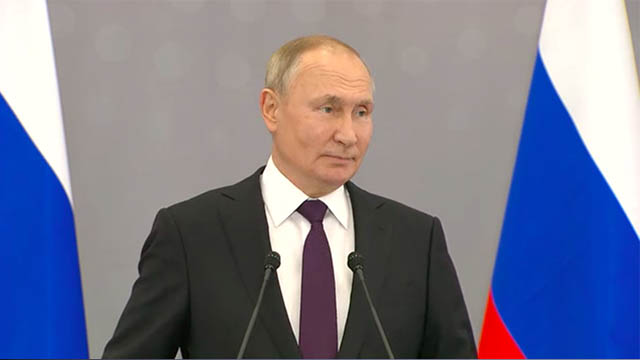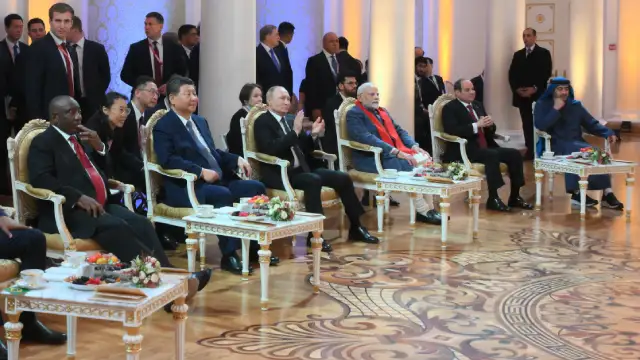
All eyes of the world have been on the BRICS Summit in Kazan from October 22nd to 24th, where the leaders of the fast-expanding global body have been meeting and discussing a plethora of issues and strengthening their bilateral ties. On the one hand, the participation of all member countries in the 16th BRICS Summit in Russia, ignoring the US-led collective West’s sanctions projects an optic of a changing world, on the other, there have been concerns over the BRICS+ countries’ role in stopping the ongoing genocide in West Asia by the US-backed Israel.
Although the final draft of the 2024 BRICS Summit in Kazan has particularly condemned Israel’s aggression on Gaza and Lebanon, condemned the violence unleashed by it, promoted the United Nations (UN) resolutions and demanded a two-state solution to the Israel-Palestine conflict, questions remain on whether the BRICS+ member countries can collectively exert pressure to stop the bloodshed.
Can the BRICS+ countries help stop the conflict in West Asia, restore peace and normalcy, and protect human lives?
While member states of BRICS have been individually playing their roles, experts believe that BRICS+ is quite weak in its present form and in the context of the broader geopolitical scenario to end the West Asia conflict.
The sceptical bloc
According to the 2023 estimates, the BRICS+ countries’ combined share of global GDP, 37.4%, far surpasses that of the G7’s 29.3%.
However, experts believe the bloc itself is weaker than the US-led collective West because most members are traditionally inclined towards the global power centre.
Speaking to The East Post, Oleg Glasunov, an associate professor of the Department of Political Analysis at Plekhanov Russian University of Economics, highlighted that the BRICS countries can’t take on the West due to their weakness.
“BRICS does not yet have the strength and resources to change or control the political situation in the world. Especially to challenge the US. BRICS countries are too weak economically and politically,” opines Mr Glasunov.
According to him what matters now is Russia’s victory in its special military operations in Ukraine, where the US-led collective West is waging a proxy war against Moscow using Kiev as a pawn.
Mr Glasunov argued that Russia’s performance in the war would not only help it shape a ‘new world order’ but also change the attitude of the BRICS+ countries towards it as well as towards the US-led bloc.
“BRICS has now been extended to nine countries from the original founding countries, and they are still waiting to see when and how the Ukraine war will be over,” Mr Glasunov told the East Post.
“They are waiting until Russia can win victory in this conflict between Russia and Ukraine. As most of these, especially extended countries, come from those parts of the world where they respect power, Russia’s victory will demonstrate its power and, in this case, all these countries will stay in the bloc (BRICS). That’s why all the countries are waiting for the result of this war,” Mr Glasunov added, underscoring the importance of Russia’s victory in the shadow war waged against it by the US-led NATO bloc.
“If Russia loses (the war), it will stay alone,” he warned.
“So, Russia’s victory will bring a new world order, in all the countries, especially the BRICS countries. They are waiting as they want to see this ‘new world order’ in practice. If Russia loses the war, the world order will be under the US, but not for a long time, for five to ten years. Because the US will not be able to retain its world hegemony for more than five to ten years, the world will be changing anyways, even if Russia loses,” Mr Glasunov mentioned.
BRICS+ countries driven by selfish goals
Experts also believe that unlike the western blocs, like G7, the BRICS+ countries lack a cohesive bond, a unity of purpose.
Mohsen Solhdoost, an assistant professor in International Relations at Xi’an Jiaotong-Liverpool University, based in China’s Suzhou, believes that BRICS+ countries lack cohesion like the G7 and are mostly driven by their self-interests.
Mr Solhdoost highlighted the fissures within the BRICS+ as members pursue diverse policies vis-a-vis the West Asia conflict.
“It (BRICS) can definitely offer an alternative platform for dialogue negotiations diplomacy things like this or conflict resolution but at the same time, we have to again take note of the diverse political agendas of member states and the alliances among BRICS members,” Mr Solhdoost said highlighting the diverse stance of the BRICS+ member countries.
“They’re (organisations like BRICS) not homogeneous; so there are divergent interests and they don’t act like the European Union or some organisations in the West. These are different. That’s why they provide the platform for diplomacy engagement, bilateral relations and negotiations, but at the same time, if it comes to national interests, these countries pursue their policy rather than joining the groups of these states,” he said.
He highlighted the instance of India and its stance on the ongoing conflict.
“India is an ally of the US, which is on the opposing side of China and Russia— which is pretty much considered as an adversary to the US as well. So all this divergence may actually hinder their cohesive and assertive approach to complex conflicts such as the one we see between Palestinians and Israelis or even the conflict with regards to Russia and Ukraine,” Mr Solhdoost told East Post.
He cited an instance of India’s double standard on the question of Israel’s aggression.
“Just a few days ago, we heard that the Israeli foreign minister declared the UN Secretary-General personal non grata, barring him from entering Israeli territory at the Security Council, UN Security Council, there was widespread support for the UN Secretary-General…there was a letter of support prepared by a few countries. But interestingly India did not sign the letter. So it was one interesting case that India broke with Global South because previously it joined several resolutions but if the resolution is very critical of Israel, India has always stepped outside. So abstaining in at least four such major resolutions on Palestinian issues, India has refused to sign or perhaps join these resolutions,” Mr Solhdoost mentioned.
Pointing out the importance of the step taken to protect the sanctity of the office of the UN Secretary-General, Mr Solhdoost says, “So the decision not to sign the letter which was circulated by Chile, supported by Brazil, Colombia, South Africa, Uganda, Indonesia, Spain, Mexico was very significant given It was seen as a defence of the UN Secretary-General and the UN itself. It was about the authority of the UN, reinstating the authority and legitimacy of the most important international organisation.”
Mr Solhdoost draws his conclusion that it’s the self-interests, the national interests of the BRICS+ countries that drive them, saying, “So there are divergent interests we see here between these members of the BRICS.
That’s why we don’t see a unanimous consensus about what they’re going to do about the conflicts most of these countries, particularly major powers like India, Russia and China, they act upon their national interests — if there is consideration about their national interests they’ve joined these efforts, these campaigns, if not, they usually refuse to join the collective movement by the organisation.”
Diverse geopolitical interests
BRICS+ countries have truly divergent geopolitical goals. The matrix is unique and shows interesting permutations and combinations. And many have diametrically opposite positions to others on the question of West Asia.
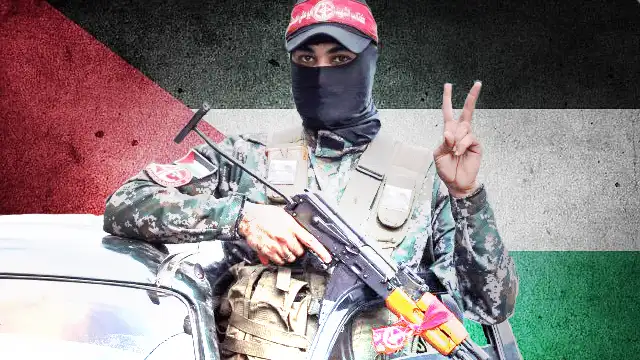
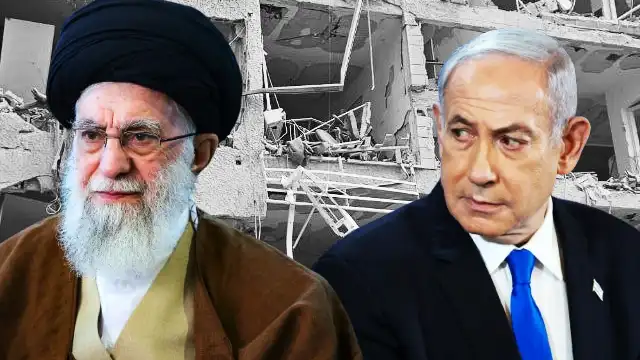
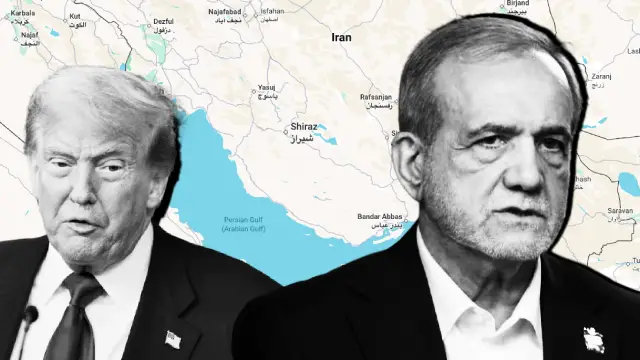
Iran is a newly-inducted member in 2023. It’s playing a pivotal role in the current West Asia conflict by leading the ‘Axis of Resistance’ against Israel’s aggression on Gaza, Lebanon and Syria.
Israel and the US allege that Iran-backed resistance organisations like Hamas in Gaza, Hezbollah in Lebanon, the Houthi militia in Yemen and Shiite organisations in Iraq have been targeting Israeli military installations. Iran itself has launched two major missile attacks on Israel—the first of its kind suffered by the Zionist state in recent years—after suffering attacks on its territories.
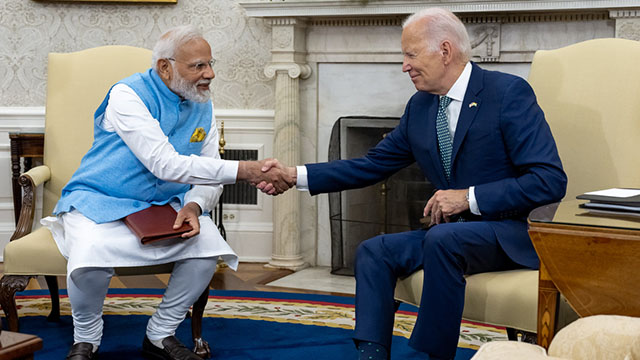
On the other side, there are India and the UAE. While India has friendly ties with Iran and also controls the Chabahar Port in the Persian Gulf, it’s an ally of the US and Israel, the bitter enemies of Tehran. The UAE also have strong relations with Israel and the US.
Following the initial discussions at the G20 Summit held in New Delhi last year, India has been a partner of the US-led initiative—India-Middle East-Europe Economic Corridor (IMEC)—to counter China’s Belt-Road Initiative (BRI).
The UAE, Saudi Arabia and Israel are proposed partners of the IMEC. Egypt also has the possibility of becoming a member.
BRICS members India and the UAE’s involvement in building this corridor, which consists of a railway, hydrogen pipeline, high-speed data cables, and renewable energy grids, make them reliant on the US, unlike other bloc members.
Similarly, China and Russia, two considerable military powers, have been also condemning Israeli actions in West Asia and the US’s support of it.
However, neither has made any difference to the situation.
Experts opine both of these countries, whose interests run against that of the US-led collective West, have their reasons to engage in West Asian affairs, albeit indirectly.
Russia’s entanglement
According to Mr Glasunov, Russia’s engagement in Ukraine prevents it from playing a role in West Asian affairs, unlike in 2015 when it helped Syria defend itself against the terrorist forces backed by the West and Gulf monarchies.
“Russia can’t be involved now in the Middle East problem. Besides that, the situation has more to do with Iran vis-a-vis the Arab world. That’s why the Arab world doesn’t interfere in this conflict,” Mr Glasunov said.
While Russia’s special military operations in Ukraine keep it away from meddling in the affairs, it’s alleged by the West that Moscow and Tehran have strong military ties, which may in the future affect the overall Iran-Israel equation.
Moreover, as Russia’s relations with countries like Saudi Arabia and the UAE have improved recently, Moscow ensures that it can secure its business interests in the region and to do so, it’s important to thwart the attempts to escalate the conflict into a full-blown war.
The Arab multipolarity
While the Arab states remain mum on the unfolding humanitarian crisis and leave it to Iran, as Mr Glasunov mentioned, they are also managing to do a geopolitical trapeze work in the region by fine-balancing between the China-Russia bloc and the West.
“Saudi Arabia plus the Arab states in the Persian Gulf have pretty much moved towards multipolarity. They are tilting towards some balanced relationships with major powers in the system; you can see how they’ve managed actually to balance their foreign relations in both economic and political spheres by engaging with China and Russia. They buy military weapons from these two major powers, still, they have their own relationships with the US as well,” Mr Solhdoost while underscoring a tectonic shift in the economic priorities of these kingdoms.
“Today, we see that these countries have significantly reduced their reliance on traditional western allies and oil revenues that have come from the western allies. Instead, they have started investing in sectors like technology, infrastructure, manufacturing, renewable energy and those sectors that are pretty much supported by China, by Chinese investors. So they have used China here to balance relations with the US. It is a big market for China,” he added.
Now, as China plays an important role in the region, can it play a pivotal role in stopping the conflict?
China’s reluctance
Mr Solhdoost believes the Chinese foreign policy of non-intervention will stop it from interfering directly in the conflict. However, China has been helping in reaching a consensus among the Palestinian resistance organisations for better unity. He believes a lot of Chinese interests would be at stake if the conflict escalates and engulfs the entire region.
Discussing why it has become important for China, Mr Solhdoost highlights China’s growing energy consumption and reliance on energy imports from the Middle East. The Arab countries, on the other hand, are using the money they earn selling oil to China to buy technology and other goods from it. Like they did with the US. This has become a win-win situation for both, which China won’t allow to get disrupted.
“The economic relationship with these countries is not just for the big market that is available to China in the region, it’s also the crude oil that is very important for China,” Mr Solhdoost said, adding, “China imports half of its crude oil from the Middle East it is the largest importer of crude oil. Economic growth in China is very much relying on the import of crude oil so it matters a lot to China and that’s why China is trying to intervene as much as it can as long as it is aligned with its foreign policy of non-interference; so it tries to step in to mediate conflicts as long as it can.”
What does the future look like?
Except for condemnations and rhetoric, the BRICS members left nothing for the Palestinian or Lebanese people. While individually the member states may get involved in resolving the conflict or aiding the resistance, like Iran, or supporting Israel, like India, as a bloc, BRICS won’t be able to do anything significant.
Mr Glasunov predicts that Russia won’t open a second front for no reason in the Middle East against the West. China’s reluctance to interfere in the affairs of other countries, despite its bid to protect its long-term interests, will make it play a dual role—of a non-interventionist and a desperate mediator.
In this scenario, Iran will remain the only BRICS+ member to actively engage in the conflict, but without any substantial power to end it.
Other BRICS+ countries like Egypt or the UAE have their own reasons to stay mute spectators, expecting investments under the IMEC, while India will continue to be in favour of Israel for its own interests.
Amid this equation, the possibility of peace coming to West Asia through any collective efforts of BRICS+ countries appears bleak, which raises questions on the fate of those at the receiving end of the violent aggression, the Palestinians and the Lebanese people.
East Post is an independent geopolitical analysis portal covering South Asia and global power dynamics for international audiences. Views expressed are analytical and do not constitute endorsement of any state or non-state actor.
Join our channels on Telegram and WhatsApp to receive geopolitical updates, videos and more.