One ceasefire, two narratives
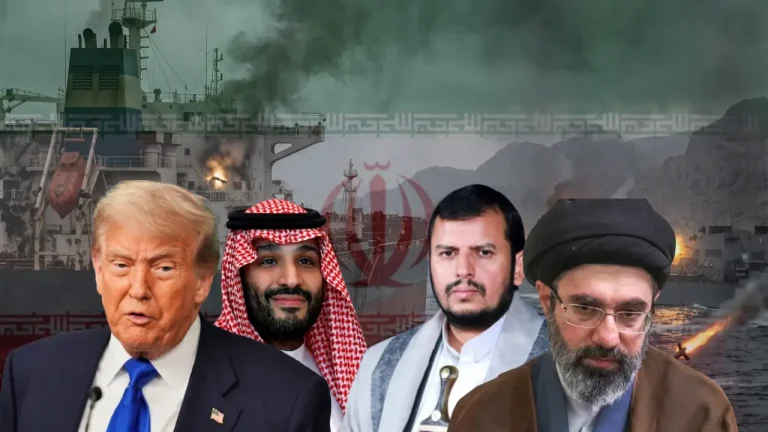
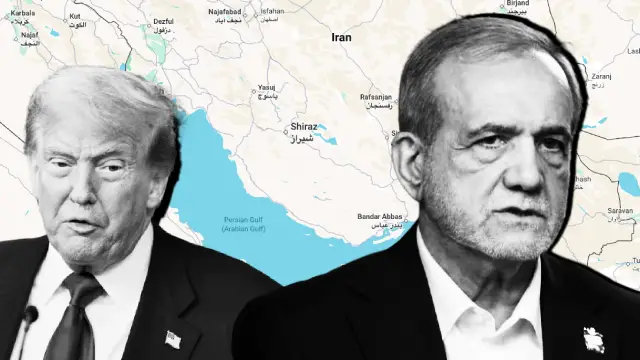
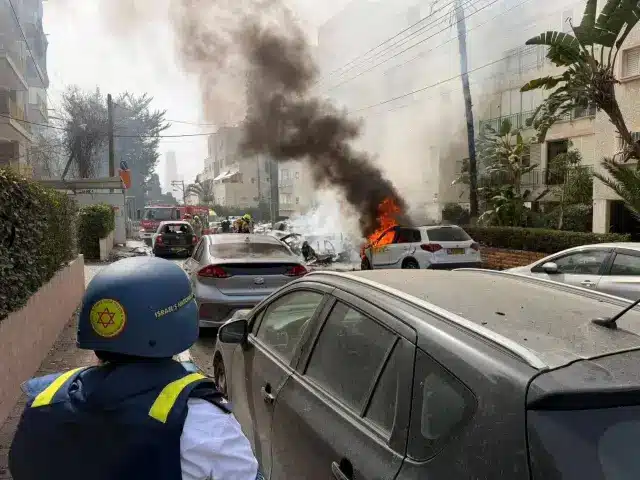
A two-week ceasefire between the US and Iran has brought a temporary halt to a 40-day war that pushed West Asia to the brink of wider conflict. Yet even as the ceasefire took effect, sharply contrasting narratives emerged from Tehran and Washington.
In Iranian cities, including Tehran, there were visible celebrations marking what officials described as a victory. In Washington, however, the announcement was framed as a controlled de-escalation, with President Donald Trump declaring that the United States had agreed to suspend further attacks following consultations with Pakistan’s Prime Minister Shehbaz Sharif and Asim Munir, the army chief.
The divergence is not merely rhetorical. It goes to the heart of how the US–Iran ceasefire will be understood: as a negotiated pause, or as an outcome shaped by battlefield and strategic pressures.
Both sides claim ceasefire
The Trump regime and Western media accounts have suggested that the ceasefire was brokered by Mr Sharif, with Iran agreeing to terms under pressure. Iranian officials, however, present a different account: that Tehran compelled Washington to accept its conditions after failing to achieve decisive gains in the conflict.
Iran’s Supreme National Security Council (SNSC) issued a statement claiming victory in the 40-day war and stated that the US-Iran ceasefire is a victory for the Islamic Republic.
Both positions cannot simultaneously be true. What is clear is that the ceasefire has emerged not from resolution, but from competing claims of advantage.
Escalation expected, pause delivered
In the final hours before the announcement, the expectation was escalation. Mr Trump had warned of a potentially devastating expansion of military action against Iran. He had threatened to wipe out the civilisation in Iran after posting expletives targeting the Islamic Republic on his captive social media platform Truth Social.
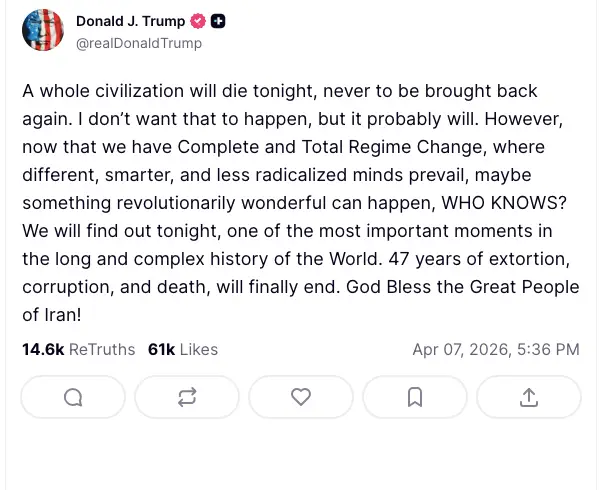
Mr Trump’s threats, which Iran mocked, were ironically veiled attempts to unlock the exit door. The US has been seeking a ceasefire since the second week of the war. However, it has failed to achieve a ceasefire as Tehran has been dictating terms and choked the Strait of Hormuz.
This shift—from imminent escalation to abrupt pause—defines the central contradiction of this conflict’s current phase.
Exiting under Iran’s pronounced pressure would have been a political suicide for Mr Trump and his regime. Instead, he pursued a ceasefire discussion with Iran through allies like Pakistan, Egypt, Saudi Arabia and Türkiye.
Behind the threats, which drew global condemnations, was his desire to show the world that the US is capable of inflicting greater damage and causing massive destruction in Iran. Something that Mr Trump’s Secretary of War Pete Hegseth confirmed during a press conference on Wednesday, April 8th. However, in reality, these threats provided the US an opportunity to exit while retaining its bully image.
This shift—from imminent escalation to abrupt pause—defines the central contradiction of this conflict’s current phase.
Nevertheless, the Islamic Revolutionary Guards Corps (IRGC) has claimed that it has its fingers on the trigger despite Mr Trump’s nod to the US-Iran ceasefire deal. Any violation, the IRGC and the SNSC claim, will draw attacks from Iran. This keeps the volatility at the fore, raising doubts on the longevity of the conflict.
Iran’s declaration: Victory after ‘war of aggression’
The SNSC issued a formal statement describing the conflict as a “war of aggression” and declaring victory.
“Iran has achieved a great victory and has forced criminal America to accept its own 10-point proposal,” the statement said.
It further asserted that the US had been left with “no way forward but to submit to the will of the great nation of Iran and the honourable Axis of Resistance”. This statement highlights that Iran has managed to retain the upper hand during the negotiations.
The language is overtly ideological, but its political purpose is clear: to frame the ceasefire between the US and Iran not as a compromise, but as an act of capitulation by Mr Trump’s regime.
Washington’s position: Victory through force
In Washington, the tone was markedly different. Driven by fantasy data, a delusional Mr Hegseth argued that American military operations had achieved overwhelming success. He claimed that Iran’s military capabilities had been severely degraded.
“Iran’s navy is at the bottom of the sea,” he said. “Iran’s airforce has been wiped out. Iran doesn’t have any sort of a comprehensive air defence system. We rule their skies.”
He added: “Their missile programme is functionally destroyed… Launchers, production facilities and existing stockpiles depleted and decimated.”
These claims, however, sat uneasily alongside the decision to accept a ceasefire. They raise questions on the destroyed American bases across West Asia, the damage inflicted on US warplanes in the Iranian territory, the killing of several servicemen and Washington’s reluctance to start ground operations using its most elite troops.
Moreover, Mr Hegseth, in his attempt to highlight a purported US victory, even contradicted the president.
Trump’s announcement—and its contradictions
Mr Trump confirmed the ceasefire in a post on Truth Social, citing conversations with Pakistan’s leadership.
Breaking his statement into parts, he wrote: “Based on conversations with Prime Minister Shehbaz Sharif and Field Marshal Asim Munir… I agree to suspend the bombing and attack of Iran for a period of two weeks.”
He added: “This will be a double sided CEASEFIRE… we have already met and exceeded all Military objectives (sic).”
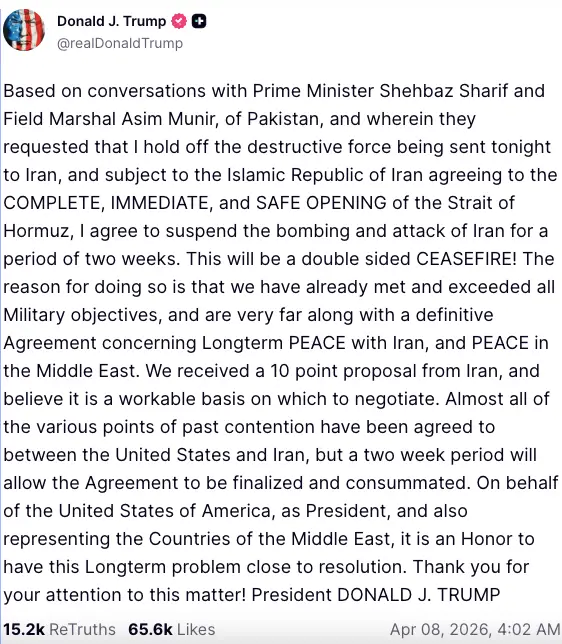
“We received a 10 point proposal from Iran, and believe it is a workable basis on which to negotiate (sic),” he further said in another post on Truth Social.
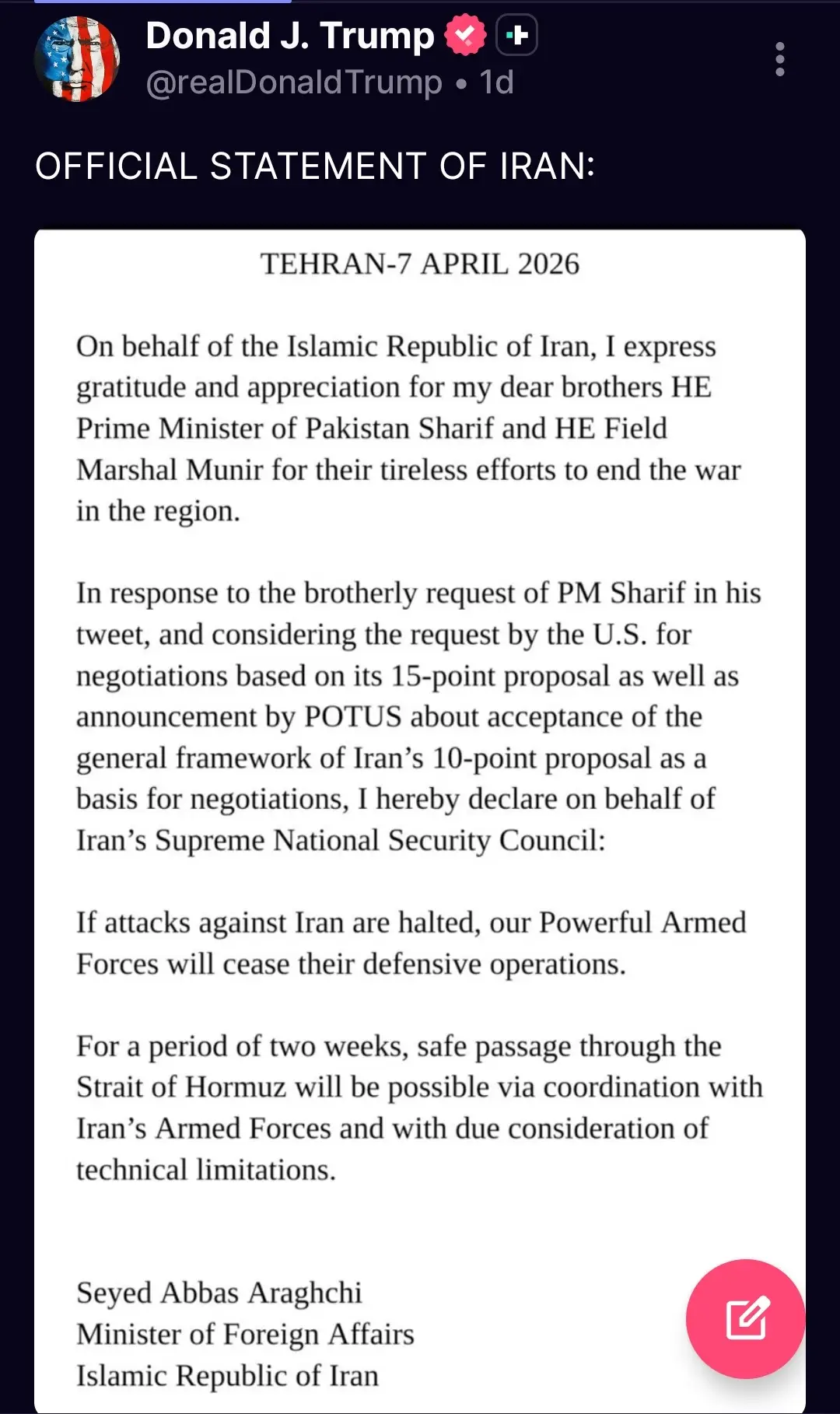
Earlier, while lambasting CNN for publishing an Iranian statement that the president said is fake, he shared a message signed by Abbas Araghchi, the Iranian foreign minister.
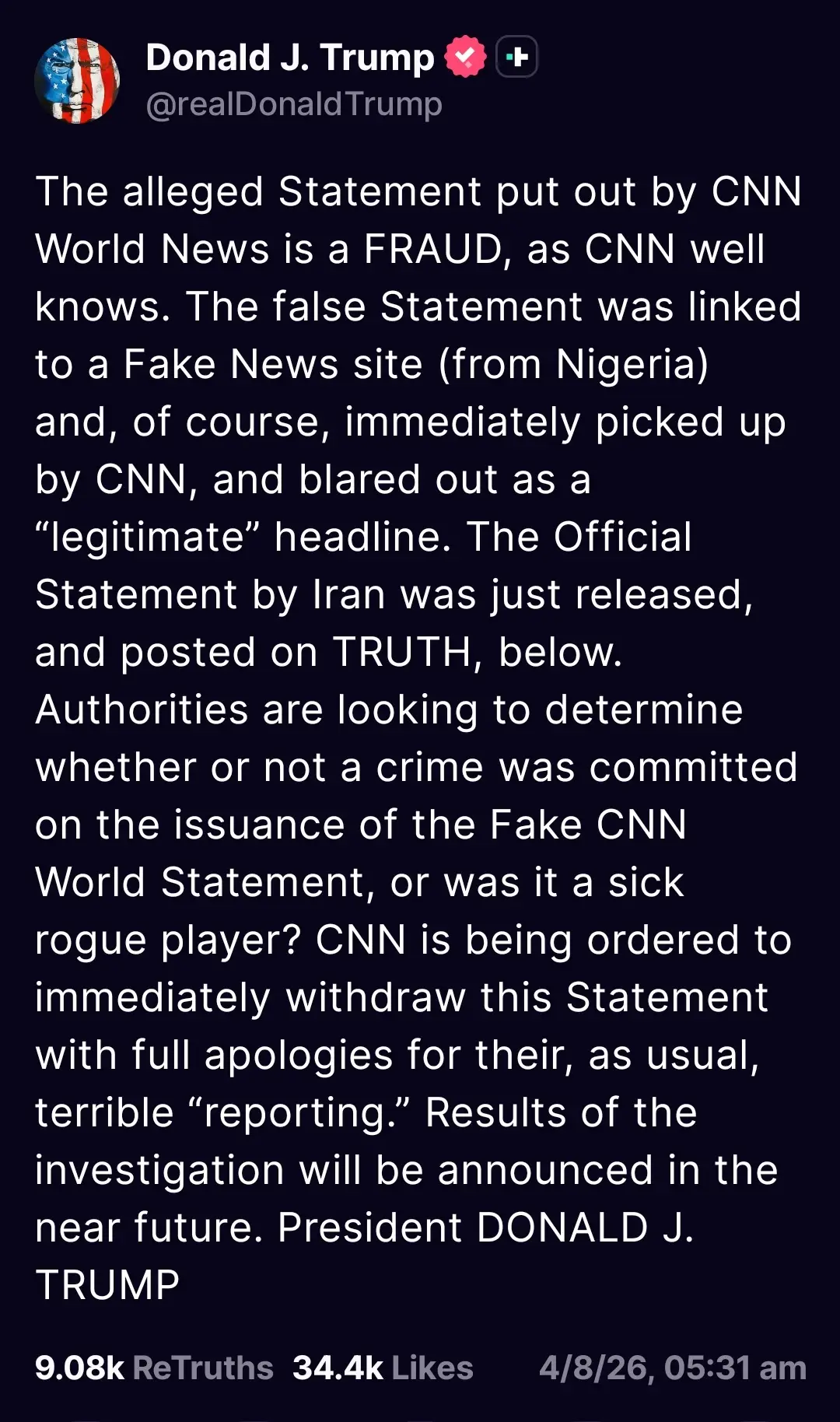
This message from the Iranian official negates the claim that the US has managed to defeat Iran. Rather, it points to the fact that the US has agreed to negotiate on these terms set by Iran during the ceasefire period. It shows that Iran has an upper hand, which makes it impose conditions on Washington, a major development in the third decade of the 21st century.
He concluded, saying, “A big day for World Peace… Iran can start the reconstruction process… this could be the Golden Age of the Middle East.”
The juxtaposition is striking. A declaration of overwhelming military success is paired with the acceptance of a negotiated pause based on Iranian proposals. This contrast exposes that there remain lacunae in Washington’s position regarding the Iran-US ceasefire deal.
A look into the 10-point framework raises questions about the US’s victory claim.
Ten-point framework: Iran’s conditions for ceasefire
At the centre of the US–Iran ceasefire is a ten-point proposal attributed to Iran’s leadership and acknowledged by Mr Trump. These points provide insight into Tehran’s negotiating position.
- No new aggression against Iran
Iran’s first condition requires a binding commitment from the US to refrain from future military action. Iranian officials argue that their air defence systems successfully intercepted multiple attacks during the war, demonstrating resilience against sustained pressure.
- Continued control over the Strait of Hormuz
The second point affirms Iran’s authority over the Strait of Hormuz, through which a significant portion of global oil supply passes.
During the conflict, Iran imposed restrictions on the strait, using maritime control as leverage to disrupt supply chains and exert economic pressure.
- Acceptance of uranium enrichment
Iran demands recognition of its right to uranium enrichment under the Nuclear Non-Proliferation Treaty.
Officials claim that nuclear facilities remained operational throughout the conflict despite repeated attempts to target them.
- Removal of primary US sanctions
The proposal calls for the lifting of direct US sanctions, including restrictions on trade, financial assets, and key sectors such as energy and shipping.
- Removal of secondary sanctions
Iran also seeks the end of secondary sanctions that penalise third countries for engaging economically with Tehran, a central pillar of US pressure in recent years.
- Termination of UN Security Council resolutions
Iran demands the removal of past UN Security Council resolutions related to its nuclear programme, many of which imposed restrictions between 2006 and 2010.
- Revocation of IAEA Board resolutions
The proposal includes reversing resolutions by the International Atomic Energy Agency concerning Iran’s nuclear activities, which Tehran has long contested.
- Compensation for war damage
Iran calls for reparations, citing damage to infrastructure, including energy facilities, transport networks, and civilian sites.
- Withdrawal of US forces from the region
The ninth point demands the removal of US military forces from West Asia, where tens of thousands of troops have been stationed across multiple bases.
Iran claims its strikes rendered several facilities unusable during the conflict.
- End to hostilities across all fronts
The final condition calls for a comprehensive halt to hostilities, including those involving allied groups such as Hezbollah and other regional actors.
Pakistan’s role—and wider diplomacy
The ceasefire was publicly linked to mediation efforts by Pakistan, particularly Mr Sharif and Mr Munir.
However, the broader diplomatic picture appears more complex.
Iran has historically maintained cautious relations with Pakistan, despite recent engagement. Past tensions, including cross-border strikes in Balochistan, underline this mistrust. Moreover, Pakistan’s alliance with the US and Saudi Arabia, its hosting of terrorist organisations that attack Iranian soldiers and Islamabad’s condemnation of Iranian strikes on Gulf countries have kept the relationship on edge.
At the same time, regional actors including Saudi Arabia, Egypt, and Türkiye have been linked to ceasefire efforts, while analysts suggest that China may have played a quieter, indirect role in stabilising the situation.
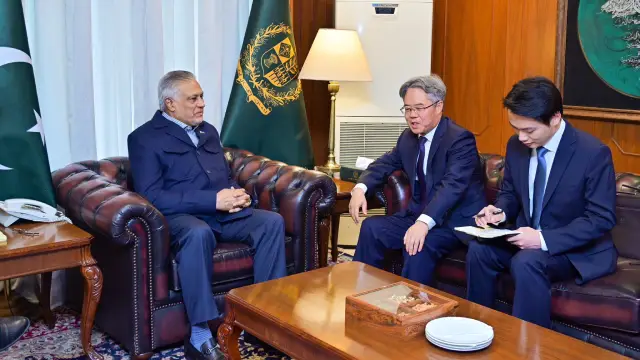
According to experts, China has leveraged its position as one of the biggest oil buyers from the region. It has cajoled the Gulf monarchies to limit their anger against Iranian strikes to condemnations. With the help of Russia, China also vetoed a United Nations Security Council (UNSC) resolution condemning Iranian strikes, moved by Bahrain.
While China and Russia, two crucial allies of Iran, vetoed the Bahrain resolution, they claimed that a Chinese-Pakistani proposal is in the making. During the discussion on the resolution at the UNSC, the envoys of China, Iran and Russia indicated towards a mediation and that involved Pakistan.
As China’s signature appears all over the ceasefire between the US and Iran, it appears that Pakistan was merely used as a shell entity in brokering this crucial deal.
US Iran ceasefire claims, unresolved realities
Iranian officials claim that the United States recognised early in the conflict that it could not achieve its objectives.
“Not only did none of the enemy’s main objectives materialise (sic),” the statement said, “but the enemy realised… that it would have no ability to win this war.”
At the same time, US officials maintain that their objectives were met. Mr Hegseth has made surprising claims during his press conference on Wednesday. He refused to accept that the US has ever suffered any losses in the war. Even Mr Trump continues to exhibit this contrast, drawing flak from the public and other states.
The result is a ceasefire built on fundamentally incompatible interpretations.
Fragile pause, not settlement
Despite the ceasefire, hostilities have not fully ceased across the region. The Israeli media and opposition have slammed Benjamin Netanyahu’s government for failing to achieve any targets. This has prompted Israel to intensify attacks on Lebanon.
Israeli operations in Lebanon have continued, raising questions about the durability of the agreement.
On Wednesday, the first day of the truce, Israel launched over 100 strikes targeting Lebanon, claiming it’s not a part of the ceasefire agreement between the US and Iran.
As a result of these attacks, killing scores of civilians, Iran has threatened retaliation and Hezbollah, the resistance organisation defending Lebanon, has launched a major retaliatory strike on Thursday, April 9th.
At the same time, while the US has been bragging about opening the Strait of Hormuz, Iran has claimed it can keep it closed until Israel follows the ceasefire agreement in Lebanon.
“The Iran–US Ceasefire terms are clear and explicit: the US must choose—ceasefire or continued war via Israel. It cannot have both. The world sees the massacres in Lebanon. The ball is in the US court, and the world is watching whether it will act on its commitments (sic),” Mr Araghchi posted on X, attaching a screenshot of a post by Mr Sharif.
The Iran–U.S. Ceasefire terms are clear and explicit: the U.S. must choose—ceasefire or continued war via Israel. It cannot have both.
— Seyed Abbas Araghchi (@araghchi) April 8, 2026
The world sees the massacres in Lebanon. The ball is in the U.S. court, and the world is watching whether it will act on its commitments. pic.twitter.com/2bzVlHFKgi
In that post, Mr Sharif had claimed that Iran and the US have agreed on a ceasefire, including in Lebanon.
Citing it, Iranian Foreign Ministry spokesperson Esmaeil Baqaei told the state media, “As explicitly stated in the Pakistani prime minister’s initial tweet, the US commitment includes a ceasefire on all fronts. The United States has pledged that both it and its allies will observe the ceasefire across all fronts, including in Lebanon.”
“The responsibility for any violation of the ceasefire by the Zionist regime will rest not only with that regime, but also with the United States,” Mr Baqaei added.
With Israel, blamed for violating the ceasefire, it remains to be seen how Washington can rein in Mr Netanyahu, whose political career depends on prolonging the conflict in West Asia.
The US–Iran ceasefire, therefore, represents not an end to conflict, but a narrowing of it.
Ceasefire shaped by contradiction
The ceasefire between the US and Iran has halted immediate escalation, but it has not resolved the underlying conflict.
Washington presents the pause as strategic control. Tehran presents it as enforced acceptance.
The reality is more complex. The ceasefire reflects a moment where both sides, despite claiming victory, have chosen to stop.
Whether that pause leads to negotiation—or renewed confrontation—will determine what this ceasefire ultimately represents: an end, or merely an interval.
East Post is an independent geopolitical analysis portal covering South Asia and global power dynamics for international audiences. Views expressed are analytical and do not constitute endorsement of any state or non-state actor.
Join our channels on Telegram and WhatsApp to receive geopolitical updates, videos and more.