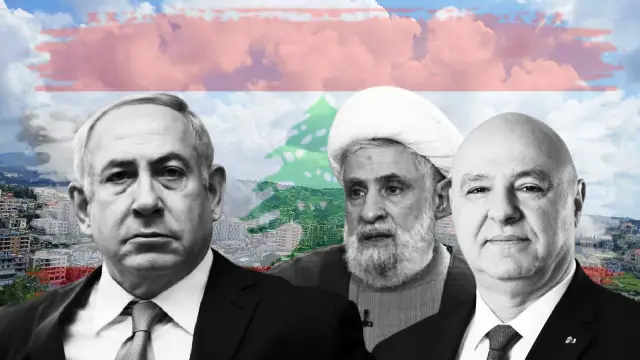
Since Wednesday, the unfolding ceasefire between the United States and Iran has revealed less about de-escalation and more about the limits of Western-led conflict management in West Asia. While President Donald Trump moved to contain direct confrontation with Tehran through a temporary truce, Israel has expanded the theatre by intensifying attacks on Lebanon—effectively testing whether the ceasefire applies beyond Iran itself.
What was projected as a controlled de-escalation between Washington and Tehran is instead unfolding as a wider regional contest—where Israel is not bound by the very ceasefire its patron negotiated.
This contradiction lies at the heart of the current West Asia crisis. Iran has declared strategic success after forcing the US into a negotiated pause. Yet Israel, acting with operational autonomy, has continued its military campaign with impunity, reinforcing Tehran’s long-held belief that any agreement with Washington remains vulnerable to disruption by Tel Aviv.
The result is a fragile arrangement under immediate strain—one that has drawn criticism not only from Iran and its allies, but also from Arab states and sections of the West that had initially backed the ceasefire process.
This tension became visible within hours of the truce taking effect.
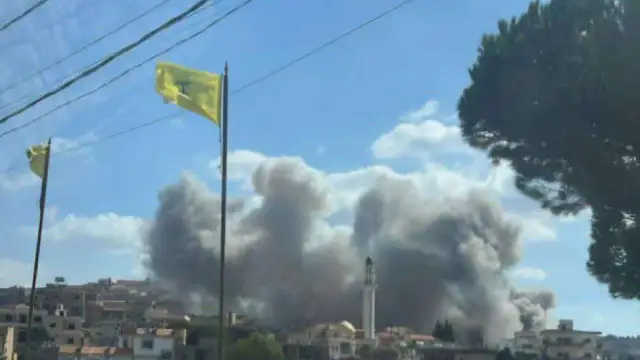
Israeli attacks on over 100 targets across Lebanon on Wednesday, April 8th, the first day of the truce, reportedly killed over 300 people, mostly civilians. These attacks have drawn flak from almost all corners of the world, sans the closest Israeli allies like Argentina, India and the US.
BREAKING:
— sarah (@sahouraxo) April 10, 2026
Israel is now carpet bombing civilian homes in Nabatieh in South Lebanon — an ancient city older than most nations. pic.twitter.com/vHsZ1TN0nj
Now, under pressure from the West, Prime Minister Benjamin Netanyahu has agreed to discuss a ceasefire with Lebanon. However, critics believe it will be done with an ulterior motive to disarm the Lebanese resistance organisation, Hezbollah.
Israel has repeatedly violated its November 2024 ceasefire agreement with Lebanon’s Hezbollah and attacked the country. These violations have prompted Hezbollah to resist, and the conflict has widened. Israel has used the Wednesday attacks on Lebanon as a bargaining chip to force Lebanese President Joseph Aoun and Prime Minister Nawaf Salam to push Hezbollah towards total disarmament.
As the US controls Lebanon’s deeply fractured and weakened military, disarmament of Hezbollah will lead to an unbridled Israeli occupation of the country, especially the southern parts, experts believe.
Tehran opposes the move as well. Hezbollah has been a key component of the Iran-led anti-Israel Axis of Resistance in the region. Hezbollah secretary-general Naim Qassem has condemned the recent Israeli strikes on Lebanese civilians, calling them a desperate attempt to cover up the Zionist regime’s “accumulated failure” on the battlefield.
Iran calls Lebanon strikes a direct ceasefire violation
Condemning the Israeli attacks, which violate the ceasefire terms, Iranian President Dr Massoud Pezeshkian said Iran will never abandon Lebanon. “Renewed aggression by the Zionist regime against Lebanon blatantly violates the initial ceasefire,” Dr Pezeshkian wrote in a post on his X (formerly Twitter) account on Thursday.
Renewed aggression by the Zionist regime against Lebanon blatantly violates the initial ceasefire. Such actions signal deception and non-compliance, rendering negotiations meaningless. Our hands remain on the trigger. Iran will never forsake its Lebanese brothers and sisters. https://t.co/T3Wy3qBqcE
— Masoud Pezeshkian (@drpezeshkian) April 9, 2026
Speaker of Iran’s Parliament Mohammad Bagher Ghalibaf has posted on X that the “time is running out” for the US and Israel as the ceasefire’s terms, which clearly include a ceasefire in Lebanon, have been violated.
Time is running out ⏳ https://t.co/sUmeoS9LGQ
— محمدباقر قالیباف | MB Ghalibaf (@mb_ghalibaf) April 9, 2026
In a surprising move, US and Israeli allies in the region, the Gulf monarchies, Türkiye and Pakistan, have also condemned Israel’s attacks on Lebanon and demanded adherence to the ceasefire terms that Iran highlighted as a key to have the choked Strait of Hormuz open.
Although Israel earlier tried to spread confusion, claiming that the ceasefire doesn’t include Lebanon and Hezbollah, it faced a backlash after Pakistan, the mediator of the deal, emphasised that Lebanon and Hezbollah have been integral parts of the ceasefire terms. Dr Pezeshkian and Mr Qalibaf have also underscored it.
Western unease grows as Israel escalates in Lebanon
British Prime Minister Keir Starmer said on Thursday that Israel’s continued attacks in Lebanon “shouldn’t be happening. That should stop.” Speaking in a television interview during his Bahrain visit, the British prime minister said that Lebanon and Hezbollah “should be included in the ceasefire, and that’s the important part.”
Yvette Cooper, the British foreign secretary, echoed Mr Starmer, saying that Lebanon and Hezbollah must be included in the ceasefire deal. Ms Cooper stressed that any failure to include Lebanon and Hezbollah in the ceasefire would “destabilise the whole region”.
Mr Starmer’s government isn’t the only one in Europe to condemn the attacks. French Foreign Minister Jean-Noël Barrot has done what most European leaders master. He has condemned both Hezbollah and Israel for the violence that Tel Aviv unleashed. “Iran must stop terrorising Israel through Hezbollah,” Mr Barrot said on Thursday. He condemned the Israeli attacks on Lebanon, a former French colony. Mr Barrot accused Israel of attacking Lebanon out of the frustration emerging from Mr Trump’s acceptance of Tehran’s ceasefire conditions.
However, Mr Barrot has not been the only European politician to try a superficially balanced approach.
Kaja Kallas, the European Union’s top diplomat, condemned the Israeli attacks on Lebanon as well. However, she blamed Hezbollah first before criticising Israel’s attacks. “Hezbollah dragged Lebanon into the war, but Israel’s right to defend itself does not justify inflicting such massive destruction,” Ms Kallas said.
She highlighted that Israeli attacks have put the ceasefire “under severe strain”. Ms Kallas, like the British and the French, demonstrated that she didn’t know that Lebanon had been a part of the ceasefire. Trying her balancing act, she said, “Israeli strikes killed hundreds last night, making it hard to argue that such heavy-handed actions fall within self-defence.”
German Chancellor Friedrich Merz, whose government is a key Israeli ally in Europe, urged Tel Aviv to end the attacks on Lebanon, warning that the aggression threatens broader peace efforts.
“The severity with which Israel is waging war there could cause the peace process as a whole to fail,” Mr Merz told the press in Berlin.
Meanwhile, Spain strongly denounced Israeli aggression in Lebanon and Tel Aviv’s attempt to jeopardise the ceasefire. Spanish Foreign Minister José Manuel Albares condemned the Israeli attacks on Lebanon, terming them “a shame to humanity’s conscience”.
Asserting support for Iran, Mr Albares said Spain would reopen its embassy in Iran, which has been closed for a month due to the US-Israeli attacks.
With European leaders slamming Israel, overtly and subtly, over its attacks on Lebanon, Mr Netanyahu had to retreat on Thursday. He issued an order to start a negotiation with Mr Aoun and Mr Salam’s government to disarm Hezbollah. This order comes after Israel faced the heat from European capitals.
However, at the same time, he has slammed Spain and other countries that have opposed Israel’s attacks on Lebanon.
Prime Minister Benjamin Netanyahu:
— Prime Minister of Israel (@IsraeliPM) April 10, 2026
“Israel will not remain silent in the face of those who attack us.
Spain has defamed our heroes, the soldiers of the IDF, the soldiers of the most moral army in the world.
1/4 pic.twitter.com/c95fTDNXkW
Through this move, experts say, Israel has tried to achieve two goals.
Israel’s strategic calculus behind the Lebanon escalation
Several reasons have driven Mr Netanyahu to launch attacks on Lebanon, violating the ceasefire deal between Iran and the US. Foremost among them is his desire to continue the conflicts to avoid a prison term. The opponents of Mr Netanyahu’s far-right Likud Party-led alliance claim that the prime minister has found an escape route in endless wars and the “Greater Israel Project” to evade being prosecuted for corruption.
Israeli minister Ben Smotrich has OFFICIALLY announced the start of the "Greater Israel" project.
— Ethan Levins 🇺🇸 (@EthanLevins2) April 9, 2026
He includes Syria, Lebanon, and Palestine. pic.twitter.com/Y00DUQV7QL
Mr Netanyahu knows that as long as his coalition government, filled with the far-right forces in Israel, continues conflicts in the region, he can evade prosecution. Once the conflicts stop, he may lose his political career.
Netanyahu's criminal trial resumes on Sun. A region-wide ceasefire, incl in Lebanon, would hasten his jailing.
— Seyed Abbas Araghchi (@araghchi) April 9, 2026
If the U S. wishes to crater its economy by letting Netanyahu kill diplomacy, that would ultimately be its choice. We think that would be dumb but are prepared for it.
Apart from avoiding imprisonment, the ceasefire deal between the US and Iran has been an embarrassment for Mr Netanyahu. His much-hyped war goals have not been achieved, the Islamic Republic didn’t collapse, and its military prowess couldn’t be decimated. Rather, throughout the 40 days of the war, Iranian retaliation exposed Israel’s air defence vulnerabilities. It has damaged Israel’s carefully crafted invincible image in the region and beyond.
Speaking on the ceasefire, Israeli opposition leader and former prime minister Yair Lapid has blamed Mr Netanyahu for the attacks on Iran and claimed none of the stated objectives has been achieved in this 40-day-long war. Even Israeli newspapers have acknowledged that the US has conceded defeat by accepting Iran’s terms for negotiation.
From being the one boasting about decimating Iran, Tel Aviv started playing the victim card as Tehran pounded it with missiles, cluster missiles and drones.
In the meantime, social media trends show that posts and videos depicting Israel’s damages didn’t draw public sympathy. Rather, such optics have been considered amusing by the majority of social media users across platforms, justifying their rage citing Israel’s two-year-long aggression on Gaza, which has killed 72,208 people, including 21,524 children, until April 7th. Due to this, Israel has been failing to garner any sympathy, while Iran has been able to win global support.
Finally, Mr Netanyahu is trying to use the opportunity to override the clauses related to Lebanon in the ceasefire terms and use the rift within Beirut’s polarised political camps to disarm Hezbollah. While Mr Aoun and Mr Salam are keen to push Hezbollah towards disarmament, citing Israel’s threats, in reality, it will lead to an easy annexation of the southern parts of the country by the Zionist forces. The US-controlled Lebanese Army remains highly incompetent in defending sovereignty, and it’s only Hezbollah which has been able to form a strong resistance front.
As Hezbollah’s meticulous military strategy has caused major setbacks to Israel in South Lebanon, including the loss of over 115 Merkava tanks and scores of soldiers, the Israel Defense Forces (IDF) chief had claimed that the armed forces are on the verge of collapse. Hezbollah’s attacks on the IDF during the latter’s occupation drive in South Lebanon from March have remained mostly successful.
Now, even when Israel negotiates with the government in Beirut, it will try to use the opportunity to isolate Hezbollah in Lebanese politics. It will also try to isolate Iran. However, as Hezbollah has managed to deeply entrench itself in the public to involve them in the resistance, the disarmament drive, at gunpoint, won’t fetch any result.
If the Aoun-Salam regime considers exterminating Hezbollah as its primary target and helps Israel, then the government would lose popular support. If it decides not to push Hezbollah, the Israelis will continue the attacks.
In this scenario, the Lebanese government is more likely to reiterate Israel’s demands for Hezbollah. The succumbing of Mr Aoun and Mr Salam to Israel will further fragment the Lebanese society.
Fragile ceasefire with structural fault lines
Pakistan has mediated the ceasefire between the US and Iran. The ten-point proposal put forward by Iran has been agreed upon for negotiation by Mr Trump, who has appointed his vice-president, JD Vance, as a chief negotiator. The Iranians know that the US doesn’t want a permanent solution but a temporary recess after suffering a major jolt. Tehran knows that the US, at the behest of Israel, will launch a new series of attacks once it gets a time period to recover its losses, recalibrate and improvise its systems in view of Iran’s attacks.
Thus, the Supreme National Security Council of Iran has mentioned that the Islamic Revolutionary Guards Corps has its fingers on the trigger during this two-week ceasefire period.
In this scenario, disrupting the ceasefire negotiations by attacking Lebanon makes the process far more fragile. If the negotiations break down and no agreement is reached, it will be beneficial for Mr Netanyahu.
However, Israel realises its attacks on Lebanon and Iran have isolated it. The West is no longer in a position to defend it unquestioningly. The world has suffered an inflation and supply-chain crisis caused by Iran’s closure of the Strait of Hormuz. Israel’s war against Iran has demanded a premium from all countries around the world. The global public opinion has gone against the apartheid regime as well.
What is now unfolding is not merely a breakdown risk, but a structural contradiction. The US seeks a pause to recalibrate; Iran treats the ceasefire as a strategic victory; Israel uses the same window to expand pressure through Lebanon. These objectives are not aligned—they are inherently in conflict.
That is why the future of this ceasefire will not be decided at the negotiating table alone. It will be shaped on the ground in Lebanon, in the skies over West Asia, and in the political calculations of a region that no longer accepts Western assurances at face value.
If the current trajectory holds, the ceasefire may survive on paper—but in practice, it risks becoming yet another temporary illusion in an increasingly multipolar conflict order.
East Post is an independent geopolitical analysis portal covering South Asia and global power dynamics for international audiences. Views expressed are analytical and do not constitute endorsement of any state or non-state actor.
Join our channels on Telegram and WhatsApp to receive geopolitical updates, videos and more.