Under the ceasefire’s cover, the West reloads its guns
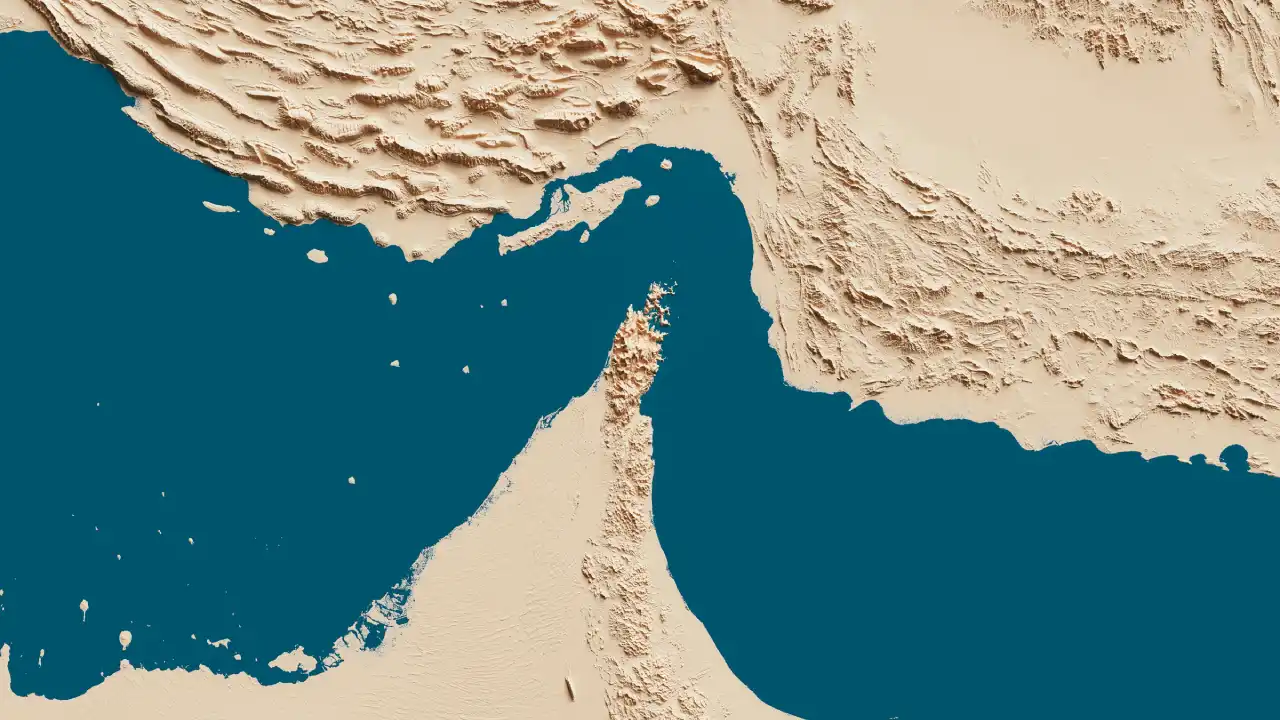
The two-week ceasefire agreed between the United States and Iran has been expected to create space for de-escalation in one of the world’s most critical energy corridors—the Strait of Hormuz. Instead, the early signs point in the opposite direction. Even as negotiations started in Islamabad—US Vice President JD Vance participates in the Pakistan-brokered talks—the West is shaping a parallel track of military contingency planning. And, with it, India again finds itself on the wrong side of the table in the West Asia conflict.
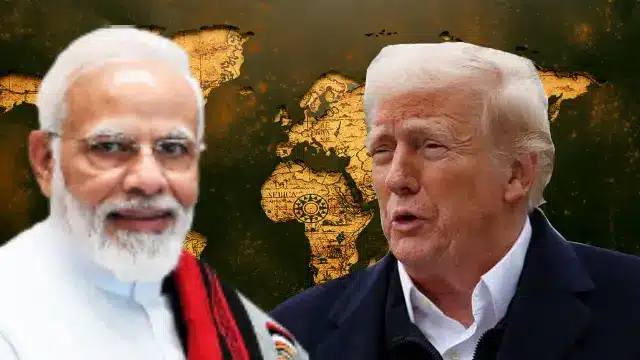
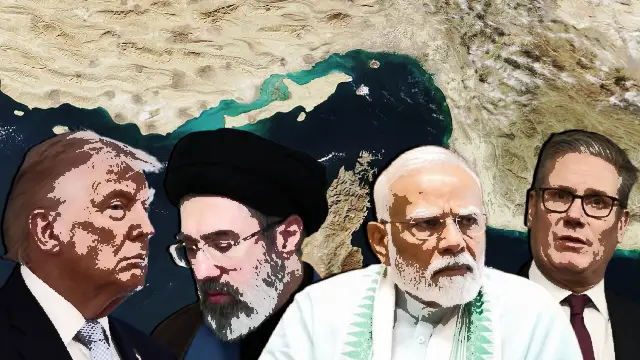
Following Israel’s sustained attacks on Lebanon and the broader regional escalation, a new initiative has emerged: the mobilisation of a 30-nation coalition aimed at ensuring passage through the Strait of Hormuz. British Prime Minister Keir Starmer disclosed the plan to the press on Saturday, April 10th, indicating that it could involve not only diplomatic coordination but also military measures. India’s potential participation in such a coalition has introduced a further layer of complexity.
Keir Starmer just confirmed he's coordinating with Trump to build a 30‑nation coalition to force open the Strait of Hormuz
— Ounka (@OunkaOnX) April 10, 2026
Starmer is leading Britain straight into another illegal war pic.twitter.com/gIgcexAMuL
Mr Starmer, speaking on his discussions with US President Donald Trump on Friday, April 9th, outlined the approach. “We have been pulling together a coalition of countries… working on a political, diplomatic plan, but also looking at military capabilities and…the logistics of actually moving vessels through the Strait,” he told reporters.
The implication is difficult to ignore. Preparations for its possible resumption now accompany a ceasefire designed to pause hostilities. What was expected to be a diplomatic cooling-off period is instead evolving into a phase of strategic alignment, where military options remain explicitly on the table. Analysts warn that such signalling, even if framed as precautionary, risks undermining the already fragile negotiations.
Strait of Hormuz: India in 30-nation coalition
India’s position sits uneasily within this evolving framework. New Delhi has historically maintained working relations with Tehran while simultaneously deepening ties with Washington and Tel Aviv. That balance has come under strain in recent months. After the US and Israel launched attacks on Iran, India not only remained quiet but also categorically condemned Iran’s retaliation, exhibiting a biased approach in the conflict.
Before the current ceasefire, a 40-day conflict disrupted maritime flows through the Strait of Hormuz, forcing India to re-engage with Iran to secure passage for its vessels. Despite India’s close ties with the US and Israel, Tehran allowed Indian ships to transit the strait—an accommodation that underscored the residual depth of bilateral ties.
Yet parallel diplomatic developments suggest a shift. India’s Foreign Secretary Vikram Misri participated in a 40-nation meeting in London on April 2nd to discuss the future of the Strait of Hormuz. During the meeting, Mr Misri emphasised the importance of uninterrupted cargo flows, while his remarks avoided direct criticism of US and Israeli military actions that had contributed to the crisis. The emphasis remained on maritime stability rather than attribution of responsibility.
This meeting now appears to have laid the groundwork for a more operational coalition. While over 40 countries and institutions—including the European Union (EU) and the International Maritime Organisation (IMO)—were present in London, Mr Starmer’s subsequent reference to a 30-nation coalition suggests a narrowing from broad diplomatic consensus to a more defined grouping potentially willing to consider coordinated action, including military options.
The timing is also important. When Mr Starmer declared the option of military strikes, Mr Misri began his European tour after visiting the US to work on Washington’s bilateral ties with New Delhi. The situation in the Strait of Hormuz remains at the top of Mr Misri’s agenda during his meetings with EU leaders.
India has not formally clarified its position on such measures. Nor has it explicitly ruled out participation in any coalition operating under British or broader Western coordination. The ambiguity reflects India’s inability to leverage its diplomatic ties with Iran and other key West Asian countries.
What does Strait of Hormuz coalition propose, what it omits
The agenda emerging from the London meeting provides further insight into the coalition’s direction. While official statements avoided explicit endorsement of military action, they outlined a series of coordinated steps aimed primarily at Iran.
According to British Foreign Secretary Yvette Cooper’s office, the first objective is to increase international pressure on Tehran, including through the United Nations, to ensure safe passage through the Strait of Hormuz. Notably, these discussions focused on Iran’s actions, with no reference to the conduct of the US or Israel in the preceding escalation.
Second, participants explored coordinated economic and political measures, including further sanctions on Iran. For countries like India, which have historically opposed unilateral sanctions regimes, the absence of visible resistance to such proposals suggests a degree of alignment—or at least acquiescence—within the broader coalition framework.
Third, the meeting proposed working with the IMO to secure the release of vessels currently held up in the Persian Gulf. While presented as a technical and multilateral solution, this approach risks positioning the IMO within a politically charged framework, potentially affecting its perceived neutrality.
In my Mansion House speech, I made clear: the Strait of Hormuz must be fully reopened, without restrictions or tolls.
— Yvette Cooper (@YvetteCooperMP) April 10, 2026
The blocking of this vital waterway is hitting trade around the world and prices here at home.
Freedom of navigation means navigation must be free. pic.twitter.com/7u71pwcM3S
Finally, the coalition discussed mechanisms to restore “market and operational confidence”—a formulation that reflects concern over energy flows and shipping insurance costs but remains strategically ambiguous in terms of implementation.
Taken together, these proposals indicate a coordinated effort to stabilise maritime transit. At the same time, the emphasis on Iran, rather than on the broader dynamics of escalation, reveals an asymmetry in how responsibility is being framed within the coalition.
Britain’s military signalling
Alongside diplomatic coordination, Britain has quietly expanded its military footprint in West Asia. However, Mr Starmer has publicly framed the conflict as “not our war”; deployments over March and April 2026 suggest a more active posture.
Reports indicate that additional Typhoon jets have been deployed to Qatar, while the Royal Navy’s nuclear-powered submarine HMS Annon has been positioned in the Arabian Sea. Wildcat helicopters have also been deployed to Cyprus. These moves enhance Britain’s regional presence and its capacity to support maritime operations, even if officially described as defensive.
The distinction between deterrence and preparation remains blurred. While London maintains that these deployments are precautionary, their scale and timing align with the broader coalition-building effort. Critics within the UK have described this as indirect alignment with US strategy, despite political attempts to maintain rhetorical distance from Washington’s actions.
Straight of Hormuz: India’s strategic bind
For India, the Strait of Hormuz is not an abstract geopolitical concern but a critical energy lifeline. A significant share of its oil imports passes through the corridor, making uninterrupted access a strategic necessity.
The recent disruption exposed the limits of India’s current positioning. Following the crisis, New Delhi engaged Tehran to secure passage for its vessels, reportedly on a case-by-case basis. External Affairs Minister S Jaishankar confirmed that there is no blanket agreement with Iran, with arrangements negotiated individually for each transit.
Between February 28th and April 8th, only eight Indian-flagged vessels passed through the Strait, highlighting the scale of the disruption. Following the ceasefire agreement, one Indian-flagged vessel passed through the Strait of Hormuz on Saturday, April 11th morning, to reach the Gulf of Oman by afternoon.
Reports that Iran imposed a $2m toll per ship have been denied by India, adding to the opacity surrounding the arrangements.
At the same time, India has continued to frame Iran’s actions as a potential violation of the United Nations Convention on the Law of the Sea (UNCLOS), even as it has avoided direct criticism of US and Israeli strikes. This dual approach reflects an attempt to balance legal positioning with geopolitical alignment.
Two strategic paths
India now faces a narrowing set of options.
The first is participation—explicit or implicit—in a Western-led coalition aimed at securing the Strait of Hormuz, potentially through military means. Such a move would risk escalating tensions with Iran, a country with which India has long maintained strategic ties. Any disruption in that relationship could have direct economic consequences, including higher energy costs and inflationary pressures.
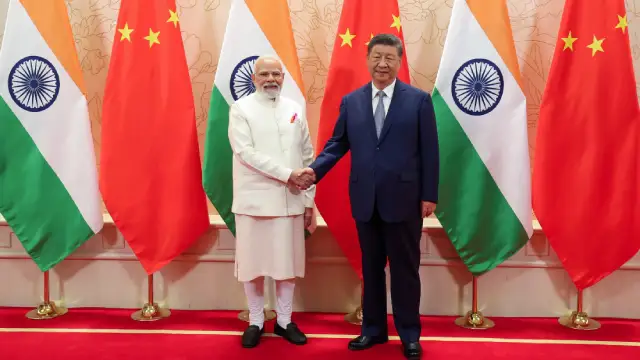
The second is recalibration towards Tehran. Iran has already demonstrated a willingness to accommodate Indian shipping despite geopolitical differences. Strengthening that relationship—potentially with support from Russia, a shared partner in both BRICS+ and the Shanghai Cooperation Organization—could provide a more stable long-term arrangement for energy access.
Yet this path carries its own constraints. India’s expanding ties with the US and its partners limit the extent to which it can diverge from Western positions. The result is a form of strategic hesitation: engagement without commitment, alignment without full endorsement.
While India claims its alignment with Israel and the US-led collective West stems from its strategic interests, the 40-day war has shown how unreliable the West and Israel are as partners. The US couldn’t save its own bases, let alone the resources of its Gulf allies, from Iranian wrath. Even Israel couldn’t survive Iranian missile strikes. Moreover, Mr Trump himself dumped his allies, including India, when he said they would “fend for themselves” in the context of the Strait of Hormuz being choked.
Corridor under pressure
The Strait of Hormuz has long been a site where global energy flows intersect with regional rivalries. The current moment adds a new layer: a ceasefire that coexists with military preparation, and a diplomatic process shadowed by coalition-building.
For India, the question is no longer simply whether it can balance competing relationships. The question is whether such a balance remains viable in an environment where maritime access is increasingly shaped not by bilateral accommodation but by competing security architectures.
The outcome will determine not only India’s position but the future of one of the world’s most strategically contested waterways.
East Post is an independent geopolitical analysis portal covering South Asia and global power dynamics for international audiences. Views expressed are analytical and do not constitute endorsement of any state or non-state actor.
Join our channels on Telegram and WhatsApp to receive geopolitical updates, videos and more.