Indian Prime Minister Narendra Modi‘s government has dispatched seven all-party delegation teams across the globe to defend Operation Sindoor, India’s “measured” and “non-escalatory” military strikes against Pakistan on May 7th, which resulted in a local skirmish between the nuclear power neighbours.
According to India, Operation Sindoor was a retaliation against terrorists to avenge the Pahalgam terror attack that killed 26 people on April 22nd.
Yet the all-party delegation on Operation Sindoor has failed to generate meaningful international support, exposing the hollowness of New Delhi’s diplomatic strategy and the absence of credible evidence linking Pakistan to the initial attack, which is strengthening Islamabad’s cause, much to India’s dismay.
The timing of this global charm offensive reveals the desperation underlying India’s position.
Modi’s problematic Operation Sindoor
Mr Modi remained conspicuously silent during the actual military operation between May 7th and 10th, only jumping into the fray to do damage control after his “friend”, US President Donald Trump, announced he had enforced a ceasefire between the nuclear-armed neighbours.
While India has been denying a US role behind the ceasefire, the lack of confidence exhibited by India’s External Affairs Minister S Jaishankar has raised questions over New Delhi’s narrative. The optics of the Indian prime minister prostrating before the US president during his February 12th-13th Washington tour reinforce the American narrative that India accepted Mr Trump’s diktat.
The ceasefire declaration had earlier stirred a large-scale discontent within Mr Modi’s fanbase, who wanted a prolonged war with Pakistan at a time when the pro-Hindutva Indian mainstream media even claimed India had “taken over Islamabad”.
Mr Modi broke his silence a few days later on national television and during a visit to an Indian Air Force station that Pakistan had claimed to have hit.
Although the prime minister’s rhetoric against terrorism and teaching Pakistan a lesson remains hollow, due to India’s inability and unwillingness to hit the hydra of regional terrorism—the Pakistani Army—he managed to cool down the anger of his supporters by feeding them with a narrative of a victory against Pakistan.
The Hindutva camp has since resorted to making memes to prove its point, while Mr Modi’s government has sent seven all-party delegation teams to several countries to prove its point.
Meanwhile, in the aftermath of Operation Sindoor, which purportedly aimed to avenge the killing of 26 men, Pakistani shelling took 16 Indian civilians’ lives, while there have been claims of military losses as well, which India does not accept.
It raises questions over who paid the price for the bloodshed of the innocents in Pahalgam?
All-party delegation on Operation Sindoor exposes diplomatic isolation
The composition of India’s diplomatic missions tells a revealing story about the government’s priorities.
On May 18th, amid a lot of allegations and counter-allegations as well as claims and counter-arguments between the Indian and Pakistani sides over the skirmish, New Delhi announced the formation of seven all-party delegation teams on Operation Sindoor to visit different countries and defend the government’s narrative.
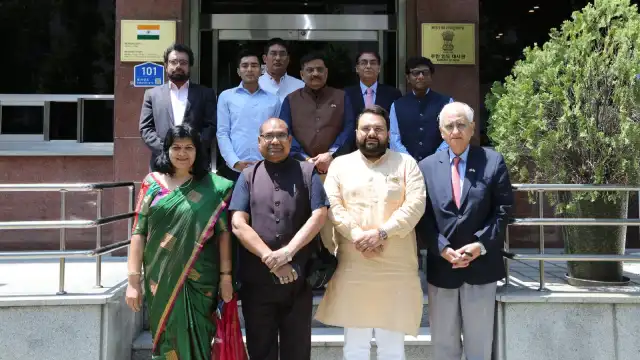
Seven teams of members of the Parliament (MPs) members from Mr Modi’s far-right Bharatiya Janata Party (BJP), Indian National Congress, Janata Dal United, Shiv Sena (Eknath Shinde) and Nationalist Congress Party (Sharad Chandra Pawar), along with the left, have fanned out across North America, South America, Africa, Europe, the Middle East and South-East Asia.
A delegation led by BJP MP @PandaJay, which is currently on a visit to Algeria, interacted with the Indian community in Algiers.
— DD India (@DDIndialive) June 1, 2025
The delegation observed a moment of silence to honour those who lost their lives in a Pakistan-sponsored terror attack in #Pahalgam. pic.twitter.com/VgTZMTVURH
Yet their reception in these countries has been notably lukewarm.
The all-party delegation on Operation Sindoor visits foreign offices, Indian diaspora communities and sympathetic political organisations to present New Delhi’s narrative.
The All-Party Parliamentary Delegation, led by MP Ms. @kanimozhidmk and comprising members @RajeevRai, @CaptBrijesh, @GUPTAPC50 and @DrAshokKMittal, arrived in Madrid today. Over the next two days, the delegation will meet with members of the Spanish government, the Indian… pic.twitter.com/FtVnjRMP4i
— India in Spain (@IndiainSpain) May 31, 2025
However, global media coverage remains minimal, with only Indian parliamentarians sharing details on their social media handles and the pro-Modi news agency, ANI, providing coverage for domestic consumption.
Internationally, the delegates have not made any remarkable achievements in establishing India’s views or garnering support.
A warm welcome to the All-party Indian Parliamentary Delegation led by Hon'ble Member of Parliament, Dr. Shashi Tharoor, on their arrival at the Cheddi Jagan International Airport in Guyana. The delegation is here to convey India’s unequivocal message of zero tolerance for… pic.twitter.com/Pr9vPH4loR
— India in Guyana (@IndiainGuyana) May 25, 2025
The indifference shown to the all-party delegation on Operation Sindoor reflects broader international priorities.
The world remains focused on larger conflicts in Ukraine and Gaza, treating India’s skirmish with Pakistan as a minor regional dispute unworthy of sustained attention.
The delegates find themselves speaking to largely empty rooms filled with Indians while Pakistan continues to deny involvement in the Pahalgam attack.
The selection of delegation members reveals tactical considerations that undermine substantive diplomacy. Asaduddin Owaisi, a firebrand leader from the All India Majlis-e-Ittehadul Muslimeen (AIMIM), joined the West Asia mission to provide Muslim representation in India’s anti-Pakistan narrative.
Mr Owaisi bashed Pakistan in Kuwait, before the Indian diaspora and ANI correspondent. The video of his speech went viral, especially across the Hindutva social media echo-chambers.
Asaduddin Owaisi slams Pakistan in Kuwait:
— Megh Updates 🚨™ (@MeghUpdates) May 26, 2025
"Pak Army gifted Shehbaz a photo of a 2019 Chinese drill, claiming 'victory over India' — Jokers! 'Nakal karne ke liye akal chahiye… aur inke paas akal bhi nahi hai!' Don't take their claims even with a pinch of salt!" pic.twitter.com/umLN5PzkTx
Pro-BJP forces celebrated Mr Owaisi’s condemnation of Pakistan as evidence that Indian Muslims reject their co-religionists across the border.
"There is a limit to the patience of Indians.
— News Arena India (@NewsArenaIndia) May 24, 2025
We would request Bahrain Govt to help us in putting Pakistan back into the FATF grey list as that money is going into terrorism."
– AIMIM MP Asaduddin Owaisi pic.twitter.com/u87dOl5iCe
Yet this theatre served domestic consumption rather than international persuasion.
Arab media largely ignored Mr Owaisi’s statements, defeating the purpose of establishing Indian narratives in West Asia.
Instead, the episode reinforced harmful stereotypes about Indian Muslim loyalty, which the BJP and the Hindutva camp allege lies with Pakistan, while providing no diplomatic advantage.
All-party delegation on Operation Sindoor hampered by investigation failures
The fundamental weakness undermining the all-party delegation on Operation Sindoor lies in the absence of conclusive evidence linking Pakistan to the Pahalgam attack.
Union Home Minister Amit Shah, whose ministry oversees security in the disputed territory of Jammu and Kashmir, has avoided accountability for the intelligence failure that enabled the attack.
National Security Advisor Ajit Doval, an octogenarian enjoying the perks of the post with insignificant output, similarly escaped responsibility despite his role overseeing counterterrorism and national security operations.
While no heads rolled over the Pahalgam attack, the investigation into the incident is also under the scanner as there are allegations that the Modi government would try to ensure Mr Shah’s and Mr Doval’s failures are concealed.
So far, India has failed to present foolproof evidence regarding Pakistani involvement in the April 22nd incident to the international community.
This evidentiary vacuum provides Pakistan with plausible deniability on international platforms while leaving India reliant on rhetoric rather than facts.
The all-party delegation on Operation Sindoor consequently lacks persuasive material to present to foreign governments, limiting their effectiveness to symbolic gestures rather than substantive diplomacy.
Hence, except for some photo ops and press conferences, which are only hyped by the Indian mainstream media that works as the government’s public relations agency, the all-party delegation on Operation Sindoor has failed to build any international consensus in favour of India and against Pakistan.
The government’s failure to conduct a proper investigation reflects broader patterns of prioritising political optics over security competence.
Mr Modi walked his familiar path of military theatre designed to titillate jingoistic voters rather than addressing underlying security vulnerabilities.
This approach satisfies domestic political needs while undermining international credibility.
He has conveniently followed the template used during the 2019 Balakot strikes, which followed the attack on paramilitary troops in Jammu & Kashmir’s Pulwama on February 14th 2019, that killed 40 soldiers.
Mr Modi knows that his voters will be happy with the optics of Pakistan suffering without considering how much the military operations have been effective in eradicating the root causes of terrorism in the region.
While it’s imperative to destroy the terrorism industry built by the Pakistani Army with the support of Türkiye for India’s national security, Mr Modi wants to confine the military actions within the ambit of cosmetic measures.
The existence of Islamic terrorism in the region for a long time will eventually help Mr Modi’s Hindutva camp in reaping political benefits during elections.
The delegates visiting South-East Asia, particularly Muslim-majority Indonesia, have attempted to highlight how Operation Sindoor destroyed terrorist infrastructure in Pakistan.
They have repeatedly reiterated the claims made by the Indian Ministry of External Affairs.
However, these claims lack supporting evidence, rendering them ineffective with sophisticated foreign audiences who demand verifiable information rather than assertions.
More significantly, the all-party delegation on Operation Sindoor has avoided countries genuinely capable of influencing Pakistan’s behaviour.
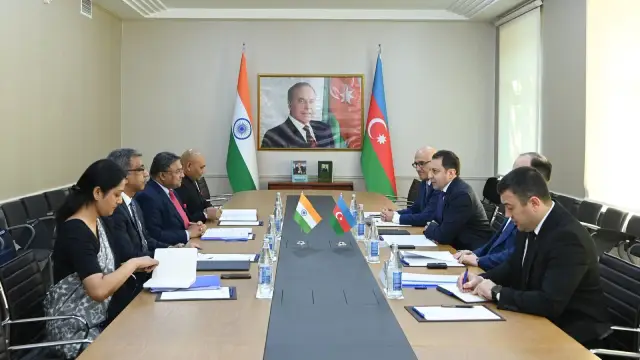
No teams visited Azerbaijan, China or Türkiye—nations that maintain significant leverage over Islamabad.
This selective approach reflects India’s inability to present compelling evidence that might weaken Pakistan’s relationships with key allies.
All-party delegation on Operation Sindoor undermined by Gaza complicity
India’s unwavering support for Israeli actions in Gaza has severely compromised the all-party delegation on Operation Sindoor’s effectiveness, particularly in West Asia, Africa and South-East Asia.
New Delhi not only endorses Israeli military operations but actively supplies weapons to Tel Aviv’s war machine, placing India among Israel’s most committed supporters at a time of unprecedented global condemnation.
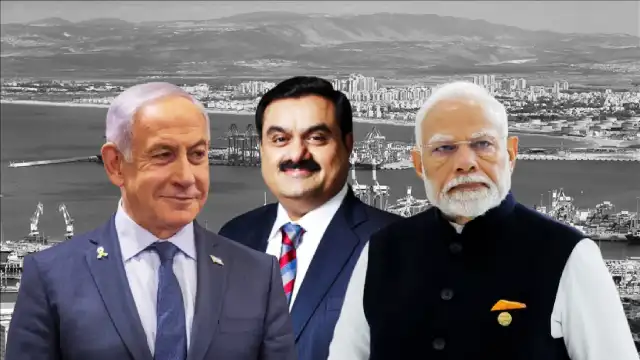
Mr Modi is accused of being a patron for India’s tycoon Gautam Adani, who owns the port-to-power conglomerate Adani Enterprises. Mr Modi’s BJP has jumped into the fray every time Mr Adani has been accused of malpractices, especially after the release of the erstwhile short-seller Hindenburg Research’s report.
A joint venture company between Adani Defence and Aerospace and Israel’s Elbit Systems exported munitions in the form of Indian-made Hermes 900 UAVs/drones to Israel.
They have reportedly been used in Israeli aggression against Gaza.
Moreover, an Israeli tech company has ordered multiple rocket launcher systems developed by India’s Maharashtra-based NIBE Ltd, which is close to Mr Modi’s BJP.
Despite being a BRICS and Shanghai Cooperation Organization (SCO) member, India has refrained from condemning the Israeli aggression in Gaza.
In the name of balancing its stance, Mr Modi’s government has refrained from calling Israel’s actions an act of genocide, unlike fellow BRICS countries, and it has also offered ideological support to Israel by condoning the claim that Tel Aviv is fighting “terrorism” in Gaza by killing civilians.
This positioning proves disastrous for Indian diplomatic efforts.
Even Western nations have adopted increasingly critical stances toward Israeli actions, with Spain blocking weapons sales and other European countries imposing restrictions.
India’s continued arms sales to Israel mark it as complicit in what much of the world views as genocidal policies against Palestinians.
The timing could hardly be worse for the all-party delegation on Operation Sindoor.
As delegates attempt to build sympathy for Indian victims of terrorism, their government simultaneously enables terrorism against Palestinian civilians.
This contradiction renders Indian appeals for international support deeply hypocritical in the eyes of many potential partners.
Pakistan’s vocal support for Palestinian rights provides Islamabad with moral authority that India lacks.
Recent statements by Iran’s Supreme Leader, Sayyed Ali Khamenei, praising Pakistan’s solidarity with Gaza demonstrate how the conflict reshapes regional alignments.
Pakistan’s stance on the Palestinian issue has been very commendable. While there have always been inducements for Islamic countries to establish ties with the Zionist regime, Pakistan has never been influenced by those inducements.
— Khamenei.ir (@khamenei_ir) May 26, 2025
Despite Pakistan’s poor treatment of Shia Muslims domestically, Tehran values Islamabad’s support for Palestinian resistance over sectarian considerations.
Pakistan's Prime Minister, Shehbaz Sharif, and his accompanying delegation, met with Imam Khamenei on Monday, May 26, 2025. pic.twitter.com/SultfG7TL3
— Khamenei.ir (@khamenei_ir) May 26, 2025
Moreover, despite India’s warm relations with Iran, the powerful clergy in the Islamic Republic views it with suspicion for its role in the Gaza genocide.
The all-party delegation on Operation Sindoor finds itself defending a country increasingly viewed as complicit in war crimes. This association severely limits India’s ability to generate sympathy for its own security concerns while Pakistan positions itself as a champion of oppressed Muslims worldwide.
African and Asian nations with significant Muslim populations, especially countries like South Africa that have vocally opposed Israel’s actions, view India’s Gaza policy with particular suspicion.
India’s own record of institutional bigotry and hate crimes against Muslims has made it problematic for any Muslim-majority country in the Global South, including the powerful Arab countries, to support its stance against Pakistan.
In most countries, the all-party delegates discover from the indifference of the public and officials that their hosts prioritise Palestinian suffering over Indian grievances against Pakistan, leaving the diplomatic missions struggling for relevance.
Futile exercise reveals strategic bankruptcy
The all-party delegation on Operation Sindoor operates within an echo chamber that reflects India’s broader strategic limitations.
By avoiding countries with genuine influence over Pakistan while lacking credible evidence of Pakistani involvement in the Pahalgam attack, the diplomatic exercise achieves little beyond domestic political theatre.
Mr Modi’s real calculations become apparent when examining the political benefits of this approach.
With opposition leaders deployed abroad defending government policy, domestic criticism diminishes while the prime minister focuses on upcoming state elections.
On the one hand, Mr Modi takes the credit for the Operation Sindoor, of using war as a political tool, which is diametrically opposite to his discussions with Vladimir Putin where he said this isn’t the era of wars, before the crucial elections in Bihar and other states; on the other, he ensures the Opposition can’t criticise him over the operation by making them a part of his larger campaign.
Thus, the all-party delegation on Operation Sindoor serves as a political weapon for Mr Modi rather than genuine diplomacy.
For the Opposition, to oppose Mr Modi’s Operation Sindoor means losing votes, like in 2019 when they questioned the credibility of the Balakot strikes.
The Indian Opposition realises that the jingoistic waves have even turned a large section of their voters into hyper-nationalists, gullible to Mr Modi’s propaganda.
Fearing the massive polarisation, they, including the left parties, have also claimed credit for the Operation Sindoor.
The human cost of this cynical approach continues to mount.
While the delegates and Mr Modi discuss the Pahalgam victims, they don’t discuss the 16 innocents killed in Pakistani shelling following Operation Sindoor.
The blood bath shows that the military action achieved neither deterrence nor resolution.
The government’s alleged loss of a Rafale fighter jet—procured through controversial deals that implicated Mr Modi in corruption allegations—gets partially acknowledged by the Air Force chief during the Shangri-La Security Dialogue, while the all-party delegates promote fictional military successes.
International audiences recognise the gap between Indian claims and observable reality.
The exercise ultimately wastes taxpayer resources while achieving no meaningful diplomatic objectives.
Countries maintain existing relationships with both India and Pakistan based on their interests rather than Indian grievances.
The all-party delegation on Operation Sindoor discovers that moral authority cannot be purchased through diplomatic missions when underlying policies contradict professed values.
As the delegates continue their futile rounds, Pakistan maintains its international relationships while India’s Gaza complicity increasingly isolates New Delhi from the Global South.
The all-party delegation on Operation Sindoor represents the bankruptcy of a foreign policy that prioritises domestic politics over strategic effectiveness, leaving India weaker rather than stronger in the aftermath of military action that solved nothing while creating new vulnerabilities.
East Post is an independent geopolitical analysis portal covering South Asia and global power dynamics for international audiences. Views expressed are analytical and do not constitute endorsement of any state or non-state actor.
Join our channels on Telegram and WhatsApp to receive geopolitical updates, videos and more.