Throughout the world, Chinese development assistance to undeveloped or developing economies of the global south is often shaped by western critiques, which accuse it of being a “debt trap”. To counter the western narrative and to bring forth the views of the global south, the recent Global South Voices episode on Chinese state-owned CGTN sought to dispel the myth of China‘s so-called “debt-trap diplomacy”.
The show’s host, Mushahid Hussain Sayed, set the tone by sharply contrasting the West’s development aid, provided through institutions like the World Bank, the International Monetary Fund, etc, with the Chinese model of assistance.
“When we talk of Chinese development assistance, there is a sharp contrast compared to western assistance which comes with a lot of strings attached. Chinese development assistance shows that it is neither transactional nor tactical nor temporary. It comes with no strings attached, no conditions and no preconceived notions. Let the people decide,” Mr Sayed remarked.
His statement underscored the importance of allowing developing nations of the global south autonomy over their progress, free from external interference, especially of the West.
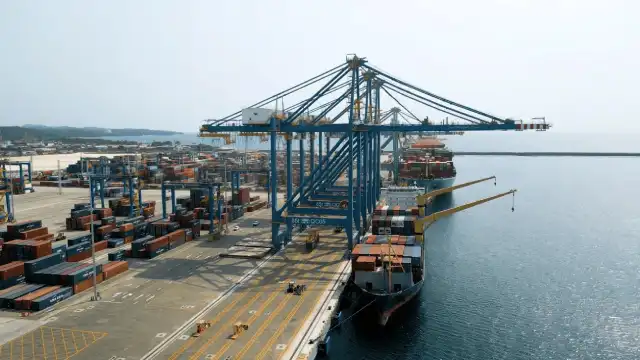
Zambian MP Harry Kamboni supported the overall sentiment expressed in the show. He illustrated the tangible impact Chinese partnerships have had on his country. Like many African nations, Zambia has reportedly benefitted from Chinese infrastructure investments and development that prioritise local capabilities.
“China’s approach, characterised by respect and non-interference, contrasts positively with the often conditional aid provided by Western nations,” Mr Kamboni emphasised. This respect for sovereignty and self-determination shown by Beijing makes China’s role pivotal in Africa’s future growth, Mr Kamboni stressed.
The discussion then shifted to global issues with Carlos Ferreyra, an Argentine expert in global governance and climate change activism. Mr Ferreyra hailed China’s leadership in combating climate change, highlighting its investments in renewable energy and green technology.
“China’s efforts are essential not only for combating climate change but also for setting a global standard in environmentally responsible development practices.” For Ferreyra, China’s proactive approach presents a model that other nations should follow, particularly in an era of mounting environmental challenges.
John Pang, a senior fellow at the Belt and Road Initiative Caucus for Asia Pacific, broadened the scope by focusing on the strategic significance of China’s Belt and Road Initiative (BRI).
Pang noted how the BRI has bridged critical infrastructure gaps in developing nations, enabling them to fully participate in the global economy.
“The BRI reflects China’s vision of a multipolar world where development is shared and benefits are mutual,” he observed, contrasting it with western-centric economic models that often leave developing nations sidelined.
Keith Bennett, the co-founder of Friends of Socialist China, added a historical dimension to the conversation.
Mr Bennett argued that China’s development path is grounded in socialist principles that prioritise people’s welfare and collective progress.
“China’s model, which has lifted millions out of poverty and contributed to global development, presents a viable alternative to neoliberal policies that have exacerbated inequality in many parts of the world,” Mr Bennett said. Mr Bennett’s reflection emphasised that China’s rise offers a counterpoint to the dominance of neoliberalism, positioning it as a new alternative for developing nations.
Mr Sayed circled back to the broader critique of China’s development model.
He urged listeners to look beyond the surface-level accusations, particularly the narrative of debt dependency.
“While criticisms often focus on debt dependency or environmental concerns, these issues must be weighed against the tangible benefits China provides, such as infrastructure development, job creation and technological transfer,” he argued.
Mr Sayed called for a more nuanced discussion, encouraging consideration of both the challenges and achievements China brings to global development.
In a world where development narratives are frequently influenced by geopolitical interests, the episode provided an essential counterbalance, asking the audience to reevaluate the western narrative on China and consider the voices of those who have directly benefited from Chinese development assistance.
East Post is an independent geopolitical analysis portal covering South Asia and global power dynamics for international audiences. Views expressed are analytical and do not constitute endorsement of any state or non-state actor.
Join our channels on Telegram and WhatsApp to receive geopolitical updates, videos and more.