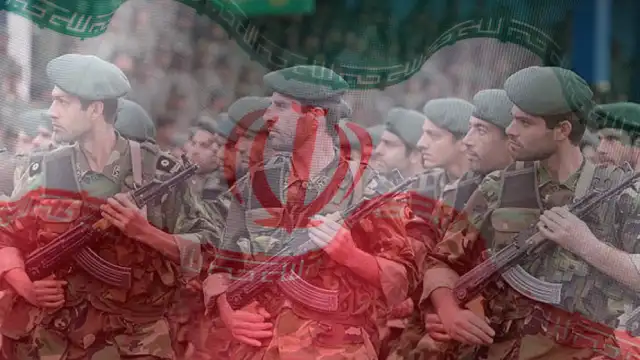
Iran’s security apparatus continues targeting Israeli intelligence networks even as Tehran maintains its fragile ceasefire with Tel Aviv. The Islamic Revolutionary Guard Corps (IRGC) has intensified operations against suspected Mossad operatives, revealing the depth of intelligence penetration that threatens Iranian national security.
Recent arrests of over 50 Mossad agents and the killing of two demonstrate how Mossad infiltration attempts persist while the IRGC struggles to secure the country’s borders and manage internal discontent, exposing vulnerabilities that Israel has exploited for strategic advantage.
The latest security sweeps in Sistan and Baluchestan province, announced by Iran on Tuesday, July 1st, underscore the IRGC’s desperation to eliminate the threat posed by Mossad to Iran’s internal security and stability.
These operations highlight the ongoing shadow war between the powerful IRGC and Mossad, seeking to destabilise the Islamic Republic.
Mass arrests reveal infiltration
The IRGC’s Public Relations Department announced on Tuesday the arrest of over 50 suspected Israeli intelligence operatives and the elimination of two others during recent operations in southern Sistan and Baluchestan province.
Security officials described these arrests as the largest crackdown on foreign intelligence networks since the June 13th Israeli attacks that devastated Iranian military leadership.
According to the IRGC’s statement, “unique and effective public cooperation and timely information to the 110, 113, 114 systems” enabled this comprehensive security operation.
The IRGC’s Quds Force headquarters coordinated with provincial intelligence organisations to target what officials termed “proxy terrorist elements” operating within Iranian territory.
The IRGC’s Public Relations Department confirmed that security forces from multiple agencies—General Intelligence Directorate of Sistan and Baluchestan, the IRGC’s provincial intelligence organisation, and the Faraj intelligence organisation— collaborated in “inflicting fatal blows” on suspected Mossad operatives during the ongoing “Martyrs of Security” operational exercise.
Arrested individuals reportedly planned to “spread insecurity in the south of the province and carry out harassing and destructive operations on infrastructure, economic” and other strategic targets.
Security forces discovered significant quantities of weapons and ammunition, including American-manufactured equipment, during these operations, the IRGC claimed.
Local communities rally in Iran against Mossad
Iranian officials emphasised the crucial role of local populations in identifying and reporting suspicious activities, which led to the crackdown in Sistan and Baluchestan.
Provincial authorities credited “zealous youth, scholars, influential people, and some tribal and clan leaders in the southern part of the province” with providing essential intelligence that enabled successful operations against foreign networks.
The recent 12-day conflict between Iran and Israel has turned the local communities, especially those in Iran’s provinces, vigilant about security breaches and intelligence operatives.
The IRGC requested continued civilian cooperation through established reporting channels, emphasising telephone numbers 110, 113, and 114 for “suspicious, sensitive and security matters.”
This public appeal indicates Iranian authorities believe additional operatives remain active within their territory.
It indicates that the IRGC’s actions against Mossad operatives or those linked to Israel in any other way will continue in the days to come.
Systemic vulnerabilities expose Iranian security weaknesses
These arrests illuminate fundamental security vulnerabilities that Mossad have exploited with devastating effectiveness.
The Mossad’s successful penetration of Iranian territory enabled the June 13th strikes that eliminated senior military commanders and the IRGC’s commander-in-chief, demonstrating sophisticated intelligence capabilities.
Intelligence experts identify a dual approach employed by Israeli operatives within Iran.
First, the recruitment of foreign workers from countries maintaining diplomatic relations with Israel provides operational cover for intelligence activities.
Second, the exploitation of domestic opposition elements, particularly supporters of the former monarchy and relatives of post-1979 revolution exiles, creates internal networks sympathetic to foreign objectives.
Previous intelligence failures enabled major security breaches, including the August 2024 assassination of a senior Hamas leader attending President Dr Massoud Pezeshkian’s inauguration ceremony in Tehran.
This operation revealed how foreign intelligence agencies had penetrated the Iranian state security apparatus, compromising protection protocols for high-value targets.
The September 2024 elimination of Hezbollah leadership, including secretary-general Hassan Nasrallah, further demonstrated Mossad’s intelligence capabilities within Iranian allied networks.
These successful operations highlighted systematic intelligence failures that have cost Iran crucial regional partners and strategic assets.
Strategic intelligence planning reveals long-term infiltration
Israeli intelligence services reportedly began planning the June 2025 attacks during September-October 2024, indicating sophisticated long-term operational capabilities within Iranian territory.
This extended planning period suggests Mossad operatives maintained sustained access to sensitive information and strategic targets.
The timeline reveals how intelligence networks require months of preparation and coordination to execute major operations.
Mossad apparently established reliable communication channels, logistical support systems, and operational security protocols that evaded Iranian counter-intelligence efforts for extended periods.
Iranian authorities acknowledge that Israel initiated preparatory activities for the June strikes immediately following the October 2024 regional escalation.
This rapid transition from defensive to offensive planning demonstrates the adaptability and forward-thinking approach of Israeli intelligence operations, which Iran lacks.
Mossad harps on discontent against IRGC, theocracy
Security analysts highlight how domestic political tensions create opportunities for Israel’s intelligence recruitment.
Middle-class urban Iranians expressing dissatisfaction with theocratic governance and the IRGC that protects it represent potential recruitment targets for Mossad seeking local cooperation.
Economic pressures, especially high unemployment prevalent in Iran, social restrictions, and political limitations generate grievances that Mossad exploits through financial incentives, ideological appeals, or promises of emigration assistance.
These vulnerabilities require Iranian authorities to address underlying socio-economic challenges while maintaining security vigilance.
The IRGC faces the complex challenge of distinguishing between legitimate political dissent and foreign-sponsored subversion.
This distinction becomes particularly difficult when economic hardships drive citizens toward activities that may inadvertently support foreign intelligence objectives.
Counter-intelligence efforts face structural challenges
Iran’s efforts to strengthen national security and address intelligence failures confront significant structural obstacles.
The vast network apparently established by Mossad exploits multiple social, economic, and political vulnerabilities that cannot be quickly eliminated through security operations alone.
The IRGC’s counter-intelligence capabilities, while extensive, struggle to identify and neutralise networks that have developed over years or decades.
Mossad operatives benefit from established communication systems, financial resources, and operational experience that provide significant advantages over reactive security measures.
Iranian security forces must balance aggressive counter-intelligence operations with maintaining public support and avoiding alienating communities whose cooperation proves essential for identifying foreign threats.
This delicate balance complicates efforts to eliminate intelligence networks while preserving social cohesion.
However, in most of the cases, the theocratic regime’s obstinate approach pushes a section of the population towards the nation’s enemies.
The ongoing arrests in Sistan and Baluchestan province represent only the beginning of what likely constitutes a comprehensive campaign to eliminate foreign intelligence presence within Iranian territory.
The Mossad’s demonstrated capabilities and the IRGC’s determination to secure the country suggest this intelligence conflict will continue regardless of broader diplomatic developments.
As Iran attempts to rebuild its security architecture following devastating intelligence failures, the effectiveness of these counter-operations will determine whether the Islamic Republic can protect its leadership, infrastructure, and strategic interests from foreign infiltration.
The scale of recent arrests indicates both the scope of the challenge and Iran’s commitment to addressing vulnerabilities that have compromised national security and regional influence.
The shadow war between Iranian security forces and foreign intelligence agencies, including the CIA and Mossad, represents a crucial dimension of regional competition that extends far beyond conventional military confrontations.
Success or failure in this domain will significantly influence Iran’s ability to maintain sovereignty and project power across West Asia, making these ongoing operations essential for the country’s long-term strategic position.
East Post is an independent geopolitical analysis portal covering South Asia and global power dynamics for international audiences. Views expressed are analytical and do not constitute endorsement of any state or non-state actor.
Join our channels on Telegram and WhatsApp to receive geopolitical updates, videos and more.