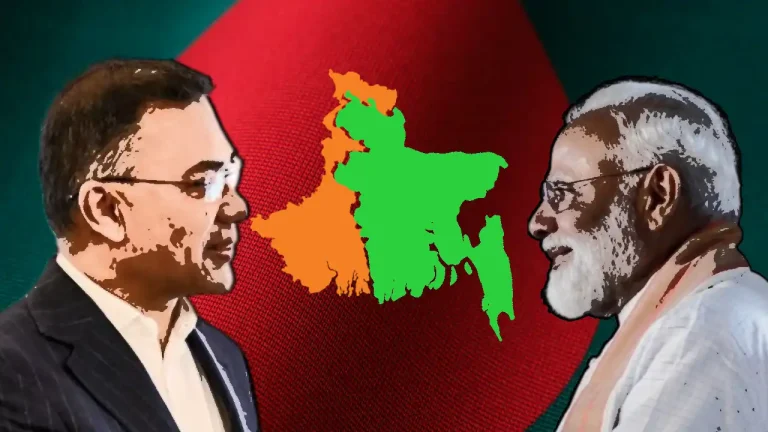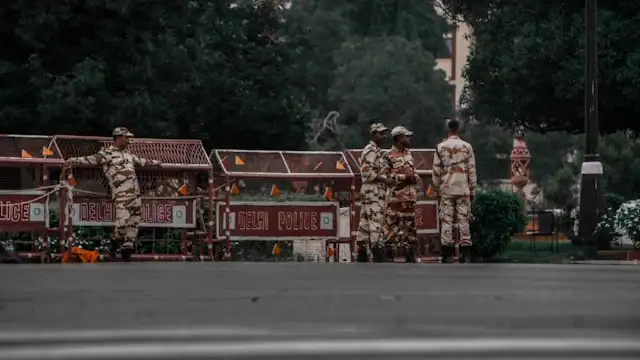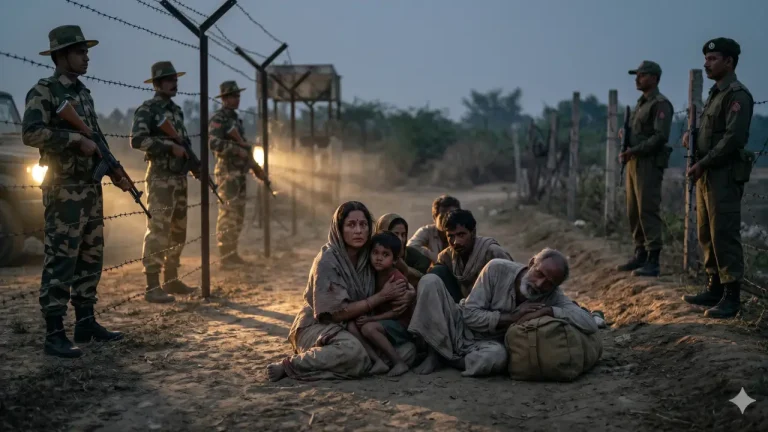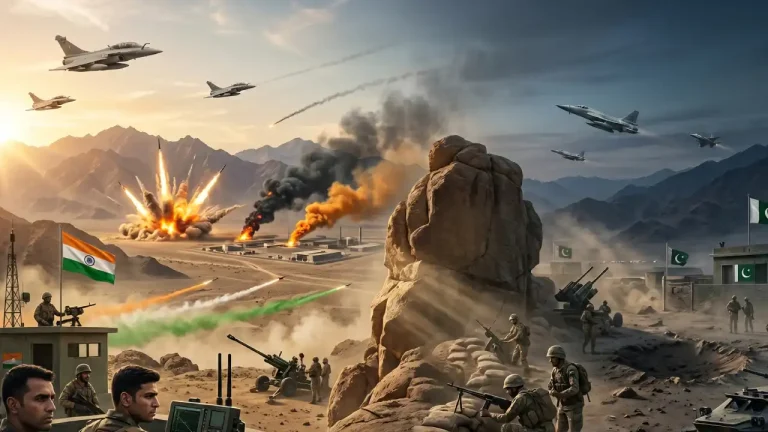
On the night of May 6th–7th 2025, India launched its most ambitious cross-border military operation—Operation Sindoor—since 1971, striking nine sites across Pakistan and Pakistan-administered Kashmir. The targets included facilities linked to Islamist terror groups Jaish-e-Mohammed in Bahawalpur and Lashkar-e-Taiba in Muridke. New Delhi declared the mission a success. One year on, Prime Minister Narendra Modi’s far-right government has marked the anniversary with commemorative videos, ministerial tributes and a carefully managed narrative of resolve.
However, the record — drawn from statements by India’s own military leadership, diplomatic outcomes over the past 12 months and shifts in regional alignments — suggests a more complex picture.
It shows tactical effectiveness paired with strategic drift, and a regional power increasingly constrained in how it converts force into influence.
Mr Modi’s government had expected Operation Sindoor to isolate Pakistan internationally, redraw the rules of engagement in South Asia and reinforce its position as the region’s central security actor. In a nutshell, it wanted to ape Israel in South Asia. Instead, Pakistan has emerged from the crisis with expanded diplomatic space — hosting sensitive negotiations, deepening military ties in West Asia and repositioning itself as a relevant intermediary — while India continues to contest the narrative of a ceasefire it does not fully acknowledge and confronts a security environment that looks largely unchanged.
What Operation Sindoor actually achieved
The Indian Air Force (IAF) marked the anniversary of Operation Sindoor at precisely 1.05am on May 7th 2026 — mirroring the timing of the original strikes. The precision extended to the storytelling. So did the omissions.
India’s opening phase was, by most technical accounts, effective. IAF’s Rafale aircraft equipped with SCALP cruise missiles and HAMMER precision-guided munitions struck targets deep inside Pakistan. Analysts noted that Indian systems were able to disrupt Pakistani air defences early in the operation, enabling a series of calibrated strikes on infrastructure linked to the terror groups.
But the record of the engagement did not remain confined to official briefings. On May 30th 2025, India’s Chief of Defence Staff General Anil Chauhan acknowledged that the country suffered “initial losses” during the early phase while addressing an event in Singapore. General Chauhan attributed the losses to tactical miscalculations that were later corrected.
Later, an Indian defence attaché in the embassy in Indonesia confirmed on June 10th 2025, that aircraft losses occurred under constraints shaped by political direction. These admissions, delivered outside India’s highly censored domestic media cycle, sit uneasily alongside the official narrative of unqualified success. These admissions confirm the claims by Pakistan that it had successfully shot down the IAF’s controversial Rafale jets.
There were also external dimensions that did not feature prominently in India’s public messaging. Senior military officials later pointed to Chinese support to Pakistan during the confrontation, including intelligence inputs and technical assistance. This suggests that the operational environment was more complex than a bilateral exchange.
The question of how the operation ended remains equally contested. The ceasefire announcement came first from Washington, with US Secretary of State Marco Rubio attributing it to presidential intervention. At the same time, Indian Foreign Secretary Vikram Misri, who, rather than a military official, declared the ceasefire on May 10th 2025, had faced public wrath in India.
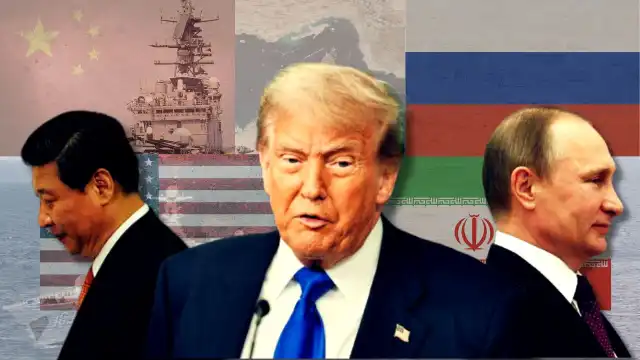
Coming under pressure, Mr Modi’s government has maintained that the cessation of hostilities was bilateral, while Pakistani and American accounts differ. US President Donald Trump claimed credit for forcing the ceasefire. He claimed he had persuaded Mr Modi and his Pakistani counterpart, Shehbaz Sharif, to agree to the ceasefire.
These revelations, which accompanied Mr Trump’s bid for the Nobel Peace Prize, provided ammunition for India’s Opposition. While the Leader of the Opposition, Rahul Gandhi, demanded that Mr Modi name Mr Trump in the Parliament and slam him for lying, the Prime Minister evaded it.
Meanwhile, Mr Sharif had acknowledged in the presence of Mr Trump that the latter had brokered the ceasefire between the nuclear-power neighbours. India has, until now, continued to deny Mr Trump’s claims without officially labelling them falsehoods.
The divergence has not been publicly resolved.
The implication is not that Operation Sindoor failed. It did not. It demonstrated IAF’s capability, reach and intent. But it also revealed a pattern: the operational record and the public narrative do not fully align. That gap becomes more consequential when the focus shifts from battlefield outcomes to strategic consequences.
How Pakistan escaped isolation
In the weeks following the strikes, India undertook an unusually broad diplomatic outreach. Parliamentary delegations travelled across major capitals, seeking to reinforce India’s position on cross-border terrorism and build pressure on Pakistan.
The effort did not produce the outcome New Delhi appeared to seek.
Unlike the period following the November 2008 Mumbai attacks, Pakistan did not face sustained international isolation. Instead, the framing of the crisis shifted. By positioning himself as a mediator, the US president reframed the confrontation as a bilateral conflict requiring external management rather than a question centred on terrorism. This diluted India’s core argument.
Over the next 12 months, Pakistan’s diplomatic trajectory moved in a different direction. Islamabad hosted sensitive engagements involving the US and Iran, signalling a renewed relevance in a file that had long bypassed it. In September 2025, Pakistan and Saudi Arabia formalised a mutual defence arrangement, and by April 2026, Pakistani aircraft deployments in the Gulf reflected that commitment in practice.
Economic signals followed. A $500m agreement between US Strategic Metals company and a Pakistan military-linked engineering entity pointed to renewed confidence in engaging with Pakistan’s institutional ecosystem. The same military establishment that India had sought to discredit was now entering partnerships with Western capital.
The personal rehabilitation of Pakistan’s military leadership also became visible. High-level engagements with Washington and honours from Gulf states suggested that Islamabad had regained diplomatic traction across multiple axes.
These show that Mr Modi’s attempts to contain Pakistan have faced challenges the dispensation didn’t anticipate. India has downplayed Pakistan’s increasingly visible role as an emerging player in Southwest Asia and a strong pillar in the Islamic world, following Saudi Arabia and Türkiye.
External Affairs Minister S Jaishankar, while speaking to India’s parliamentarians on the US-Iran conflict, called Pakistan’s attempts to mediate a ceasefire discussion an act of “brokering” and called Islamabad a traditional “broker”.
These comments in early April didn’t explain why India failed to seize an opportunity to broker peace between the US-Israel axis and Iran, when it shares cordial relations with both sides. It didn’t answer its reluctance to stop the bloodbath in the Gaza Strip to strengthen its standing in West Asia.
Taken together, these developments indicate that Pakistan was not contained in the aftermath of Operation Sindoor. It adapted. More importantly, it occupied diplomatic spaces that India had expected to shape.
India’s Israel problem and Iran contradiction
Operation Sindoor was not only a South Asian event. It intersected with a wider geopolitical theatre in which India’s positioning has grown increasingly complex.
India’s defence relationship with Israel was visible during the operation, with the use of Israeli-origin systems ranging from loitering munitions to air defence platforms. This reflects a deepening partnership that extends beyond procurement into co-development and integration.
Yet the same period exposed tensions in India’s broader West Asia policy. Following Israeli strikes on Iran in mid-2025, India’s response evolved over time — from initial caution to later participation in a multilateral condemnation. The shift reflected an attempt to balance competing relationships. It also revealed the limits of that balance.
The question of Iran is particularly instructive. India has invested for over a decade in connectivity projects centred on Chabahar, designed to provide access to Afghanistan and Central Asia. But the renewal of US pressure mechanisms, including sanctions-linked constraints, has narrowed India’s operational space. As India adjusts its engagement, other actors — including China — have shown interest in filling the vacuum.
The broader pattern is one of simultaneous alignment and hesitation. India maintains close ties with Israel, signals support for Palestinian concerns and seeks to preserve a working relationship with Iran. Each position is individually defensible. Together, they are increasingly difficult to reconcile in a polarised regional environment.
For external observers, this produces ambiguity. For competitors, it creates an opportunity.
Why Modi couldn’t act after Operation Sindoor
Mr Modi’s government describes its foreign policy as one of strategic autonomy. The past year suggests that autonomy operates within tighter structural limits than official language implies.
The economic dimension is one constraint. US tariff measures linked to India’s energy imports have demonstrated Washington’s willingness to use trade as leverage. India’s subsequent adjustments in sourcing patterns indicate compliance with that pressure, rather than confronting the illegal tariffs.
Defence cooperation is another layer. The extension of long-term frameworks with the US, including commitments on interoperability and procurement, strengthens capability but also embeds dependency within supply chains and doctrine. Under the Indo-US defence agreements, India is bound to help the US in its overseas operations, but as India doesn’t operate in the trans-Atlantic theatre, there is little for it to gain from Washington.
Trade ambitions reinforce the same direction. Plans to expand bilateral economic engagement with the US to $500bn by 2030 imply deeper integration into a system where policy choices carry external consequences. The India-US trade agreement has become a source of embarrassment for Mr Modi’s government, as it surrenders India’s interests and ability to enjoy a greater trade surplus to Washington’s diktats.
Within this structure, domestic economic actors play a role. India’s largest corporate groups have significant exposure to Western markets. Their interests align with stability in those relationships. The pattern of policy decisions — from energy imports to infrastructure investments — is consistent with a system that avoids moves likely to disrupt that equilibrium. This explains India’s reluctance to play a key role as a peacemaker in West Asia and its nonchalant attitude towards the greater call for de-dollarisation.
At the same time, India signals commitment to a multipolar order through platforms such as BRICS and the Shanghai Cooperation Organization. Symbolic moments — including high-profile summits — suggest potential for strategic diversification. But these signals have not consistently translated into decisive shifts in policy behaviour.
Rather, sources claim that BRICS founding members have found their approach objectionable and have been adopting a very careful approach towards India.
One of the examples of this is that Russia has increased the premium on oil exported to India after Mr Modi had earlier reduced purchases from Moscow following Mr Trump’s threats.
The result is not dependence in a formal sense. It is constrained through alignment. India retains agency, but that agency is exercised within boundaries that limit how far it can move in any direction.
Terrorism continues, doctrine has not deterred
Operation Sindoor was presented as the beginning of a “new normal” in India’s response to cross-border terrorism. The premise was that calibrated conventional strikes would deter future attacks.
One year on, the evidence is mixed.
Cross-border infiltration attempts have continued. The operational environment along the Line of Control remains active. There is little indication that the underlying networks enabling militant activity have been structurally dismantled.
At the same time, both India and Pakistan appear more accustomed to operating under conditions of controlled escalation. Analytical assessments suggest that future crises may unfold under tighter timelines, with higher risk tolerance on both sides.
Pakistan’s internal narrative has also evolved. Official messaging has framed the outcome of the confrontation as one of resilience, reinforcing the military establishment’s domestic legitimacy.
The implication is that while infrastructure was targeted and degraded, the political and strategic drivers of terrorism remain intact. The Pakistani Army didn’t suffer any major losses. Deterrence, in this context, has not yet produced the behavioural shift it was intended to achieve.
Operation Sindoor demonstrated that India can strike across borders with precision and intent. It did not demonstrate that India can shape what follows. Over the past year, the gap between action and outcome has become clearer. Military success did not translate into diplomatic leverage. Strategic signalling did not produce strategic realignment. And a doctrine designed to deter has not yet altered the calculus it seeks to change.
The result is not defeat, but dissonance. India has the capacity to act, but its ability to convert action into advantage remains constrained — by external pressures, internal alignments and a foreign policy that is still negotiating the space between aspiration and structure. One year after Operation Sindoor, the question is no longer what India can do. It is what it can turn those actions into.
East Post is an independent geopolitical analysis portal covering South Asia and global power dynamics for international audiences. Views expressed are analytical and do not constitute endorsement of any state or non-state actor.
Join our channels on Telegram and WhatsApp to receive geopolitical updates, videos and more.