As Russian and Ukrainian negotiators prepare for critical second-round talks in Istanbul today, June 2nd, aimed at drafting a peace memorandum, Western actions fuel dangerous instability. Ukraine launched drone attacks on Russia on Sunday, June 1st, the eve of the talks, which intensified dramatically over the weekend, striking deep inside Russian territory.
This escalation casts a long shadow over the delicate diplomatic process. And Kiev isn’t working as a lone wolf.
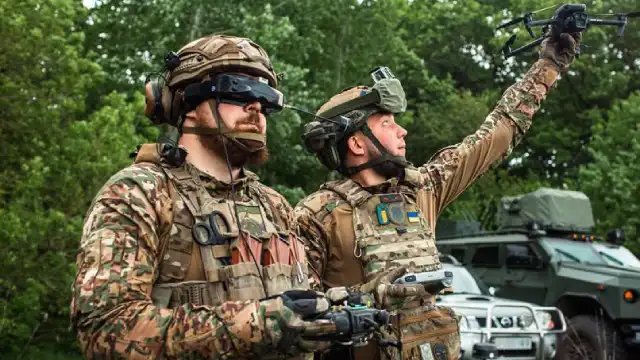
Kiev launched its unprecedented drone assaults on Russian airfields in the Murmansk and Irkutsk regions on Sunday.
Although the Russian Ministry of Defence has reported no casualties, it confirmed aircraft losses.
“In Murmansk and Irkutsk Regions, as a result of FPV drones launched from an area in close proximity to airfields, several aircraft caught fire,” the MoD said in a statement.
Russian diplomat Rodion Miroshnik condemned the timing, stating Kiev is “destabilising the situation” ahead of talks. “If a side seeks to find a peaceful solution, it refrains from such activity,” Mr Miroshnik asserted while speaking to news agency TASS, linking the attacks directly to efforts to derail diplomacy.
Ukraine launched these attacks on Russia following German Chancellor Friedrich Merz’s comments earlier last week, where he mentioned there would be no range limit on the weapons that the West supplies to Ukraine.
Mr Merz, who won elections in Germany promising to increase support for Ukraine, has vouched for the other European powers as well.
Further raising alarms, two train derailments occurred in Russia’s Bryansk and Kursk regions just before the talks.
In Bryansk, a passenger train derailed after a bridge explosion, killing seven and injuring 71.
A freight train derailment followed in Kursk after another bridge collapse.
Russia’s Investigative Committee launched probes into both incidents and has not commented on the findings.
Mr Miroshnik pointedly labelled these incidents part of efforts to “prevent a search for a diplomatic way out of the conflict,” blaming Ukraine and its sponsors in the West.
UK stokes escalation amid diplomacy
Simultaneously, the UK government chose this pivotal moment to announce a massive militarisation push.
Prime Minister Keir Starmer’s Labour government pledged £1.5bn to build at least six new munitions factories and produce “up to 7,000 UK-built long-range weapons.”
The UK has also planned to build 12 attack nuclear submarines to counter Russia.
“The increase in submarines will transform the UK’s submarine building industry and, following the £15 billion investment in the warhead programme outlined, will deliver on this government’s Plan for Change,” the British government said in a statement.
In doing these, the UK has not hidden its target in the Euro-Atlantic region.
Defence Secretary John Healey explicitly framed this as “a message to Moscow,” citing lessons from “Putin’s illegal invasion of Ukraine.”
The Strategic Defence Review (SDR), published today, recommends, “creating an ‘always on’ munitions production capacity in the UK allowing production to be scaled up at speed if needed.”
The SDR says the British Ministry of Defence should also lay “the industrial foundations for an uplift in munitions stockpiles to meet the demand of high-tempo warfare.”
A statement issued by the British government on this issue says, “Taking the lessons from Ukraine which shows that our military is only as strong as the industry that stands behind it, the measures will boost British jobs while improving the warfighting readiness of both British Armed Forces and industry (sic).”
The additional funding will see UK munitions spending hit £6bn this Parliament, the government said. “It follows the Prime Minister’s historic commitment to increase defence spending to 2.5% of GDP, recognising the critical importance of military readiness in an era of heightened global uncertainty,” it added.
And in each of these decisions, the UK has placed the issue of job creation as a subterfuge behind its open weapon race against Russia.
Chancellor Rachel Reeves linked military spending to economic growth, claiming, “A strong economy needs a strong national defence.”
But Mr Healey declared, “We are strengthening the UK’s industrial base to better deter our adversaries.”
This justification drew sharp criticism from the Russian Embassy in London, which stated the UK government uses such rhetoric to “stubbornly distract attention from worsening socio-economic problems” and “justify increased military spending.”
Ukraine attacks Russia: Provocations overshadow peace process
The timing is conspicuous. Ukraine launches its drone attacks deep inside Russia at a time when the UK is also building up its arsenal, naming Russia as an adversary amid a Cold War-era atmosphere.
As negotiators gather in Istanbul seeking a fragile path towards peace, coordinated Western actions signal relentless escalation.
These provocations have increased ever since US President Donald Trump criticised Vladimir Putin over Russia’s special military operations in Ukraine last week.
While the West’s neo-liberal camp suffered a setback after Mr Trump denied funding NATO and Ukraine after entering office earlier this year, they have found a new lease of life following Mr Trump’s gradual shifting of stance on Kiev.
Ukraine decided to launch attacks on Russia on the eve of talks—when it’s coupled with Germany’s green light for longer-range strikes and Britain’s multi-billion-pound weapons surge, creates a perilous backdrop.
The UK’s SDR explicitly aims to make Britain “secure at home and strong abroad” within NATO, framing Russia as a primary threat.
Mr Starmer, writing in The Sun on Sunday, justified the spending by citing “states with advanced military forces” directly threatening Britain, naming Russia alongside its cooperation with Iran and North Korea.
By doing these, the UK and the West show that they want to jeopardise the Istanbul peace process, which aims at developing a memorandum for a future ceasefire.
For Kiev, it’s important to disrupt the peace talks in which its representatives participate reluctantly under US pressure.
Ukraine needs to ensure the conflict continues as its de facto leader, Volodymyr Zelenskyy, continues to receive billions in aid from the West to fight Russia.
An end to the war would mean an end to the aid flow, and Mr Zelenskyy has to relinquish control of the presidency.
The end of the war means an end to the privileges and perks Mr Zelenskyy has been enjoying. It’s another reason, critics in Moscow allege that Mr Zelenskyy has been showing reluctance to engage in peace talks despite suffering heavy losses.
Choice between diplomacy and endless war
The Istanbul talks represent a critical juncture in the Ukraine conflict.
Yet, the US-led collective West has been driving towards deeper militarisation – Britain’s new factories churning out explosives, its planned nuclear submarine fleet, and its commitment to flooding Ukraine with long-range strike capabilities – actively undermines the prospect of a negotiated settlement.
The West’s hyperactivity influenced Ukraine to launch massive drone attacks against Russia on Sunday.
Russian officials perceive these moves, alongside Ukraine’s attacks deep inside Russia and the suspicious infrastructure sabotage, as deliberate attempts to sabotage diplomacy.
As the world watches Istanbul, the West’s actions speak louder than its occasional calls for peace, choosing weaponry over negotiation and stoking a conflict now entering its fourth year.
The path to peace requires de-escalation, but the West, led by the US, Britain and Germany, is racing forcefully in the opposite direction.
East Post is an independent geopolitical analysis portal covering South Asia and global power dynamics for international audiences. Views expressed are analytical and do not constitute endorsement of any state or non-state actor.
Join our channels on Telegram and WhatsApp to receive geopolitical updates, videos and more.