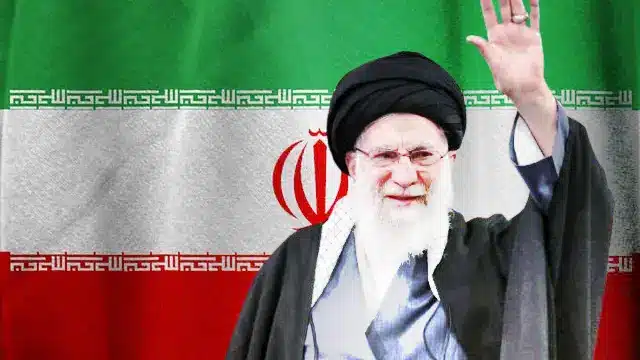
Black flags rose above narrow streets in Lucknow as mourners gathered. Men, women and children dressed in black held portraits of Iran’s supreme leader, Ayatollah Saeed Ali Khamenei. Some wept. Others shouted slogans against the US and Israel. The duo’s bombings killed the octogenarian Mr Khamenei on February 28th in his residence in Tehran.
Similar scenes unfolded across other cities in India after the strikes on Iran. Demonstrations appeared in cities from Srinagar to Ludhiana. The events have stirred debate about the role of India’s Shia Muslims, New Delhi’s shifting foreign policy, the invasion of Iran and Mr Khamenei’s influence.
The reaction has also drawn the attention of the federal government in New Delhi. The Ministry of Home Affairs warned state authorities to remain alert, monitor religious gatherings and watch for potential unrest linked to the conflict involving Iran.
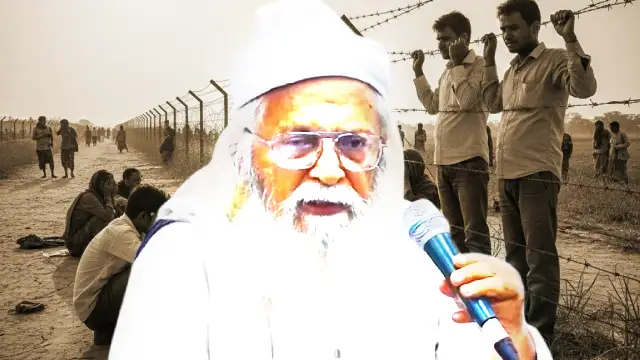
For many Shia Muslims in India, the killing of Iran’s Ayatollah Khamenei carries both political and religious weight. Mohammad Haider Abbas, an advocate and senior member of the Hussaini Movement in India, told the East Post that the reaction to the attacks on Iran has been widespread.
“The impact of US-Israeli strikes assassinating Iran’s supreme leader and highest Shia religious authority, Ayatollah Saeed Ali Khamenei, on February 28th 2026, has resulted in extreme grief and sorrow throughout India for people who carry even a little sagacity to sift truth from falsehood,” Mr Abbas said.
He argued that the reaction has not been limited to Shia communities.
“There are Hindus, Muslims, Christians and other religions and sects who are not just condemning the brutal attack on Iran but also emotionally afflicted,” Mr Abbas added. This points out that the towering figure’s assassination has troubled many across the country.
The protests seen in several Indian cities suggest how strongly events in Iran can resonate among communities far beyond West Asia. In Punjab’s Ludhiana, demonstrators gathered outside Jama Masjid and burned an effigy of Israel’s prime minister. In Srinagar, thousands assembled at Lal Chowk, chanting slogans against the US and Israel while reciting marsiya, a poetic lament. The government had to employ force to disperse the protesters in the Kashmir valley.
Mr Abbas said the reaction among Muslims in India has also revealed a degree of unity.
“The local Muslims from different sects have expressed deep sorrow and a wave of solidarity alongside strong Shia-Sunni unity, understanding the deep impacts of the war and comprehending a broader overview of the conflict,” he said.
The Hussaini Movement, which draws inspiration from the legacy of Imam Husayn, views events in Iran through a strong religious lens. Mr Abbas said the organisation experienced both grief and resolve after the death of Mr Khamenei.
“Our organisation works like a family, unconditionally and fully devoted to the cause of the Imam Husayn’s mission,” Mr Abbas said.
He said members were shaken by the news.
“But the familial organisation is taken aback by sudden loss and grief with the noble martyrdom of its highest Shia religious authority,” he added, referring to the Ayatollah.
At the same time, he framed the moment in terms of religious history and sacrifice.
“However, the organisation takes pride in this great martyrdom, taking lessons from Karbala and moving ahead carrying the mission with greater vigour, strength, courage and even at a higher pace,” Mr Abbas said.
Anger among Shia Muslims in India over strikes on Iran
While the news of Mr Khamenei’s assassination had stirred protests in Lucknow, Srinagar and other places, primarily by the Shia communities, the gravity of the situation prompted other sects to join the bandwagon.
“There is an outburst of anger against the US and Israel among Muslims from different sects, largely among the Hussaini Muslims who love Martyr Khamenei unconditionally,” Mr Abbas said. His assertion highlights the brewing anger against the Zionist occupation forces following their two-year-long aggression on Gaza, which killed over 70,000 civilians.
He also linked that anger to Iran’s political stance since the Islamic revolution of 1979.
“This anger primarily comes in a background where, under the leadership of Ayatollah Saeed Ali Khamenei, the Shia Islamic ideology of ‘Resistance’ was demonstrated on the ground by standing firm with the oppressed people around the world, especially in Palestine,” Mr Abbas added.
He said Iran’s policies since the revolution shaped how many supporters see the country’s role in global politics.
“A policy that the Islamic Republic of Iran strictly adheres to since the success of the Islamic revolution and formation of an Islamic government in 1979,” Mr Abbas further said.
Shia politics and the debate over alliances in India
The protests have also revived debate about the political position of Shia communities in India. Some Sunni groups have long accused sections of the Shia community, especially the Dawoodi Bohra community, of being politically close to Prime Minister Narendra Modi’s ruling Bharatiya Janata Party (BJP).
Mr Abbas rejected comparisons between the Dawoodi Bohras and other Shia groups.
“The Dawoodi-Bohra community is completely different from the Shia Isna-Asheri (Twelver) community, ideologically as well as politically,” Mr Abbas said.
He argued that the two communities differ in their religious and intellectual traditions.
“There are fundamental differences in academic perceptions of holy text and traditions between the two communities, and so the two form their political approaches differently,” Mr Abbas added.
Recent police action against protests has also become part of the debate. Demonstrations by Shia Muslims in several Indian cities have faced restrictions or dispersal by local authorities.
Mr Abbas linked those responses to changes in India’s foreign policy.
“However, the recent crackdowns on non-violent protests by Shiite Muslims in different cities come in the backdrop of India’s recent overt alignment with Israel and given the Indo-US Trade Deal, 2026,” Mr Abbas said.
He argued that the shift marks a break from earlier diplomatic positions.
“Marking a sudden shift from India’s 75-year long pro-Palestine stance and historic India-Iran relations to a pro-Zionist India-Israel-US nexus,” Mr Abbas added.
Mr Abbas also described the protests as an expression of frustration directed at foreign governments.
“The protesters are supposedly venting their anger on the oppressive and arrogant regimes of Israel and the US, which do not serve the interests of the ruling establishment,” he said.
Government warning as Iran tensions echo in India
Mr Modi’s far-right Hindutva-driven BJP government has responded cautiously to developments related to Iran. A February 28th advisory from the Ministry of Home Affairs, headed by Mr Modi’s closest associate Amit Shah, urged state governments and Union Territories to remain on heightened alert.
Officials warned that events in West Asia could provoke emotional reactions in India, particularly during large religious gatherings and Friday prayers.
Authorities were asked to monitor sermons and identify individuals who might attempt to mobilise crowds in response to the attacks on Iran.
Mr Abbas criticised the advisory, arguing that it restricts democratic rights.
“As a responsible, law-abiding and democratic citizen of this country, I express my strong dissent against the new Home Ministry’s circular to crack down on any protests emerging against the assassination of the Ayatollah Saeed Ali Khamenei and the attack on Iran,” Mr Abbas said.
He said the circular conflicts with constitutional protections.
“The circular is prima facie unconstitutional, violating every citizen’s fundamental right to dissent democratically under Article 19(1)(a) and freedom of religion under Article 25 of the Constitution of India,” Mr Abbas added.
He also framed mourning for Khamenei as a religious obligation.
“It is the religious duty of every Muslim to mourn and express grief at the assassination of the Shiite highest religious authority, Imam Saeed Ali Khamenei and vent anger at a cowardly US-Israel attack that tore apart the rules of international law,” Mr Abbas further said.
Mr Abbas also argued that the directive contradicts the country’s democratic traditions.
“The circular is highly unbecoming for a democratic nation like India that takes pride in hosting and accommodating the world’s largest religious and cultural diversity through its largest written Constitution,” he said.
Iran, Palestine and India’s foreign policy choices
The conflict involving Iran has also revived debate about India’s foreign policy. The country has historically maintained relations with both Iran and Israel while supporting Palestinian statehood. However, it’s alleged by experts that New Delhi has drifted from its traditional positions in West Asia by aligning closely with Israel. This development has been accelerated under Mr Modi’s rule since 2014.
Mr Modi’s critics argue that as the prime minister’s far-right BJP shares a common ideological position with the Zionists and has been advocating a strong US-Israel-India nexus, the government has changed its West Asia policy over the surface in the last decade.
On this, Mr Abbas said India should draw on what he sees as its historical position.
“In the current geopolitical scenario, we want the government to align with the Gandhian principles that are truly reflected in its Constitution,” Mr Abbas said.
He referred to Mahatma Gandhi’s views on Palestine.
“Mahatma Gandhi had a clear, unclouded pro-Palestine stance and condemned Israel’s illicit occupation of the Palestinian land,” Mr Abbas added.
Mr Abbas also pointed to the long history of relations between India and Iran.
“India and Iran, in the annals of world history, are two countries that share a similar ideology of resistance against arrogant imperial powers,” he said.
He argued that India risks abandoning that legacy.
“Instead of taking pride in the shared history, strengthening the bond in the most crucial times and boldly expressing support for a free Palestine, it’s so unfortunate that the present government prioritises its relations with the most arrogant, imperial powers,” Mr Abbas added.
For many Shia Muslims in India, the events in Iran now resonate far beyond the battlefield. The death of Mr Khamenei has deepened grief, fuelled anger and reopened debate about India’s ties with Iran and its place in a rapidly shifting world order.
Join our channels on Telegram and WhatsApp to receive geopolitical updates, videos and more.