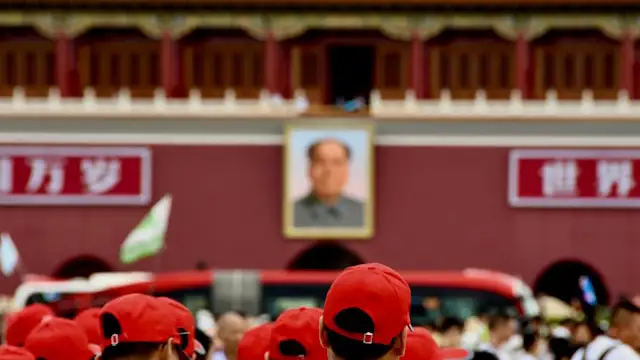
As the Communist Party of China (CPC) will convene its 20th Central Committee’s third plenary session from July 15th to 18th in Beijing to discuss the challenges associated with further comprehensively deepening reform and advancing Chinese modernisation, it’s a good time to comprehend what has been China’s reform and opening up programme, which was started in 1978.
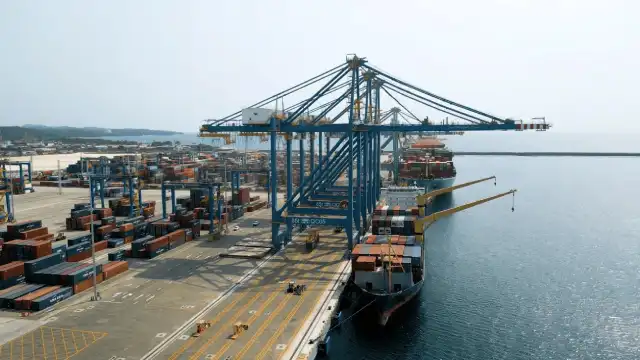
For many, China’s reform and opening up constitute its second revolution, a journey of development and progress for the country and the world. The next five decades have reshaped the world and elevated China to the top echelon of global economies.
Highlighting the multiple facets and significance of China’s reform and opening up, Wang Chunguang, the deputy director of the Institute of Sociology and head of the Social Policy Research Center at the Chinese Academy of Social Sciences, wrote an article, which helps delve into China’s achievements in economic, political, social and ecological domains since the reform and opening up period, exploring the directions and measures for China’s continued comprehensive furthering of reform.
Mr Wang said that the CPC’s 20th Central Committee’s third plenary session is crucial for “outlining systematic, comprehensive, and forward-looking frameworks for China’s development and modernisation”. According to him, 2024 marks a pivotal moment in “advancing Chinese modernisation”. He claimed that the policy decisions made during this session are expected “to attract considerable attention and interest”.
“Over the past four decades of China’s modernisation, reform has been the most defining element. Serving as the cornerstone of Chinese modernisation, reform has converted the country’s vast population into a developmental advantage, facilitated its integration into the global economy, and leveraged historical opportunities for modernisation”, Mr Wang wrote, adding, “China’s experience over these decades demonstrates that the transformative power of reform lies in its capacity to unlock the energy and vitality of Chinese society, driving rapid development and propelling China to its current status as the world’s second-largest economy”.
He wrote that central to China’s reform and opening up agenda is dismantling outdated systems that hinder its development. According to Mr Wang, mechanism reform has freed minds and unleashed significant vitality. For instance, the rural household contract responsibility system reform transformed China’s large population into a modern developmental force, resolving labour productivity issues and boosting agricultural output within years, thus ensuring food security.
He added that China’s reform and opening up freed rural labour to join industrial and service sectors, spurring the growth of small towns and township enterprises. This large-scale labour integration significantly contributed to China becoming the world’s manufacturing powerhouse. In 2023, the National Bureau of Statistics reported 53.8% of migrant workers in the tertiary sector and 45.5% in the secondary sector, he cited.
Reforms in science and education have been vital for China, Mr Wang claimed, stating that they helped enhance national modernisation and global competitiveness. He showed that in the late 1970s, China recognised science and technology as “primary productive forces,” reinstated the college entrance examination, and reformed national education. According to him, such changes enabled China to develop the world’s largest pool of higher-educated talents in just over four decades, providing crucial high-quality personnel. In 1978, the gross enrolment ratio for tertiary schools was 1.55%, soaring to 60.2% by 2023. These reforms transformed China’s human resources into powerful human capital, turning weaknesses into strengths and advancing technological progress.
Economic system reform has been central to China’s transformative changes over the past 40 years, demonstrating its “Midas touch”, Mr Wang wrote. He claimed that these reforms tackled the restrictive traditional planned economy, resolving issues like resource bottlenecks, market absence, product shortages and employment challenges, which are typical for centrally-planned economies. According to Mr Wang, China’s reform and opening up revitalised state-owned enterprises, ignited entrepreneurial spirit and encouraged private enterprise growth while attracting substantial foreign investment.
During the reform and opening up, Mr Wang highlighted, many rural farmers transitioned into entrepreneurs and small business owners, with some even entering the Fortune Global 500. Official statistics show that China’s private economy contributes over 50% of tax revenue, more than 60% of GDP, over 70% of technological innovations, more than 80% of urban employment, and over 90% of all enterprises, he cited.
Since the CPC’s 18th National Congress, China has refined its socialist market economy, established modern corporate systems and implemented various rural reforms, Mr Wang wrote. These reforms include separating ownership, contract and management rights, collective asset shareholding and the market entry of collectively-owned construction land, allowing the market to play a decisive role in resource allocation and stimulating economic vitality, he highlighted.
He showed that China has directed resources of public services to grassroots levels, especially in rural areas, ensuring a balanced distribution of basic public resources and enhancing the people’s sense of fulfilment.
He claimed China has been making significant progress in integrating legal, ethical, self-governance, intelligent and political governance to improve efficiency. These comprehensive reforms have steadily advanced China’s modernisation, according to Mr Wang.
According to Mr Wang, the CPC’s ultimate goal is to dismantle systems and mechanisms that hinder modernisation, creating an environment that energises all stakeholders, including the government, market, society, households, and individuals.
“China has now entered a ‘deep water’ zone in its reform process, facing more complex and urgent tasks than before. First, the effectiveness of previous reforms is diminishing, necessitating second rounds of reforms to generate new momentum. Second, the compatibility of different reforms has become increasingly prominent, as each reform is constrained by the need for other systemic changes, with socio-economic development no longer satisfied by isolated reforms. Third, the future path of reform is less clear than before, making it more challenging to build consensus. Lastly, shifting international relations has introduced uncertainties and risks, limiting the determination, confidence and scope for further reform,” Mr Wang wrote in the article.
“Without navigating through this ‘deep water’ zone, many issues that could be resolved will remain, transforming into pressures on various aspects of society, economy, culture and politics, significantly constraining China’s modernisation,” he added.
China’s reform and opening up are essential to invigorate its development and provide new impetus for its modernisation, Mr Wang wrote in the concluding lines highlighting that a comprehensive deepening of China’s reform is an inevitable topic for the nation’s modernisation in what he called “the new era”. “Only through further comprehensive deepening of reform can the vitality of all stakeholders, particularly individuals, be fully unleashed. This is the demand of the times, and the key to China achieving and building a great modern socialist country. Consequently, society eagerly anticipates the session to provide decisive guidance on further deepening reform and advancing China’s modernisation,” Mr Wang concluded.
All eyes will be on the CPC’s 20th Central Committee’s third plenary session, which will steer the course of not just China’s reform and opening up but also have a significant impact on the world economy.
East Post is an independent geopolitical analysis portal covering South Asia and global power dynamics for international audiences. Views expressed are analytical and do not constitute endorsement of any state or non-state actor.
Join our channels on Telegram and WhatsApp to receive geopolitical updates, videos and more.