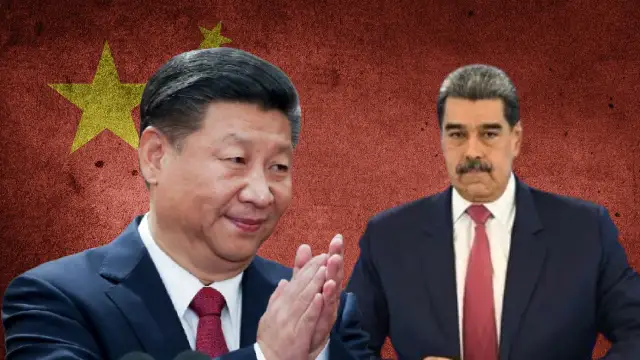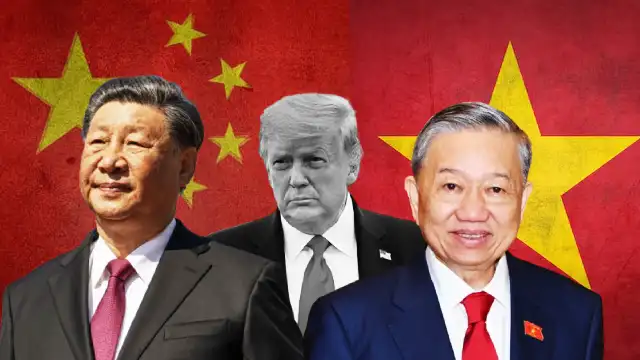
When Chinese President Xi Jinping arrives in Hanoi on April 14th for his first overseas trip of 2025, it will mark more than a diplomatic courtesy. Mr Xi’s Vietnam visit comes at a pivotal moment in regional geopolitics, as both nations navigate the economic headwinds created by Donald Trump‘s renewed trade war. This two-day state visit—Mr Xi’s fourth to Vietnam and second within his current term—signals China’s strategic pivot towards strengthening regional alliances as a bulwark against American economic pressure.
Xi’s Vietnam visit aims to deepen strategic partnership
The timing of Mr Xi’s Vietnam visit is particularly significant. It comes just days after Mr Trump imposed a punishing 145% tariff on Chinese imports, to which Beijing responded with its own 125% counter-tariff. Vietnam, meanwhile, has secured a reprieve—90 days with a flat 10% tariff while negotiations continue with Washington.
“This is Xi’s first overseas visit in 2025, his fourth visit to Vietnam as China’s top leader, and the second within his current term. It demonstrates the high regard that the Chinese Party and State, as well as the leader personally, place on strengthening the friendly neighbourliness and comprehensive cooperation between Vietnam and China,” Vietnamese Ambassador to China Pham Sao Binh told the Vietnam News Agency.
The visit coincides with the 75th anniversary of diplomatic relations between the two countries and takes place during what both sides have designated as the “Vietnam-China Year of Humanistic Exchange.” According to Chinese Foreign Ministry spokesperson Lin Jian, Mr Xi will hold talks with Communist Party of Vietnam’s (CPV) General Secretary To Lam and meet with President Luong Cuong, Prime Minister Pham Minh Chinh, and National Assembly Chairman Tran Thanh Man.
Beyond Vietnam, Mr Xi’s itinerary includes stops in Malaysia and Cambodia—all three countries targeted by Mr Trump’s reciprocal tariffs (which are temporarily paused). This Southeast Asian tour, Mr Xi’s first overseas trip of the year, reflects China’s strategic prioritisation of regional relationships in the face of American economic pressure.
China-Vietnam ties flourish amid economic interdependence
The bilateral relationship between China and Vietnam has grown increasingly robust in recent years. Speaking ahead of Mr Xi’s Vietnam visit, Vietnamese Deputy Prime Minister and Foreign Minister Bui Thanh Son highlighted the comprehensive progress in bilateral relations.
“Since the establishment of the comprehensive strategic cooperative partnership in 2008, and particularly following recent mutual visits between the two countries’ top leaders, bilateral ties have seen comprehensive and robust progress across multiple areas,” Mr Son said.
Economic interdependence forms the backbone of China-Vietnam ties. In 2024, bilateral trade reached unprecedented levels, exceeding $200bn according to Vietnamese statistics, and $260bn according to Chinese figures. Vietnam maintains its position as China’s largest trading partner within ASEAN and fourth-largest globally. In the first quarter of 2025 alone, bilateral trade reached $51.25bn, a 17.46% year-on-year increase.
China has become the largest market for Vietnamese agricultural, forestry, and fishery products, delivering tangible benefits to millions of Vietnamese farmers. Meanwhile, in terms of foreign direct investment, China ranks as Vietnam’s sixth-largest investor, with a total registered capital of $31.26bn.
Infrastructure connectivity represents another cornerstone of China-Vietnam ties. The two countries are accelerating plans for railway integration, with Vietnam aiming to begin construction on the Lao Cai-Hanoi-Hai Phong railway line this year. Planning for the Mong Cai-Ha Long-Hai Phong and Dong Dang-Hanoi railway lines is expected to be completed in 2026.
These railway projects are particularly significant in the context of Mr Trump’s tariffs, as they could enable Vietnam to “take advantage of rail transport routes connecting China to potential markets such as Central Asia, Eastern Europe, Russia, and the Middle East,” according to Mr Binh. Simultaneously, “high-quality Chinese products can access the ASEAN market through these rail routes.”
Vietnam balances relations as Trump’s tariffs reshape trade
While Mr Xi’s Vietnam visit strengthens China-Vietnam ties, Hanoi maintains its carefully calibrated balancing act between Beijing and Washington. Vietnamese Deputy Prime Minister Ho Duc Phoc is currently in the United States for trade negotiations, having met with US Treasury Secretary Scott Bessent on April 10th.
According to Nhân Dân, the CPV’s official newspaper, Mr Phoc “affirmed Vietnam’s commitment to deepening its Comprehensive Strategic Partnership with the US and its wish to foster a balanced, harmonious, and sustainable bilateral economic and trade relationship.”
The urgency of these negotiations underscores the high stakes for Vietnam’s export-oriented economy. While China exported $3.59 trillion worth of merchandise and $422.33bn worth of services in 2022, according to World Trade Organization estimates, Vietnam’s exports totalled $371.29bn in merchandise and $12.6bn in services—a significant portion of which goes to the American market.
The 90-day tariff suspension represents a critical window for Vietnam to secure a more favourable trade arrangement with the United States. Mr Phoc urged both parties “to accelerate discussions to reach an agreement at the earliest opportunity.” Vietnam has established a negotiation team to engage immediately with the US delegation led by Mr Bessent.
Mr Trump’s tariffs present a significant challenge for Vietnamese exports, but they also create potential opportunities in the context of China-Vietnam ties. As Chinese manufacturers seek to circumvent American tariffs, Vietnam could position itself as an attractive alternative production base.
Trump’s tariffs push China to seek regional alternatives
Mr Trump’s aggressive trade policies have fundamentally altered China’s economic calculus since his first tariff increase in 2018. Most notably, the importance of the US market to China’s export-driven economy has declined significantly. In 2018, US-bound exports accounted for 19.8% of China’s total exports; by 2023, that figure had fallen to 12.8%.
This shift has coincided with China’s “domestic demand expansion” strategy, which aims to unleash the spending power of Chinese consumers and strengthen its domestic economy. However, China also recognises the strategic value of regional partnerships as a buffer against American economic pressure.
Mr Xi’s Vietnam visit exemplifies this approach. By strengthening China-Vietnam ties, Beijing not only secures a friendly neighbour but also potentially gains access to alternative export channels. The Financial Times reported on April 11th that some Chinese manufacturers are already building factories in third countries to circumvent American tariffs.
“Chinese sellers will not be able to take on the extra [financial] burden from the US tariff hikes,” Wang Xin, president of the Shenzhen Cross-Border E-Commerce Association, told the Financial Times. “We are going through fire and water.”
One Guangzhou-based seller on Chinese e-commerce platform Temu told the Financial Times that some counterparts had been building factories in countries like Jordan to finish goods before re-exporting to the United States. Similar strategies could potentially expand through China-Vietnam ties, though the Trump administration has signalled its awareness of such approaches.
“Vietnam is essentially a colony of communist China,” Mr Trump’s senior trade counsellor Peter Navarro told Fox News on April 7th. “China uses Vietnam to transship to evade the tariffs.”
While characterising Vietnam as the “poster child for nontariff cheating,” Mr Navarro explained that this was one reason the country had been subject to a 46% reciprocal tariff. He suggested that even if Vietnam reduced its duties on American imports, the US would refuse to negotiate on trade—though negotiations have in fact begun.
However, the funny part is that on April 12th, Mr Trump’s administration excluded computers, phones and chips from the tariff net, including those imported from China, indicating that there will be nearly no implication of the tariffs on the major imports from China.
Regional realignment as Trump’s tariffs reshape alliances
The broader impact of Mr Trump’s tariffs extends beyond bilateral China-Vietnam ties. Beijing appears to be capitalising on the opportunity to reshape regional alliances as countries reevaluate their economic relationships with the United States.
On March 30th—after Mr Trump had first raised tariffs on Chinese goods—China, Japan, and South Korea hosted their first economic dialogue in five years and pledged to advance a trilateral free trade agreement. This development is particularly noteworthy given the Biden administration’s careful cultivation of Japanese and South Korean partnerships as part of its strategy to counter Chinese regional influence.
Similarly, Mr Trump’s steep tariffs on Southeast Asian countries may push those nations closer to China. Mr Xi’s current tour of Vietnam, Malaysia, and Cambodia—all targeted by Mr Trump’s now-paused reciprocal tariffs—suggests Beijing’s strategy to deepen “all-round cooperation” with its neighbours.
The European Union, too, has shown signs of strengthening ties with China in response to American protectionism. On April 8th, the president of the European Commission held a call with China’s premier, during which both sides criticised US trade policies and advocated for free and open trade. The following day, as China raised tariffs on US goods to 84%, the EU announced its first wave of retaliatory measures against American imports worth over €20bn, though implementation has been delayed following Mr Trump’s 90-day pause.
Can Vietnam navigate between two giants?
For Vietnam, the challenge is navigating between two economic superpowers while maintaining its sovereignty and economic growth. Mr Xi’s Vietnam visit offers opportunities to deepen China-Vietnam ties, but Hanoi remains cautious about becoming overly dependent on Beijing.
Vietnamese officials emphasise that their goal is balanced relationships with both China and the United States. “Vietnam and China are close neighbours, sharing mountains and rivers, with a long-standing tradition of friendship between their people,” Mr Son noted, while also affirming Vietnam’s commitment to its Comprehensive Strategic Partnership with the US.
This balancing act is particularly evident in Vietnam’s approach to infrastructure connectivity with China. While embracing railway integration projects, Vietnam carefully frames these initiatives as mutually beneficial. The railways will “help reduce transit time in the border areas, optimise transport costs, and improve the logistics advantages and competitiveness of bilateral intermodal transport,” enabling Vietnam to “export more of its key products” to the Chinese market.
Mr Trump’s tariffs have complicated this balancing act. The administration’s identification of Vietnam as a channel for Chinese tariff circumvention places Hanoi in a difficult position. Still, American experts believe it’s not possible for the US Customs to trace the origin of each consignment, including the ownership of factories in Southeast Asian countries.
The future of China-Vietnam ties amid Trump’s tariffs
As Mr Xi’s Vietnam visit unfolds, both countries are likely to emphasise their “comrades-plus-brothers” relationship while expanding economic cooperation. Vietnamese officials anticipate that approximately 40 cooperation agreements between ministries, agencies, and localities will be signed during the visit.
Mr Son outlined four key goals for the visit: strengthening high-level strategic exchanges; identifying key areas for bilateral cooperation; extending the positive momentum throughout all levels of society; and addressing border and territory-related issues in a spirit of “frankness, sincerity, and mutual understanding.”
For China, the visit represents an opportunity to showcase regional leadership at a time when Mr Trump’s tariffs are reshaping global trade patterns. Beijing sees in Mr Trump’s policies “a generational strategic opportunity to displace American hegemony,” particularly in East Asia.
For Vietnam, Mr Xi’s visit offers chances to secure investment and market access while maintaining diplomatic flexibility. As Mr Trump’s tariffs reshape global trade, Hanoi’s careful cultivation of China-Vietnam ties provides economic alternatives without foreclosing options with the United States.
The next 90 days will be crucial, as Vietnam negotiates with Washington to secure a more favourable trade arrangement. Meanwhile, Mr Xi’s Vietnam visit lays the groundwork for deeper regional integration that may prove increasingly valuable in a world where Mr Trump’s tariffs continue to disrupt established trade patterns.
East Post is an independent geopolitical analysis portal covering South Asia and global power dynamics for international audiences. Views expressed are analytical and do not constitute endorsement of any state or non-state actor.
Join our channels on Telegram and WhatsApp to receive geopolitical updates, videos and more.