Border tensions between India and Bangladesh are no longer a bilateral concern. They are becoming a test of supply-chain resilience, regional integration, and geopolitical competition in the Bay of Bengal — with consequences for European markets that few in Brussels or Stockholm have yet to register.
For American or European consumers buying clothes from H&M, Zara, Primark or Gap, the confrontation unfolding along the India-Bangladesh border may appear distant. Yet the escalating dispute between South Asia’s two neighbours threatens one of the world’s most important manufacturing ecosystems, with ripple effects extending from Dhaka to Berlin.
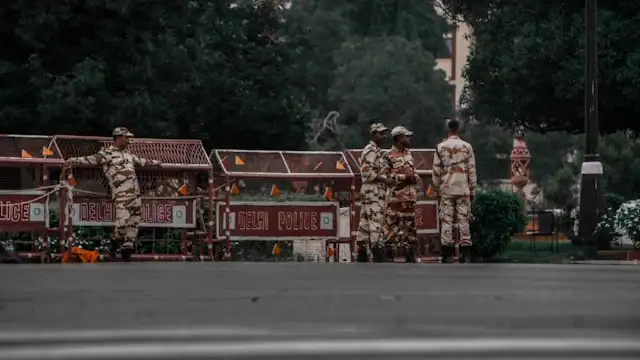
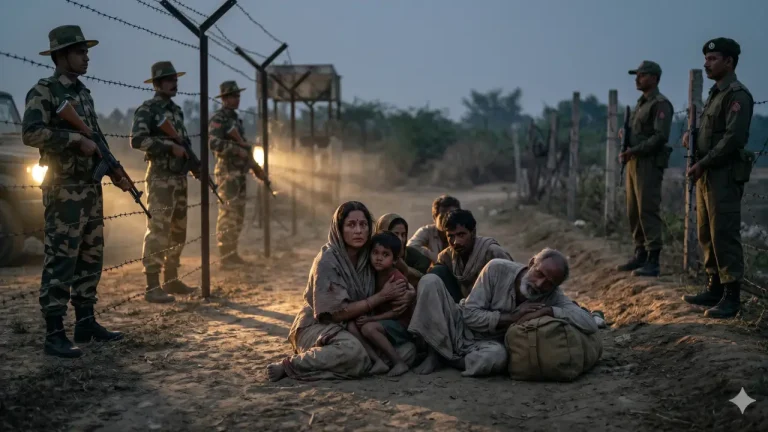
Over the past several weeks, Bangladesh has accused Indian authorities of attempting to push back alleged Bangladeshi nationals across the frontier without completing agreed verification procedures. Bangladesh’s Border Guard (BGB) has publicly objected to what Dhaka describes as “push-in” operations. India’s Border Security Force (BSF), in turn, has accused Bangladeshi authorities of conducting similar operations in the opposite direction.
The two countries share a 4,156 km-long international border spanning 26 Bangladeshi districts and five Indian states. Of this, the 2,217 km-long Bangladesh-India border falls in West Bengal, where the newly formed government has intensified anti-immigration rhetoric.
As the BGB and the BSF are participating in a four-day bilateral meeting from June 8th to June 11th, the 57th DG-level Border Co-ordination Conference, against this backdrop, Dhaka has increased troop deployments spanning five Indian states and 26 Bangladeshi districts to stop the “push-in” drive. The BGB troops are backed by local villagers, who are also remaining vigilant against the BSF’s “push-in” of suspected Bangladeshis.
New Delhi
— BSF (@BSF_India) June 8, 2026
8-11 June 2026
57th DG level Border Co-ordination Conference between Border Security Force and Border Guard Bangladesh -2026
Shri Praveen Kumar, IPS, DG BSF, received and welcomed Major General Mohammad Ashrafuzzaman Siddiqui, DG BGB along with the @BGB_GOV_BD… pic.twitter.com/2k8dtmZLb7
09 June '26
— BSF (@BSF_India) June 9, 2026
New Delhi
57th Border Security Force – Border Guard Bangladesh DG Level Border Co-Ordination Conference – 2026 continues at BSF Force Headquarters, New Delhi.#BSF_BGB#BorderCoordination#BeyondBorders pic.twitter.com/zQagS0bcAe
The dispute was expected to remain a manageable border disagreement. Instead, it has become a fault line running through South Asia’s most economically integrated bilateral relationship — and through the supply chains that connect it to European retail.
Politics behind India’s push-back
The immediate origins of the Bangladesh-India border tensions lie in India’s eastern states.
Following Indian Prime Minister Narendra Modi’s far-right Bharatiya Janata Party‘s (BJP) recent electoral victories in Assam and West Bengal, the question of alleged undocumented Bangladeshi migration has returned to the centre of political debate. During the campaigns, BJP leaders promised tougher measures against what they describe as “infiltration” from Bangladesh.
Assam’s Chief Minister Himanta Biswa Sarma has previously suggested that suspected undocumented migrants were handed to the BSF and returned across unguarded stretches of the frontier. In West Bengal, the newly elected state government under Chief Minister Suvendu Adhikari has pledged to intensify enforcement against alleged irregular migration.
These commitments are bound up with broader contests over citizenship, electoral rolls and the legal status of Bengali-speaking border populations — a combination that has proved electorally potent across both states.
On the one hand, Mr Modi’s government claims it’s trying to reset diplomatic ties with Bangladesh following the victory of the Bangladesh Nationalist Party (BNP), led by Tarique Rahman, in the February 2026 national elections; on the other, the BSF is used to push suspected Bengali-speaking people into Bangladesh without following the due diplomatic process.
While Dhaka’s Ministry of Foreign Affairs (MFA) has reportedly objected to the BSF’s actions and claimed that New Delhi has ignored international laws regarding deportation, New Delhi’s Ministry of External Affairs (MEA) has denied the charges.
Speaking to the press on June 5th, MEA Spokesperson Randhir Jaiswal stressed that New Delhi is following a “bilateral mechanism” in place between the two countries regarding the deportation of suspected Bangladeshi nationals living illegally in India. According to Mr Jaiswal, India has been awaiting confirmation on the nationality of 2,860 suspected Bangladeshi nationals from Dhaka.
However, he refrained from mentioning how India’s BSF is managing to push the alleged “Bangladeshi infiltrators” into the neighbouring country if their nationality has not been verified. Dhaka has been raising concerns over this, which appears to have cast a shadow over the BGB-BSF director-general-level summit in New Delhi.
For New Delhi, however, the challenge extends beyond domestic politics. Every escalation along the border carries diplomatic costs at a moment when the region’s economic interdependence has never been deeper.
Why Bangladesh matters to Europe
The strategic significance of Bangladesh is routinely underestimated in European policy circles.
Bangladesh is not merely India’s eastern neighbour. It is the world’s second-largest exporter of ready-made garments and a critical node in global apparel supply chains. The country exports tens of billions of dollars worth of clothing annually, supplying H&M, Zara, Primark, Gap and dozens of other Western retailers. European consumers encounter Bangladeshi-made products daily, often without awareness of their origin.
For much of the past decade, Western policymakers have sought to reduce dependence on Chinese manufacturing. Bangladesh has emerged as one of the principal beneficiaries of that strategy, elevating its importance far beyond South Asia.
For European businesses focused on supply-chain resilience and diversification, Bangladesh represents a key component of broader de-risking efforts. Any disruption affecting its manufacturing ecosystem therefore carries consequences far beyond the Bay of Bengal.
That is why Bangladesh-India border tensions now register as a European economic concern.
Even before the BJP came to power in the Bengali-majority state of West Bengal, New Delhi had been at loggerheads with Dhaka following the ouster of Sheikh Hasina, the former prime minister, following a students’ and youths’ uprising in July-August 2024. With the push-backs, the situation has worsened.
Tensions persisted between India and Bangladesh throughout Muhammad Yunus‘s tenure as head of the interim government that conducted the February polls. This has impacted Bangladesh’s readymade garment exports to Europe, its largest market.
While Bangladesh has been exporting over 50% of its readymade garments to Europe, the sector that employs millions in the South Asian country saw orders contract between July 2025 and May 2026, according to the Export Promotion Bureau (EPB).
The EPB data show that in these eleven months, Bangladesh exported readymade garments worth $35.31bn, indicating a 3.41% fall in revenue compared to the same period a year ago. Of the total exports, consignments worth $17.36bn were sent to European markets, a 4.88% decline from the previous year.
While Bangladesh is attempting to diversify markets to derisk its crucial exports, the revenues aren’t showing any upward movement. According to the EPB data, during these 11 months, Bangladesh exported $5.68bn-worth of readymade garments to non-traditional destinations—including Japan, Australia, India, Russia, South Korea, Brazil, Mexico, and the Middle East—which is 16.09% of total garment exports. However, the revenue from these alternative markets has slipped by 5.95%.
India leverages geography against Bangladesh
Bangladesh’s export success is frequently framed as a story of industrialisation and comparative advantage. Less often discussed is the geographic reality underpinning it.
Bangladesh is effectively surrounded by India on three sides, creating substantial opportunities for regional integration but also leaving Dhaka heavily reliant upon Indian transit infrastructure and connectivity arrangements.
The significance of that dependence became apparent when India withdrew a trans-shipment arrangement during the interim government’s reign that had permitted Bangladeshi cargo to access third-country markets via Indian infrastructure. The episode demonstrated that geography grants New Delhi considerable leverage over Bangladesh’s access to global markets.
More recent trade restrictions have reinforced that lesson. Disputes over land-port access, customs procedures, and cross-border trade flows have already affected sections of the integrated textile ecosystem linking Indian material suppliers with Bangladeshi manufacturers.
The lesson for European observers is straightforward. Supply chains that appear global in reach often remain dependent upon regional political relationships. When those relationships deteriorate, vulnerabilities that were previously invisible become consequential.
From border tensions to supply-chain risk
The most immediate economic consequences of sustained Bangladesh-India border tensions would likely emerge in the textile sector.
Bangladesh’s garment industry is heavily dependent upon imported cotton, yarn and other raw materials, with India among its most significant suppliers. Any tightening of export procedures, logistical delays or politically motivated trade restrictions could slow the flow of critical inputs into Bangladeshi factories.
The consequences would not necessarily be immediate. Disruption would accumulate through delayed production schedules, extended delivery times and rising transportation costs.
For European retailers already managing the residual effects of pandemic-era disruptions, inflationary pressures and shipping uncertainties linked to the Red Sea and Strait of Hormuz crisis, an additional source of instability would be unwelcome. The concern is not simply whether garments continue to reach European shelves. It is whether the predictability of supply chains can be sustained in a more fragmented geopolitical environment.
Energy and water flashpoints
Trade is only one dimension of the Bangladesh-India relationship.
Bangladesh imports significant volumes of electricity from India and relies on cross-border energy arrangements that underpin industrial production and economic stability. The Bangladesh-India Friendship Pipeline has become a further component of bilateral infrastructure cooperation.
A severe political breakdown would not automatically terminate these arrangements. Prolonged diplomatic tensions would, however, complicate negotiations over future energy cooperation, infrastructure investment and cross-border connectivity projects.
Water presents a separate and perhaps more urgent challenge. The Ganga Water Treaty is scheduled to expire in December 2026. Negotiations over its renewal were already expected to be difficult. A deterioration in political relations would make compromise harder still.
For Bangladesh, water security is inseparable from agricultural productivity, food security and climate resilience. For European policymakers tracking global supply chains, the broader point is that those chains depend not only on factories and shipping lanes but also on the stability of the resource systems that sustain them.
The China variable
The implications of prolonged Bangladesh-India tensions extend beyond bilateral economics.
Beijing has spent years expanding its economic and strategic presence across South Asia through infrastructure investment, development financing and security cooperation. Bangladesh has become an increasingly important element of that strategy.
Should Dhaka conclude that its relationship with India has become unpredictable or coercive, policymakers in Dhaka will naturally seek alternative partners capable of reducing that dependence. That does not imply Bangladesh would abandon its historically important ties with India. It does, however, increase China’s leverage in Dhaka’s strategic calculations.
For Western governments, such a shift would be uncomfortable. Washington’s Indo-Pacific strategy rests substantially on India as a regional stabilising power. A scenario in which Bangladesh-India border tensions push Dhaka towards deeper Chinese economic and security networks would complicate that calculation considerably.
The Bay of Bengal risks becoming an arena of geopolitical competition rather than regional cooperation.
Border dispute with global stakes
For years, regional integration was promoted as a mechanism for reducing conflict and accelerating growth. South Asia’s connectivity frameworks — BBIN and BIMSTEC among them — were designed to deepen economic interdependence and generate new trade opportunities.
The current trajectory points in the opposite direction. Domestic political pressures are now actively undermining the regional cooperation that those frameworks were built to sustain. The border tensions between the BGB and the BSF have the potential to cause long-term disruptions in the region.
This is not a uniquely South Asian pattern. The war in Ukraine exposed Europe’s dependence on Russian energy. The Red Sea crisis demonstrated the vulnerability of maritime trade routes. The American-Israeli attacks on Iran have exhibited the world’s reliance on the Strait of Hormuz. Growing US-China rivalry has highlighted the systemic risks of concentrated supply chains. The India-Bangladesh dispute reflects the same structural logic: economic integration has not eliminated geopolitical risk; it has altered the form that risk takes.
India and Bangladesh have spent years constructing one of South Asia’s most interconnected economic relationships. A dispute driven substantially by domestic political calculations now threatens parts of that architecture — and the costs, should it continue, will not be confined to either country.
They will be felt in Bangladeshi factories, Indian border districts, European distribution centres and retail boardrooms. They will register in strategic assessments in Washington, Beijing and Brussels.
In an era defined by fragile supply chains and intensifying great-power competition, what happens along the Bangladesh-India border no longer stays there.
East Post is an independent geopolitical analysis portal covering South Asia and global power dynamics for international audiences. Views expressed are analytical and do not constitute endorsement of any state or non-state actor.
Join our channels on Telegram and WhatsApp to receive geopolitical updates, videos and more.