Iran-US peace deal hailed across West Asia as a victory for resistance forces
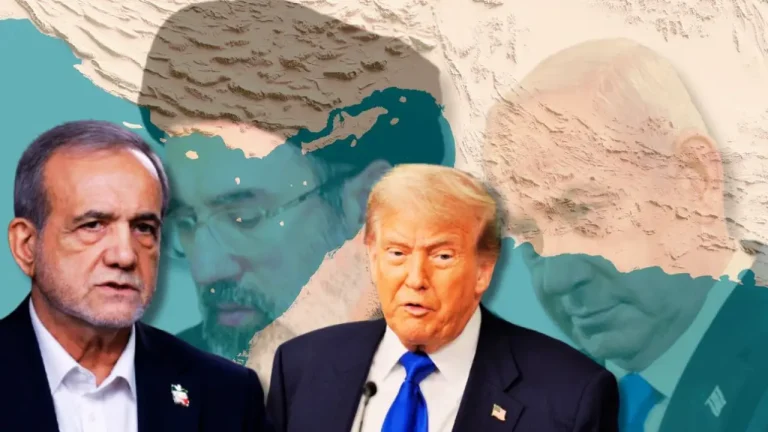
The emerging Iran-US peace deal has been presented by United States President Donald Trump as a diplomatic breakthrough that could bring an end to months of direct confrontation between Washington and Tehran. Yet across West Asia, the agreement is being interpreted very differently. Resistance movements in Palestine and Lebanon have welcomed the Iran-US peace deal not as an American victory, but as evidence that Iran and its allies have succeeded in forcing Washington to accept a negotiated settlement.
The proposed memorandum of understanding, announced on June 15th, is expected to formalise a comprehensive ceasefire between the United States and Iran. While both sides have expressed cautious confidence, uncertainty continues to surround the agreement because Israel has not fully committed itself to the arrangement and has continued military operations in both Palestine and Lebanon.
That contradiction has turned the Iran-US peace deal into one of the most consequential geopolitical developments in West Asia in recent years. Supporters view it as a step towards regional stability. Critics fear it could become little more than a ceasefire between Washington and Tehran while conflicts elsewhere continue unabated.
Resistance groups portray the Iran-US peace deal as a strategic victory
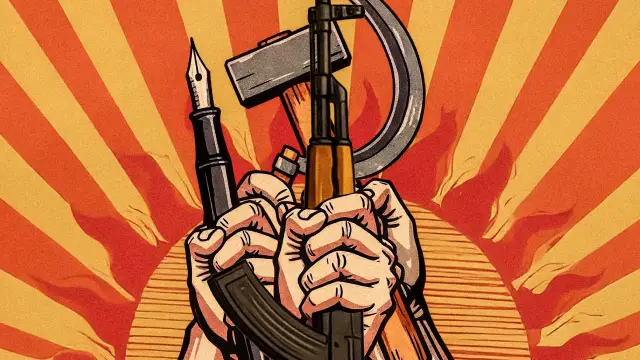
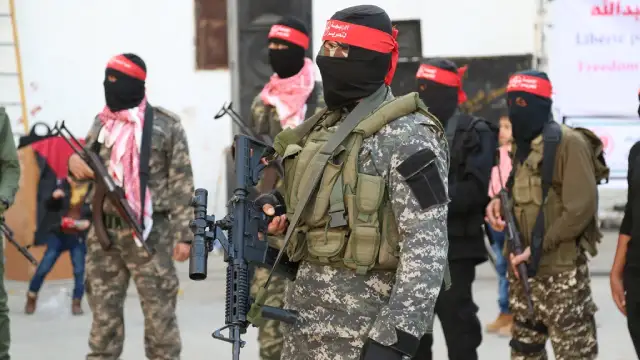
Several organisations associated with the regional “Axis of Resistance” have publicly welcomed the Iran-US peace deal, arguing that it reflects the failure of military pressure and sanctions to compel Iran to abandon its strategic objectives.
Statements issued by Hezbollah, Hamas, Palestinian Islamic Jihad, Fatah al-Intifada and the Popular Front for the Liberation of Palestine (PFLP) described the agreement as the result of Iranian resilience, military preparedness and political steadfastness.
Hezbollah, in one of the most detailed responses, characterised the agreement as the product of what it called the “steadfastness, perseverance and sacrifices” of the Iranian people. The Lebanese movement also emphasised that Lebanon’s interests had been included in the negotiations and argued that the agreement could create a broader framework for ending hostilities across multiple fronts.
Palestinian organisations echoed similar sentiments. Hamas said the Iran-US peace deal could contribute to regional stability if it led to an end to Israeli military operations in Gaza and Lebanon. Palestinian Islamic Jihad described the agreement as a significant achievement that could strengthen regional security and reduce the risk of further escalation.
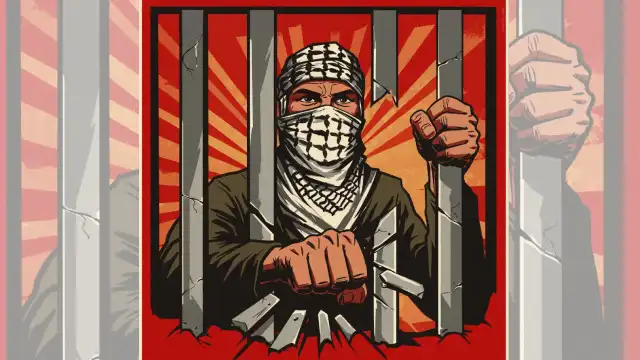
The PFLP framed the development as evidence that sustained resistance and strategic patience could challenge what it called American and Israeli pressure campaigns. Across these statements, a common theme emerged: the belief that the Iran-US peace deal represented a political success for Tehran and its allies rather than a unilateral American diplomatic triumph.
Israel remains biggest uncertainty surrounding Iran-US peace deal
Despite the optimism expressed by resistance movements, the future of the Iran-US peace deal may ultimately depend on Israel’s response.
Israeli Prime Minister Benjamin Netanyahu has repeatedly stated that Israel will not permit Iran to acquire a nuclear weapon regardless of diplomatic arrangements between Tehran and Washington.
“With an agreement, without an agreement – as long as I am Prime Minister of Israel, Iran will not have nuclear weapons,” he asserted on X.
Those remarks have fuelled concerns that Israel may continue military operations even if the United States and Iran move towards a more durable ceasefire.
עם הסכם, בלי הסכם – כל עוד אני ראש ממשלת ישראל, לאיראן לא יהיה נשק גרעיני. pic.twitter.com/CdGChKskph
— Benjamin Netanyahu – בנימין נתניהו (@netanyahu) June 16, 2026
Political analysts note that Mr Netanyahu remains under significant domestic pressure. His Likud Party failed to secure a parliamentary majority in the last election, forcing it into coalition arrangements with other far-right parties. Critics argue that continued regional tensions could benefit the Israeli leadership politically by keeping security concerns at the centre of public debate.
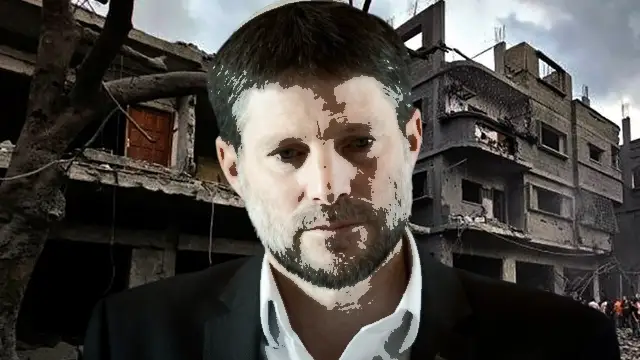
Meanwhile, Israel’s far-right politician Itamar Ben-Gvir said that the Zionist state is not bound by Mr Trump’s deal with Iran. “We are not partners to this agreement that does not ensure our security, and it does not bind us in any way. We must not compromise on anything less than the dismantling of Hezbollah, we must not withdraw from any territory that our fighters have captured and cleared of terror infrastructure, we must not return to a situation where thousands of terrorists sit on the fences of northern settlements, and certainly we must not remain silent for a moment in the face of fire directed at the State of Israel,” Mr Ben-Gvir wrote on X.
ההסכם של טראמפ אינו מחייב אותנו. ישראל לא כפופה לארצות הברית ואנחנו מדינה עצמאית וריבונית!
— איתמר בן גביר (@itamarbengvir) June 15, 2026
חובתנו לאזרחי ישראל לחיילי צה״ל ולעם היהודי וחובתנו ההיסטורית לנרדפים ולנרצחים היהודים באלפי שנות גלות, להעניק ביטחון ליהודים בארץ ישראל.
בכל פעם שנכנענו ללחץ בינלאומי על חשבון ביטחון…
At the side-lines of the G-7 Summit, Mr Trump, perturbed by his falling ratings due to Israel’s endless wars in the region, also criticised Tel Aviv’s approach in the region. Adding a new dimension to Israel’s aggression against Lebanon, Mr Trump called upon Syria under the Islamist extremists to fight Hezbollah instead.
BREAKING: President Trump publicly rebukes Israel over its war against Hezbollah.
— Fox News (@FoxNews) June 16, 2026
"Israel's fighting Hezbollah too long and too many people are being killed."
Trump said he opposed strikes that destroy apartment buildings filled with civilians and revealed he urged Israel to… pic.twitter.com/sfLxhiWTqA
For that reason, supporters of the Iran-US peace deal fear that Israeli military actions could undermine any broader effort to stabilise the region.
Violence continues despite progress on Iran-US peace deal
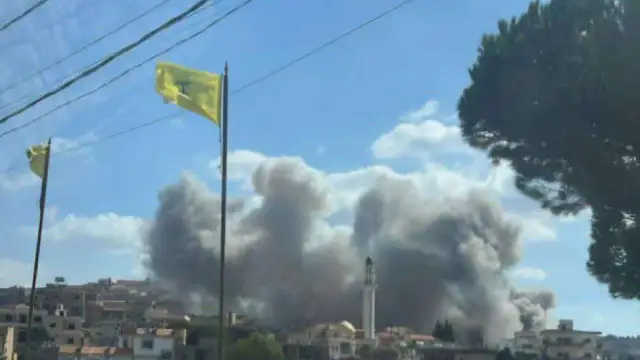
Events on the ground illustrate the fragile nature of the situation.
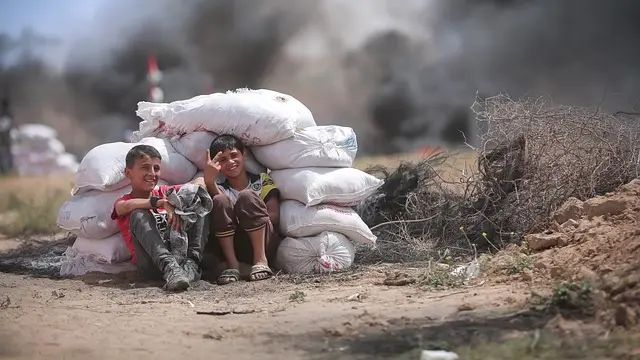
According to health authorities in Gaza, Israeli attacks on June 15th killed six people and injured six others. Rescue workers also recovered one body from areas previously struck by bombardment. A day later, on June 16th, five more Palestinians were reported killed and eight injured.
Palestinian officials say that since the Washington-brokered ceasefire of October 11th 2025, nearly 1,000 Palestinians have been killed and more than 3,100 injured. They further report that since October 7th 2023, more than 73,000 Palestinians have been killed and over 173,000 wounded.
The continuation of violence highlights the central challenge facing the Iran-US peace deal. While Washington and Tehran may be moving towards de-escalation, active conflicts remain unresolved elsewhere in the region.
Why resistance groups believe Iran-US peace deal changes balance of power
For many resistance movements, the significance of the Iran-US peace deal extends beyond the immediate ceasefire.
Their statements suggest a broader interpretation of recent events. They argue that years of sanctions, military threats and diplomatic pressure failed to force Iran into strategic concessions. Instead, they contend that Washington eventually accepted negotiations on terms that preserved Iranian sovereignty and regional influence.
This narrative has become central to how the agreement is being received in parts of West Asia. Hezbollah described the development as an achievement made possible by Iranian endurance. Hamas linked it to broader regional stability. Palestinian Islamic Jihad portrayed it as proof that resistance could compel adversaries to negotiate.
Whether those claims withstand scrutiny remains open to debate. Nevertheless, the political symbolism of the Iran-US peace deal is already shaping regional discourse.
Can the Iran-US peace deal survive without Israeli participation?
The most important unanswered question is whether the Iran-US peace deal can evolve into a comprehensive regional settlement.
The agreement currently appears focused on ending direct confrontation between the United States and Iran. Yet conflicts involving Israel, Palestinian groups and Lebanese organisations remain active. Without progress on those fronts, the ceasefire could prove vulnerable to renewed escalation.
Many observers warn that a single military incident could quickly unravel diplomatic gains. Resistance organisations have already cautioned Israel against what they describe as adventurism, while Israeli leaders continue to insist on maintaining freedom of action against perceived security threats.
As a result, the Iran-US peace deal may represent both a breakthrough and a beginning rather than a final settlement.
Fragile diplomatic opening for West Asia
The Iran-US peace deal has created an unusual moment in West Asian politics. Tehran and Washington have signalled their willingness to step back from direct confrontation after years of hostility. Resistance movements across Palestine and Lebanon have welcomed the development as a strategic victory and a validation of their broader political outlook.
Yet the region remains far from peaceful. Israeli military operations continue, casualties continue to mount, and deep mistrust persists among all major actors.
For now, the Iran-US peace deal offers a rare diplomatic opening. Whether it becomes the foundation of a wider regional settlement or merely a temporary pause in a longer conflict will depend largely on developments in Palestine, Lebanon and Israel in the weeks ahead.
East Post is an independent geopolitical analysis portal covering South Asia and global power dynamics for international audiences. Views expressed are analytical and do not constitute endorsement of any state or non-state actor.
Join our channels on Telegram and WhatsApp to receive geopolitical updates, videos and more.