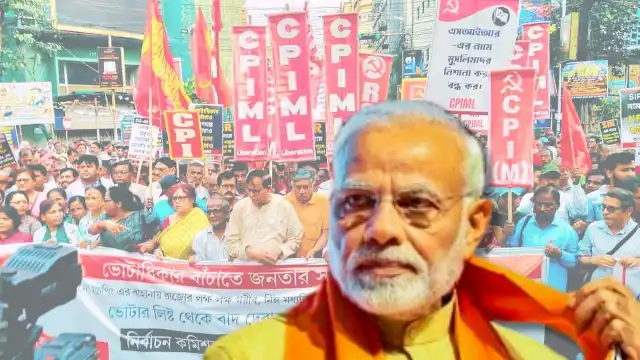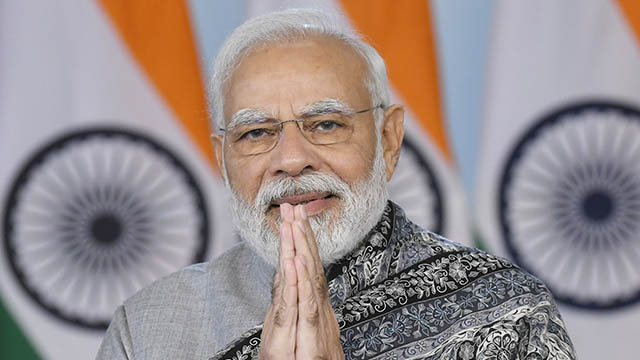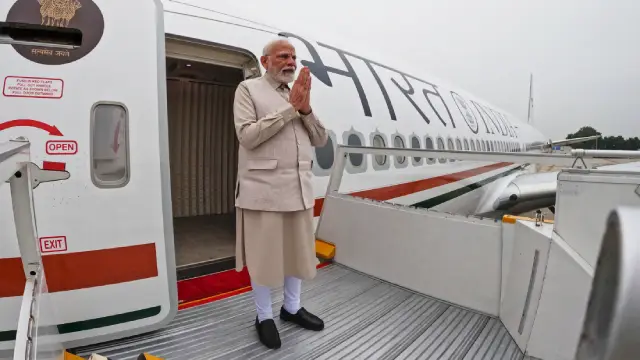
As the monsoon session of the Indian Parliament commenced on Monday, July 21st, one figure went conspicuously absent from the chambers he once dramatically called a “temple of democracy.” Prime Minister Narendra Modi, facing mounting pressure from opposition parties over allegations of American interference during Operation Sindoor, has chosen foreign diplomacy over domestic accountability. His departure for Britain and the Maldives today exposes a pattern of parliamentary avoidance that critics argue undermines India’s democratic institutions.
Opposition’s demand for answers
The collective opposition, organised under the Indian National Developmental Inclusive Alliance (INDIA), entered this monsoon session of the Indian Parliament with clear demands.
They sought Mr Modi’s presence to address serious allegations concerning American meddling during India’s four-day military skirmish with Pakistan, dubbed Operation Sindoor.
The ruling Bharatiya Janata Party assured opposition leaders that the prime minister would respond to their questions during the parliamentary proceedings.
That assurance proved hollow.
Instead of facing parliament, Mr Modi embarked on a three-day foreign tour from July 23rd to July 26th, prioritising trade negotiations with Britain and ceremonial duties in the Maldives over constitutional obligations.
The timing reveals a troubling pattern of selective attendance that has characterised his decade in office.
A tale of two Parliamentary sessions
The contrast with last year’s events proves particularly stark.
In early July 2024, Mr Modi declined to attend the Shanghai Cooperation Organization’s (SCO) summit in Astana, Russia, citing the ongoing parliamentary session as his excuse.
The Ministry of External Affairs emphasised the prime minister’s commitment to attending parliament’s first session of his third consecutive term.
External Affairs Minister S. Jaishankar represented India at the crucial geopolitical gathering instead.
This principled stance lasted exactly one year.
Today’s departure for London exposes the hollow nature of that earlier justification.
The question becomes unavoidable — what changed between July 2024 and July 2025 to make foreign travel suddenly compatible with parliamentary duties?
Western pressure and diplomatic calculations
The answer lies in geopolitical pressures rather than constitutional principles.
Mr Modi’s decision to skip the SCO summit reflected Western anxiety about India’s participation in multipolar blocs.
For Washington and its allies, India represents a crucial partner in containing China’s rise.
The prime minister’s attendance alongside Vladimir Putin and Xi Jinping would have created uncomfortable optics for this strategic partnership.
The West’s concerns centre particularly on the SCO’s potential as an alternative security architecture.
Unlike BRICS, which focuses primarily on economic cooperation, the SCO offers China and Russia opportunities to build parallel institutional frameworks that could challenge American global dominance.
Mr Modi’s presence at such gatherings sends unwelcome signals about India’s strategic autonomy.
This pressure manifested clearly during Mr Modi’s subsequent diplomatic manoeuvres.
After skipping the SCO summit, he visited Moscow to maintain ties with Mr Putin, only to face the West’s criticism, which forced a hasty trip to Ukraine to embrace Volodymyr Zelenskyy.
He became the only man in history to hug both warring leaders within a span of a month.
Such diplomatic contortions reveal the impossible balancing act India attempts between competing power blocs.
The price of diplomatic gymnastics
These elaborate efforts to satisfy all parties ultimately failed during Operation Sindoor.
Despite Mr Modi’s careful cultivation of relationships across ideological divides, no major power supported India during its confrontation with Pakistan.
Only Afghanistan’s Taliban government offered backing, highlighting the futility of India’s non-aligned positioning in today’s polarised world.
The irony proves particularly sharp given Mr Modi’s earlier embrace of Mr Xi during the BRICS summit in Kazan in October, just months after publicly hugging Joe Biden at the QUAD leaders’ meeting.
Similarly, it sparked questions on his SCO summit avoidance, which some quarters alleged was due to Mr Xi stealing the show in Astana.
Such theatrical diplomacy creates impressive photo opportunities while failing to secure meaningful support when crises emerge.
Parliamentary attendance as democratic performance
Mr Modi’s relationship with parliament has always contained elements of performance over substance.
His dramatic prostration on parliament’s steps after winning his first term in 2014 established a pattern of theatrical gestures that substitute for sustained engagement.
The construction of a new parliament building during his second term represented the physical transformation of democratic spaces without corresponding institutional strengthening.
The opposition’s criticism extends beyond simple attendance statistics.
INDIA bloc MPs argue that Mr Modi consistently avoids crucial parliamentary debates, leaving junior ministers to defend government policies while he pursues foreign travel.
This delegation of accountability undermines parliamentary oversight and reduces democratic debate to bureaucratic routine.
Monsoon session’s limited scope
This year’s monsoon session encompasses only 21 sittings, making Mr Modi’s three-day absence proportionally more significant.
Opposition leaders have repeatedly questioned his commitment to parliamentary democracy, pointing to patterns of avoidance that span his entire tenure.
His absence during critical debates suggests a fundamental misunderstanding of the prime minister’s accountability in democratic systems.
Moreover, the recent purge of Vice President Jagdeep Dhankar, a Modi loyalist per se, within a day’s notice, also raised questions over the prime minister’s intention regarding the management of parliamentary affairs.
The current controversies over Operation Sindoor, the electoral role revision in Bihar and other contentious issues make his departure particularly problematic.
Allegations of American interference in Indian military operations require prime ministerial responses, not ministerial deflection.
Parliament serves as the forum where such serious charges should be addressed directly by the country’s chief executive.
A dangerous precedent
Mr Modi’s consistent absences during parliamentary sessions establish dangerous precedents.
His approach suggests that democratic institutions can be bypassed when convenient, while governments can survive through media management rather than legislative engagement.
This pattern reflects broader concerns about democratic backsliding in India.
Critics argue that Mr Modi’s personalised style of governance, combined with his far-right Hindutva-driven party’s electoral dominance, has weakened institutional checks and balances.
Parliamentary question time, traditionally a forum for holding executives accountable, becomes meaningless when prime ministers simply refuse to attend.
Opposition’s limited options
The INDIA bloc faces structural disadvantages in challenging Mr Modi’s absences.
Prime ministers are not required to register attendance in parliament, making it difficult to quantify their participation systematically.
Opposition parties can demand explanations and express outrage, but they lack mechanisms to compel attendance at specific sessions.
This institutional weakness highlights broader problems with India’s parliamentary system.
Unlike Britain’s Prime Minister’s Questions, which ensures regular executive accountability, India’s parliament provides fewer opportunities for sustained scrutiny of government policies.
Mr Modi’s absences exploit these structural gaps while undermining the convention of prime ministerial engagement.
Monsoon session’s missed opportunities for Indian Parliament
As the monsoon session of the Indian Parliament continues without its prime minister, the absence speaks louder than his presence might have.
Opposition parties will undoubtedly use his empty chair as a symbol of arrogance and democratic decline.
The image of a prime minister prioritising foreign photo opportunities over domestic accountability creates powerful political theatre of its own.
The long-term consequences extend beyond immediate political embarrassment.
Today’s empty chair in parliament represents more than a scheduling conflict.
It symbolises a broader transformation of Indian democracy where institutions bend to accommodate the ministerial convenience rather than legislative power submitting to institutional constraint.
The temple of democracy that Mr Modi once revered now stands as a monument to his absence rather than his presence.
East Post is an independent geopolitical analysis portal covering South Asia and global power dynamics for international audiences. Views expressed are analytical and do not constitute endorsement of any state or non-state actor.
Join our channels on Telegram and WhatsApp to receive geopolitical updates, videos and more.