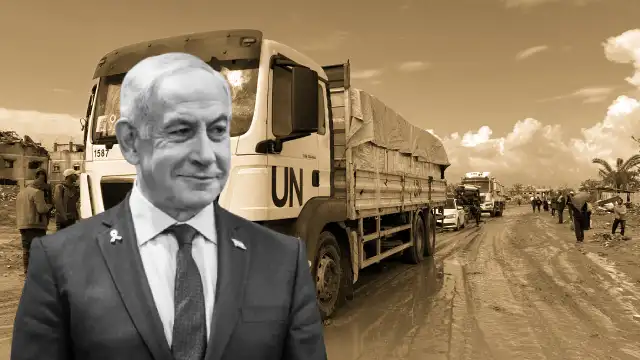
After 81 days of total blockade that pushed 2.2m Palestinians to the brink of starvation, Israel allowed 92 trucks carrying aid for Gaza to cross into the besieged territory on May 22nd 2025. The gesture, which Israeli officials have portrayed as humanitarian relief, has drawn fierce criticism from Palestinian resistance groups and UN officials who describe it as cynical theatre designed to mask an ongoing campaign of systematic starvation.
The meagre convoy represents less than one-tenth of Gaza’s daily pre-war requirements of 500 trucks. Even more telling, none of the aid for Gaza reached the northern territories, where Israeli forces have been conducting what appears to be a deliberate campaign of forced displacement through siege and bombardment.
Blocking aid for Gaza: Engineered famine arithmetic
The numbers alone reveal the hollowness of Israel’s humanitarian claims. Gaza required approximately 500 trucks daily before the war to meet basic needs. Today, with infrastructure destroyed and 2.2m people dependent on aid, requirements have soared beyond 1,000 trucks per day according to UN estimates.
Israel’s allowance of 92 trucks after nearly three months of complete blockade represents what Hamas termed “a drop in the ocean.” Of these trucks, only 90 reached southern Gaza while two were reportedly looted by gangs that Palestinian resistance groups accuse of collaborating with Israeli forces.
The geographical distribution reveals Israel’s broader strategy. Northern Gaza, home to hundreds of thousands of Palestinians whom Israel seeks to permanently displace, received no aid for Gaza whatsoever. This selective distribution aligns with Israeli plans to establish what Hamas describes as “concentration camps in the southern areas of the Strip under the guise of aid.”
UN officials have been unequivocal in their assessment. They describe the aid for Gaza as woefully inadequate for addressing the humanitarian catastrophe that has left hospitals without medicines and bakeries shuttered for over 80 days. The World Food Programme and other agencies have documented widespread malnutrition, particularly among children, as a direct result of Israel’s blockade.
Palestinian resistance condemns “starvation engineering”
The response from Palestinian political factions across the spectrum has been uniformly scathing. The left-wing Democratic Front for the Liberation of Palestine (DFLP) labelled Israel’s aid announcement as “deceptive acts to manipulate public opinion, furthering Zionist goals of genocide and displacement.”
The DFLP considers Israel’s move merely to mask its “aggression and starvation tactics,” calling it a mockery of international appeals. The organisation has called upon the Palestine Liberation Organisation’s Executive Committee and Arab states to take concrete action to break Israel’s siege of Gaza.
Hamas, which governs Gaza, offered an even more pointed assessment. The Islamic Resistance Movement described Israel’s aid allowance as “throwing dust in the eyes to deceive the international community.” In a detailed statement, Hamas argued that Israel “continues to commit the crime of systematic starvation against more than two million Palestinians in the Gaza Strip” through “rationing the entry of humanitarian aid and subjecting it to security and political equations.”
The organisation elaborated: “This is achieved by rationing the entry of humanitarian aid and subjecting it to security and political equations, as part of what has become known as ‘starvation engineering’, and by imposing facts on the ground through a ‘ghetto aid’ plan that attempts to portray this crime as a humanitarian solution.”
Hamas warned against Israel’s attempts to “implement its plan to establish what resembles concentration camps in the southern areas of the Strip under the guise of aid,” describing it as “a rejected colonial scheme that will not succeed.”
Bombs accompany bread trucks
The cruel irony of Israel’s aid theatre became apparent even as the first trucks crossed into Gaza. Israeli forces bombed a charity kitchen and bakery on May 22nd, the same day aid for Gaza supposedly demonstrated Israeli humanitarian concern.
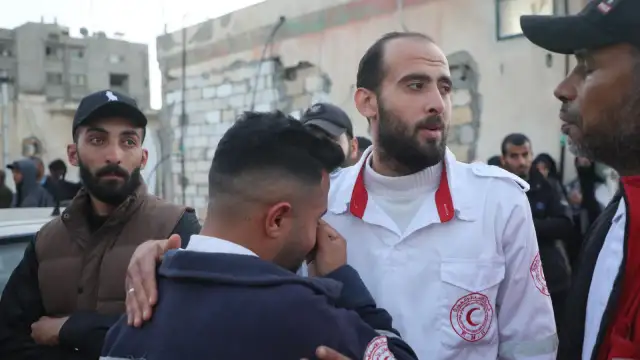
The Palestinian Ministry of Health reported 107 people killed and 247 injured in just 24 hours, bringing the death toll since March 18th to 3,613, with 10,156 injuries. Since October 7th 2023, Israeli forces have killed 53,762 Palestinians and wounded 122,197.
The scale of destruction during the period surrounding the aid announcement reveals the calculated nature of Israel’s approach. Between May 21st and May 22nd alone, Israeli forces conducted intensive bombardment across Gaza, with particular focus on Khan Younis and northern territories.
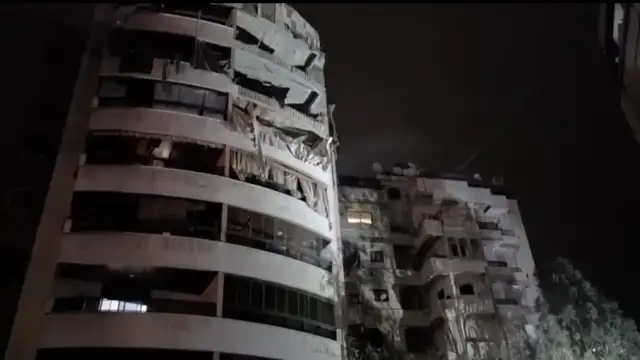
Among the most devastating attacks was the bombing of a four-storey building belonging to the Dardouna family in Jabalia Camp. The strike killed over 50 people, mostly children and women. Due to Israel’s systematic targeting of civil defence infrastructure, residents were forced to dig through rubble with their bare hands. Search operations ended due to a lack of heavy equipment needed to reach those trapped.
Israeli forces also threatened to bomb Al-Nasr School, which houses thousands of civilians in western Gaza City. Thousands of people fled their shelters in the school compound on Thursday evening, fearing an imminent attack—a pattern of forced displacement that has become Israel’s standard operating procedure.
Weaponising humanitarian assistance
Israel’s control over aid for Gaza represents the complete militarisation of humanitarian assistance. Israeli forces directly manage distribution through what they term “formal aid distribution centres” near the Morag axis between Khan Younis and Rafah. This arrangement ensures that aid becomes another tool of military control rather than genuine relief.
The timing of Israel’s aid announcement also exposes its cynical calculations. The decision came only after Hamas released Edan Alexander, an Israeli-American soldier held since October 7th. Israeli officials have made clear that aid for Gaza remains contingent on political and military developments rather than humanitarian need.
Throughout the conflict, Israeli forces have bombed 68 aid distribution centres and charity kitchens, killing dozens of Palestinians in the process. This systematic targeting of humanitarian infrastructure reveals the deliberate nature of Israel’s starvation campaign.
Prime Minister Benjamin Netanyahu himself has described the aid decision not as humanitarian relief but as a tactical move to prevent famine that might “disrupt the progress” of Israeli military operations. Such statements underscore how aid for Gaza has become subordinated to military objectives.
International complicity in manufactured crisis
The inadequacy of the international response has enabled Israel’s starvation strategy. Despite overwhelming evidence of systematic targeting of civilians, infrastructure and aid facilities, the international community has failed to take meaningful action to ensure unrestricted humanitarian access.
Hamas has called upon “the international community and humanitarian organisations to exert urgent pressure to completely lift the siege, reject the engineering of hunger and humiliation, and establish a free and permanent humanitarian corridor that ensures the unimpeded flow of aid to meet the actual needs of our people, free from control or blackmail.”
The organisation’s critique extends beyond Israeli actions to encompass international failure: “We reiterate our demand to the international community and humanitarian organisations to exert urgent pressure to completely lift the siege, reject the engineering of hunger and humiliation.”
Elimination endgame in Gaza
Israel’s token allowance of aid for Gaza serves multiple strategic purposes while providing minimal relief. It offers the appearance of humanitarian concern to deflect international criticism while maintaining the siege that serves Israel’s broader objectives of forced displacement and territorial control.
The pattern is unmistakable: Israel restricts aid to create a humanitarian crisis, then provides minimal relief to claim humanitarian concern while continuing military operations that ensure the crisis persists. This calculated approach represents what Palestinian resistance groups accurately describe as “starvation engineering”—the deliberate use of hunger as a weapon of war.
As Israeli forces continue their bombardment and Palestinian resistance groups reject what they see as humanitarian theatre, the 92 trucks of aid for Gaza stand as a symbol not of relief but of the international community’s failure to challenge Israel’s systematic starvation of an entire population. The trucks may have crossed into Gaza, but they carry with them the bitter taste of justice denied and suffering prolonged.
East Post is an independent geopolitical analysis portal covering South Asia and global power dynamics for international audiences. Views expressed are analytical and do not constitute endorsement of any state or non-state actor.
Join our channels on Telegram and WhatsApp to receive geopolitical updates, videos and more.