When Donald Trump warned that Iran could be “wiped out” if it refused American terms, the language was familiar: absolute, theatrical, and designed for domestic resonance as much as diplomatic signalling.
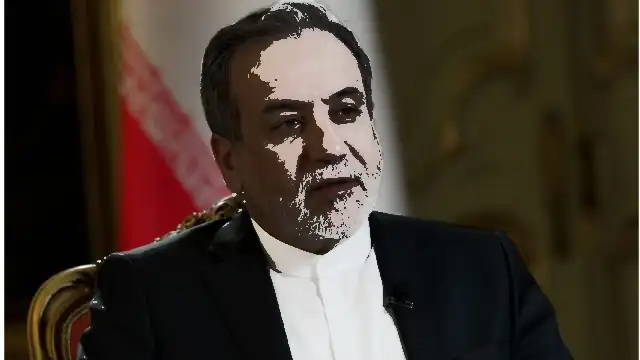
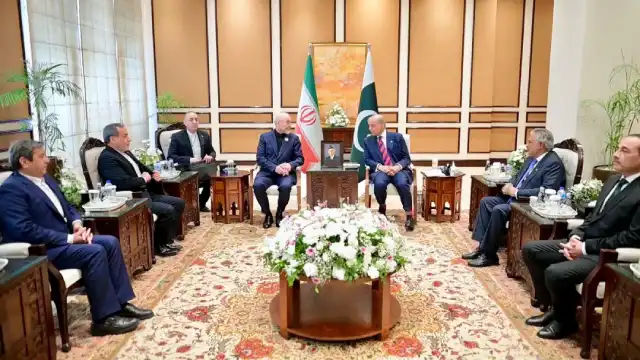
In Islamabad, however, the contrast was quieter. Across the negotiating table sat a delegation from Tehran composed not of media personalities or political inheritors, but of men whose careers were built inside institutions — war, bureaucracy, academia — and whose authority rested less on proximity to power than on their role within it.
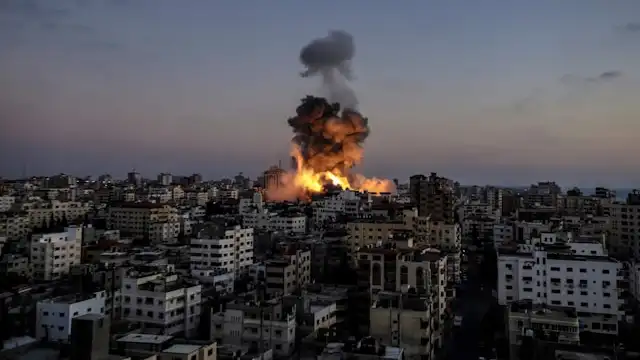
The latest round of Iran-US talks in Pakistan ended without agreement after nearly a day of negotiations. A ceasefire holds for now, but tensions around the Strait of Hormuz — through which a significant share of global oil passes — have again become the focal point of the crisis. For Europe, already navigating fragile energy markets, the implications are immediate.
Yet the failure of the talks cannot be understood only through the familiar vocabulary of sanctions, nuclear thresholds or military deterrence. What unfolded in Islamabad was also a meeting between two different ideas of how power is produced — and who is trusted to exercise it.
Expectation and exposure
Western coverage of Iran has long relied on a stable assumption: that the Islamic Republic is driven primarily by ideology, insulated from rational calculation, and resistant to compromise.
The Islamabad negotiations suggested something more complex. The Iranian delegation appeared methodical, technically grounded and institutionally coherent. The American side, by contrast, reflected a system in which political authority increasingly overlaps with private capital, personal networks and deal-making culture.
This is not a question of competence versus incompetence. It is a question of what kind of training produces what kind of state behaviour.
American delegation: power through proximity and capital
The US team in Islamabad brought together figures whose authority derives from access to capital, to networks, to the presidency itself.
Vice President JD Vance, a Yale-educated lawyer-turned-venture capitalist, led the delegation. Alongside him were individuals such as Steve Witkoff and Jared Kushner, whose careers are rooted in real estate, investment and familial proximity to executive power.
Mr Witkoff was a real estate investor who operated with the real estate mogul who later became the US president. Mr Kushner is Mr Trump’s son-in-law, and that puts him in a powerful position.
None of this disqualifies them from diplomacy. But it shapes its form.
Negotiation, in this model, resembles a transaction. Outcomes are expected within defined timeframes. Leverage — whether economic, military, or reputational — is applied to quickly produce agreement. The language used in Islamabad reflected this approach: a “final offer”, a clear threshold, and a willingness to leave if terms were not met.
It is a style consistent with a broader shift in American statecraft, where financial logic increasingly informs geopolitical strategy.
Iranian delegation: institutional memory and academic statecraft
Across the table, the Iranian delegation represented a different trajectory.
Figures such as Mohammad Bagher Ghalibaf, Abbas Araghchi, Ali Akbar Ahmadian and Abdolnaser Hemmati are products of a system in which political authority is accumulated through institutional continuity. Their careers span the Islamic Revolutionary Guard Corps, state ministries, central banking structures, and academic research.
Three of the four hold doctoral degrees. Their academic work is not ornamental. It is tied to strategic doctrine — whether in political geography, Islamic political thought, strategic management or macroeconomics.
This produces a different tempo of negotiation.
Where the American side pressed for resolution, the Iranian delegation emphasised structure: sanctions architecture, sequencing, guarantees, and the long-term balance of power in the Gulf. Agreements are not endpoints but frameworks to be tested against survival.
In intensive talks at highest level in 47 years, Iran engaged with U.S in good faith to end war.
— Seyed Abbas Araghchi (@araghchi) April 12, 2026
But when just inches away from "Islamabad MoU", we encountered maximalism, shifting goalposts, and blockade.
Zero lessons earned
Good will begets good will.
Enmity begets enmity.
That difference in tempo is not incidental. It reflects a state that has spent decades operating under pressure and has adapted accordingly.
Pakistan: mediator, but also mirror
Pakistan’s role in hosting the talks has been widely framed as a diplomatic success. And in narrow terms, it is. Islamabad brought two adversaries into direct negotiation and secured a temporary ceasefire.
But the structure of Pakistan’s own leadership reveals a different story — one that complicates its position as a neutral bridge.
Remarks by the DPM/FM Senator Mohammad Ishaq Dar @MIshaqDar50 at the conclusion of the Islamabad Talks pic.twitter.com/rg03McdIhD
— Ministry of Foreign Affairs – Pakistan (@ForeignOfficePk) April 12, 2026
Shehbaz Sharif leads a political system where authority often follows lineage as much as merit. From the Sharif family to the Bhutto dynasty, Pakistan’s top offices have historically circulated within a narrow elite, shaped by patronage, business interests and inherited networks.
Alongside Sharif, figures such as Ishaq Dar and Asim Munir bring technocratic and military expertise. Yet the broader system remains marked by a tension between institutional capacity and feudal continuity.
This explains Pakistan’s effectiveness as a mediator. It can speak the language of capital to Washington. Experts believe Pakistan’s excessive reliance on the US and its detachment from any civilisational values have made it a strange entity even in the Global South.
Who really participated in negotiations?
Analysing the Educational & Career Trajectories of Key Figures
United States of America
JD Vance
🎓 Education: Yale Law School (JD), Ohio State University (BA).
💼 Prior Career: Venture Capitalist, Author, U.S. Marine Corps.
⭐ Achievement: Rapid ascent from venture capital to the Vice Presidency.
Steve Witkoff
🎓 Education: Hofstra University (JD).
💼 Prior Career: Real Estate Investor, Founder of Witkoff Group.
⭐ Achievement: Built a massive global real estate empire.
Jared Kushner
🎓 Education: Harvard University (BA), NYU (JD/MBA).
💼 Prior Career: Real Estate Developer, Publisher.
⭐ Achievement: Key architect of the Abraham Accords.
Marco Rubio
🎓 Education: University of Miami (JD), University of Florida (BA).
💼 Prior Career: Attorney, Florida Speaker of the House, Senator.
⭐ Achievement: Longstanding tenure on Foreign Relations committees.
Scott Bessent
🎓 Education: Yale University (BA).
💼 Prior Career: Hedge Fund Manager, Founder Key Square Group.
⭐ Achievement: Recognised leading macroeconomic investor.
Adm. Brad Cooper
🎓 Education: U.S. Naval Academy, National Intel University (MS).
💼 Prior Career: Career Military Officer, Commander Fifth Fleet.
⭐ Achievement: Pioneered unmanned AI naval task forces.
Andrew Baker
🎓 Education: Advanced degrees in International Relations.
💼 Prior Career: Intelligence Analysis, Policy Advisory.
⭐ Achievement: Strategic formulation of core security doctrines.
Michael Vance
🎓 Education: Geopolitical & Regional Studies disciplines.
💼 Prior Career: Indo-Pacific Policy Specialist.
⭐ Achievement: Steering complex bilateral communications.
Islamic Republic of Iran
M. Bagher Ghalibaf
🎓 Education: Tarbiat Modares Univ. (PhD Political Geography).
💼 Prior Career: IRGC Air Force Commander, Mayor of Tehran.
⭐ Achievement: Extensive modernisation of Tehran’s infrastructure.
Abbas Araghchi
🎓 Education: University of Kent (PhD Political Science).
💼 Prior Career: Career Diplomat, Deputy Foreign Minister.
⭐ Achievement: Chief negotiator during nuclear discussions.
Ali Akbar Ahmadian
🎓 Education: Supreme National Defence Univ. (PhD), Dentistry.
💼 Prior Career: Commander of IRGC Navy, Head of Joint Staff.
⭐ Achievement: Architect in asymmetric naval warfare doctrine.
Abdolnaser Hemmati
🎓 Education: University of Tehran (PhD Economics).
💼 Prior Career: Academic, Head of Central Insurance.
⭐ Achievement: Managed economy through international sanctions.
Pakistan
Shehbaz Sharif
🎓 Education: Government College University, Lahore (BA).
💼 Prior Career: Industrialist, Chief Minister of Punjab.
⭐ Achievement: High-speed infrastructure development projects.
Mohammad Ishaq Dar
🎓 Education: Hailey College of Commerce (FCA).
💼 Prior Career: Professional Accountant, Finance Minister.
⭐ Achievement: Steered complex IMF negotiations.
Asim Munir
🎓 Education: Officers Training School, Fuji School Japan.
💼 Prior Career: Director General ISI, Director General MI.
⭐ Achievement: Led both premier intelligence agencies.
The Academic Disparity
This stacked analysis reveals a striking contrast. The total height of the bars shows that the US and Pakistani delegations have more members. However, despite their smaller size, the Iranian delegation is comprised entirely of PhD holders, whereas the larger delegations rely on Law (JD) and Bachelor’s/Master’s degrees.
Professional Genesis Comparison
A comparative look at the primary career fields these figures occupied before their current roles. The US and Pakistan lean heavily on business, finance, and political backgrounds, whereas Iran leverages military, academic, and diplomatic histories.
Europe’s misreading costs much
For European governments, the breakdown of the Iran-US talks is primarily an energy story.
Any escalation around the Strait of Hormuz risks immediate consequences: higher oil prices, disrupted shipping routes, renewed inflationary pressure. These are familiar concerns, especially after successive shocks since 2021.
Less acknowledged is the analytical gap.
European policy has often aligned with American assumptions about Iran — treating it as unpredictable, ideologically rigid, and therefore manageable through pressure. The composition of the Iranian delegation in Islamabad challenges that view.
A system built on institutional training and long-term strategic thinking does not respond predictably to short-term leverage. It absorbs pressure, recalibrates and waits.
Misreading that dynamic carries costs. Not only in failed diplomacy, but in repeated exposure to crises that are assumed to be containable.
Two models, one impasse
What emerged in Islamabad was not simply a failed round of talks. It was a demonstration of two models of power operating on different timelines.
One model — increasingly visible in the United States — derives authority from capital, speed and the ability to impose outcomes within compressed political cycles.
The other — exemplified by Iran — is slower, more rigid, and grounded in institutional memory and academic framing, in which endurance itself is a strategy.
These models are not easily reconciled. When they meet, negotiation becomes a source of friction.
The cost of misunderstanding
The immediate consequence of that friction is visible: stalled talks, a fragile ceasefire, and rising tensions in one of the world’s most critical energy corridors.
The deeper consequence is less visible but more significant.
If one side assumes the other can be pressured into rapid agreement, while the other assumes time is on its side, diplomacy becomes a process of mutual miscalculation.
For Europe, the result is not theoretical. It is measured in energy prices, supply disruptions and economic vulnerability.
The Iran-US talks in Pakistan did not fail because the issues were too complex to resolve. They failed because the actors approached them with fundamentally different assumptions about how power works.
One seeks resolution through pressure and speed.
The other through structure and endurance.
Until that gap is recognised — not rhetorically, but analytically — future negotiations are likely to follow the same pattern.
And each time they do, the consequences will travel far beyond Islamabad, reaching markets, households and governments across Europe.
East Post is an independent geopolitical analysis portal covering South Asia and global power dynamics for international audiences. Views expressed are analytical and do not constitute endorsement of any state or non-state actor.
Join our channels on Telegram and WhatsApp to receive geopolitical updates, videos and more.