After Israel broke the Gaza ceasefire deal and launched attacks on the besieged enclave on March 18th, Tel Aviv has been condemned by most of the friends of Palestine, sans India. While Prime Minister Narendra Modi and his Ministry of External Affairs (MEA) were busy sharing the snippets of a podcast he recorded with a western influencer and promoting the Raisina Dialogue, an annual geopolitical discussion hosted in New Delhi, there has been no statement on Israel’s attacks on Gaza even after 24 hours of the strikes.
According to Palestinian resistance sources, Israel’s attacks on Gaza killed 424 civilians. Among those killed by Israel on Tuesday are 174 children, 89 women, 32 elderly, and 109 men. Around 160 were killed in Rafah and Khan Younis of the enclave.
Palestinian resistance claimed that in its targeting of homes, mosques, and shelters, over 600 Gazans were wounded by Israeli airstrikes, amid a shortage of medical supplies and services, in addition to a lack of entry of aid and closing of the crossings for 17 days.
Raisina avoids Gaza
While India continued to host the Raisina Dialogue, amid the bloodbath in Gaza, it refrained from referring to the violence unleashed by its “partner” Israel, let alone any condemnation of Israel’s unilateral violation of the ceasefire.
US Director of National Intelligence Tulsi Gabbard, who ardently supports Zionism and Mr Modi’s far-right Hindutva ideology, spoke at the Raisina Dialogue and refrained from mentioning Israel’s attacks on Gaza.
Rather, she hailed US President Donald Trump’s role obliquely referring to the conflicts in Gaza and Ukraine. Mr Trump has been emphasising the US occupation of Gaza and banishing the Palestinians from the entrapped enclave. Ms Gabbard didn’t refer to it while hailing her boss’s vision in New Delhi.
Prolonged silence
India’s silence on Israel’s attacks on Gaza, violating the January 2025 ceasefire, isn’t surprising. It aligns with its overall approach towards the Palestine issue under Mr Modi’s government.
Since Operation Al-Aqsa Flood launched by the Palestinian resistance on October 7th 2023, Mr Modi’s government has taken an opportunist stance on the question of Israel’s attacks on Gaza. Although India has historically supported the liberation of Palestine, Mr Modi took a pro-Israel stance in October 2023, and following discontent in the Arab world, which is crucial for India’s energy supplies, the government took a u-turn later.
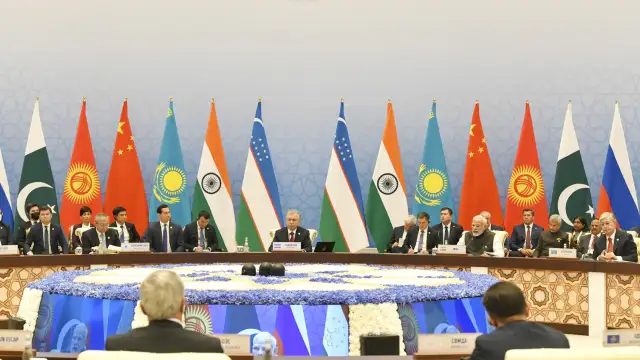
Mr Modi’s government, despite being an important member of the multipolar bodies like BRICS and Shanghai Cooperation Organization (SCO), refrained from joining other members in calling Israel’s war crimes in Gaza an act of “genocide” and India mostly abstained from crucial votings against Israel in the United Nations.
Experts claim Mr Modi’s growing reliance on Israel, in defence, technology, agriculture and other sectors, has made it imperative for him to support Israel’s attacks on Gaza indirectly. However, to conform with India’s long-standing foreign policy, the Indian MEA kept reiterating the demand for a two-state solution, which is a long-term demand, without demanding an immediate ceasefire or accusing Israel of committing war crimes.
How Israel’s attacks on Gaza impact India
While India needs the Arab world for its energy security, unlike the 1960s and 1970s, the rulers of the Arab world, especially the Gulf monarchies, are now aligned with Israel. Although Saudi Arabia refuses to establish ties with Israel under Mr Trump’s “Abraham Accord 2020”, it’s principally a partner of the India-Middle East-Europe Economic Corridor (IMEC) project proposed by India as an alternative to China’s Belt-Road Initiative (BRI).
The UAE, Egypt and Jordan, potential IMEC partners for India and the US, are already sharing cordial relations with Israel. Other Arab countries, sans Syria under former president Bashar al-Assad and Yemen under the Houthi rebels, have been nonchalant regarding the plight of the Palestinian people.
So, India’s energy security faces no challenge due to its pro-Israel stance as all Arab monarchs are standing firmly with Israel despite their occasional rhetoric mongering on Palestine’s plight.
While India’s pro-Palestine stance was a result of its alliance with the Soviet Union during the Cold War era, it’s largely a baggage of the past now. Under Mr Modi, India has gradually shifted to the US-led world order and aligned with Israel on several fronts. It’s unlikely that Mr Modi and his far-right government, which has been ideologically aligned with Zionists, will take any step that can disrupt the equation.
So, it became important for Mr Modi to play a peacemaker’s role in Ukraine, where he used his friendship with Russian President Vladimir Putin to promote the idea of peace. However, despite sharing strong bonds with Israeli Prime Minister Benjamin Netanyahu, Palestinian leaders and Iran’s government, Mr Modi didn’t take any initiative to restore peace in Palestine due to no assurance of western rewards.
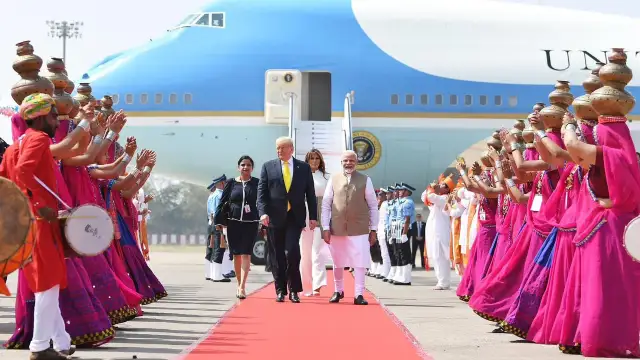
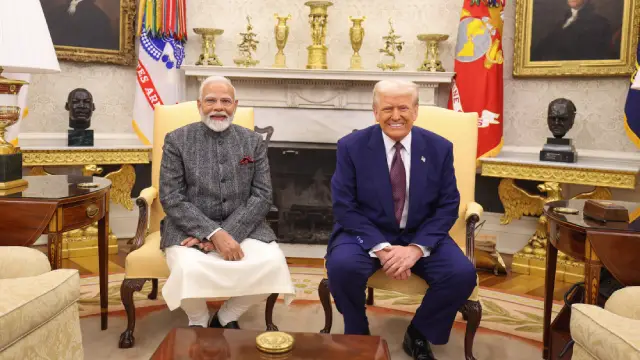
Moreover, with Mr Trump’s ascension, Mr Modi has sacrificed much of India’s long-term trade interests to appease the US president with whom he shares a common Islamophobic vision. In doing this, Mr Modi will now vouch less for a multi-polar world and support the US-led world order vociferously, which needs it to discard the pro-Palestine stance.
Thus, India doesn’t have any compulsion towards supporting Palestine any more, except for occasionally reiterating the “two-state solution”, which Mr Netanyahu strongly opposes. With no compulsions and no repercussions, it’s now absolutely ok for India to ignore Israel’s attacks on Gaza and remain nonchalant towards the agony of the Palestinian people.
East Post is an independent geopolitical analysis portal covering South Asia and global power dynamics for international audiences. Views expressed are analytical and do not constitute endorsement of any state or non-state actor.
Join our channels on Telegram and WhatsApp to receive geopolitical updates, videos and more.