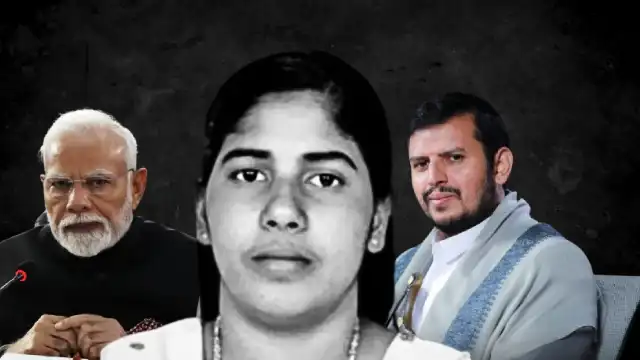
A convict on the death row had brought a rare opportunity for India to normalise relations with Yemen. Yet, Prime Minister Narendra Modi’s government’s indecision related to Kerala’s nurse Nimisha Priya, sentenced to death for killing her business partner in Yemen, killed a crucial diplomatic scope.
Now, news has emerged that a Sunni Islamic scholar, Sheikh Abubakr Ahmad, the 10th Grand Mufti of India, who is also the founder of Jamia Markaz Saqafathu Sunniyya, has mediated personally using his influence, along with Kerala’s evangelist KA Paul, who has visited Yemen. Their mediation has stalled Ms Priya’s death sentence, which was scheduled for today, July 16th.
The execution of Nimisha Priya, which was scheduled to take place tomorrow (16/07/25), has been postponed to another day.
— Sheikh Abubakr Ahmad الشيخ أبوبكر أحمد (@shkaboobacker) July 15, 2025
This is the verdict given by the Public Prosecution of Specialized Criminal Court, Republic of Yemen, today. pic.twitter.com/QvPrrF8zCu
The Union had earlier stated in the Supreme Court, which was hearing a petition urging diplomatic intervention, that India can’t engage with Yemen and save Ms Priya.
Even though Kerala’s Chief Minister Pinarayi Vijayan, Communist Party of India (Marxist) Member of the Parliament (MP) John Brittas and Indian National Congress’s Alappuzha MP KC Venugopal had pleaded with Mr Modi’s government, the latter remained nonchalant in saving Ms Priya’s life.
Wrote to Hon'ble PM Shri @narendramodi Ji urging urgent intervention to secure the release of Nimisha Priya, who remains imprisoned in Yemen. The Govt of Kerala stands firmly with all those working towards her exoneration and safe return. pic.twitter.com/IekEHsxi3h
— Pinarayi Vijayan (@pinarayivijayan) July 14, 2025
India proudly upholds its Viswa Guru image, yet the imminent execution of Nimisha Priya, a Malayali nurse in Yemen, reportedly scheduled for July 16, 2025, requires urgent intervention. An action committee committed to collecting the necessary blood money, transferring $40,000,… pic.twitter.com/cVaEOxnmCQ
— John Brittas (@JohnBrittas) July 9, 2025
The death sentence against Nimisha Priya is a grave travesty of justice. She is a victim of unimaginable cruelty and domestic abuse on foreign soil, driven to the brink.
— K C Venugopal (@kcvenugopalmp) July 12, 2025
She doesn’t deserve to die.
I’ve written to the PM seeking urgent intervention to prevent her execution. pic.twitter.com/PI18YZZGCY
While Mr Modi’s government had earlier taken the credit for stalling the death sentence of eight former Indian Navy personnel in Qatar, who were later brought to India, in the case of Yemen, New Delhi remained non-persuasive.
One of the reasons behind allowing Ms Priya’s execution to go ahead unhindered is India’s reluctance to recognise the Houthi-led government in Sana’a.
Following the civil war in Yemen, the country is now divided into two parts.
On the one hand is the Houthi-led Supreme Political Council (SPC), which controls the country’s northern and western parts, bordering the Gulf of Aden; on the other is the West-backed Presidential Leadership Council (PLC), led by Rashad al-Alimi, which controls the southern and eastern parts.
Due to India’s close ties with the US-led Israel–Saudi Arabia–UAE nexus in West Asia, New Delhi has never recognised the Houthi-led Yemen government, especially following the latter’s open hostility against the Israelis and attacks on marine traffic linked to Tel Aviv in solidarity with the suffering people of Gaza.
As India remains a mute spectator in the Gaza conflict, while unofficially aiding Israel through its military-industrial complex controlled by Mr Modi’s closest industrialist Gautam Adani, it’s hard for the government to engage with the Houthis, which can cause discomfort to Tel Aviv, Riyadh and Abu Dhabi, apart from Washington.
To maintain this diplomatic status quo, India agreed to sacrifice one of its citizens, who has been condemned according to the harshest Islamic laws.
Now, the question arises, in case the Grand Mufti, Mr Ahmad, had not intervened, along with Mr Paul, who met the family members of the victim and Houthi leaders to have the sentence postponed, could India do nothing to save Ms Priya’s life in Yemen?
What were the ways for it to save Ms Priya, without establishing close ties with the Houthis?
The Afghan way: India missed the road to Yemen
India has not recognised the Taliban-led Afghan government in Kabul since the US forces were booted out by the Islamists in August 2021.
However, without having diplomatic ties, India has developed strong ties with Afghanistan under the Taliban and received security guarantees from them, using their shared hostilities with Pakistan.
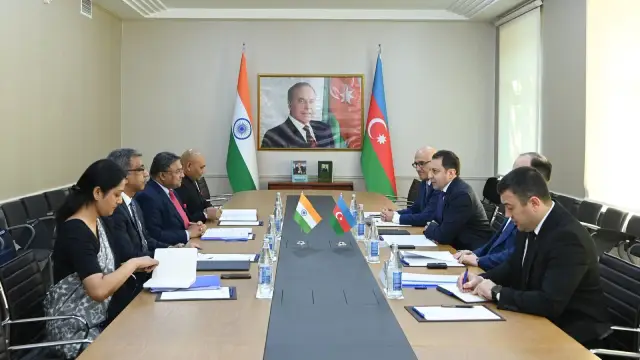
In the case of Yemen, despite recognising the PLC, India could have had dialogue with the SPC on broader terms, especially to secure its marine traffic in the Red Sea.
For this, India’s backchannel diplomatic endeavours could have been helpful.
Yet, Mr Modi’s excessively pronounced pro-Israel stance and fear of upsetting the West prevented India from not only saving Ms Priya’s life in Yemen but also from safeguarding its marine traffic in the Red Sea.
To maintain India’s ties with the PLC and remain in the good books of the West, India found it better to ignore Yemen altogether and maintain a nonchalant attitude regarding Ms Priya’s life.
Meanwhile, the disturbing trend of anti-Muslim rhetoric spewed by Mr Modi’s far-right, Hindutva-incensed Bharatiya Janata Party (BJP) leaders and cadres on social media made it difficult for the government to take another set of pragmatic steps.
Missing the Iran train: How India could’ve reached Yemen
The Houthi rebels form a core part of Iran-led “Axis of Resistance”, developed by the Islamic Republic to carry out its proxy war against Israeli aggression in Palestine, Lebanon, Syria and other countries.
India shares strong ties with Iran, despite Washington’s diktats.
Both countries aren’t merely together in multipolar platforms like BRICS and the Shanghai Cooperation Organization, India has also received a long-term contract to run the Chabahar Port in Iran, which it has helped build to counter the influence of Pakistan’s Gwadar Port in the restive Baluchistan province.
Despite Iran-Israel tensions, an Indian Navy delegation went to the Islamic Republic for a joint exercise. The two countries also saw a spike in their bilateral trade, which reached $2.33bn in the financial year 2022-23.
However, since Israel started its aggression on Gaza in October 2023, New Delhi became wary of being seen with Tehran, despite concluding the Chabahar treaty in 2024 summer.
Due to India’s constant soft stance on Israel and its reluctance to call the aggression on Gaza a “genocide” due to geopolitical and economic reasons, Tehran’s attitude towards New Delhi also saw a major shift.
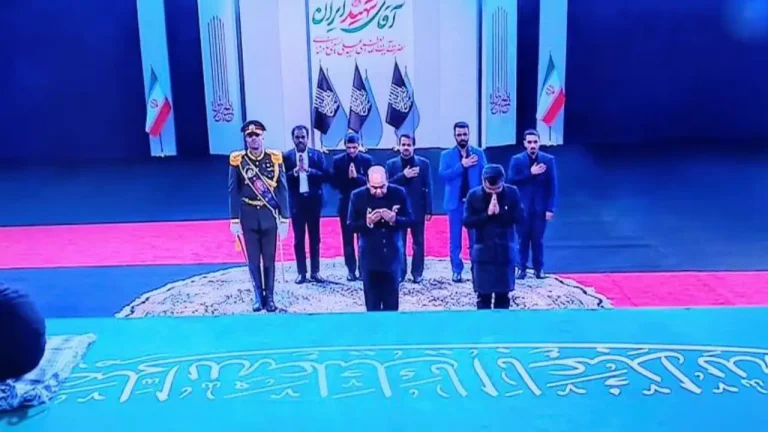
While the executive and legislative interactions continued, India found itself in a difficult spot when Iran’s Supreme Leader, Ayatollah Ali Khamenei, criticised the violence against Muslims in the country.
Not only did the BJP’s hardcore Hindutva trolls attack Mr Khamenei, India’s Ministry of External Affairs also condemned him, risking India’s strategic relations with the Gulf country.
Eventually, when Israel launched a large-scale attack on Iran in June 2025, India remained a mute spectator and called on both parties to de-escalate, without categorically condemning the provocative aggression by Israel and the US.
Despite Iran playing the peacemaker’s role during India’s four-day-long military skirmish with Pakistan in May 2025, India merely played the “neutral” role during the Iran-Israel conflict and escaped taking a principled stance.
While External Affairs Minister S Jaishankar spoke to his Iranian counterpart Abbas Araghchi, advocating peace, despite New Delhi’s own involvement in a military skirmish with Pakistan following the Pahalgam terror attack, New Delhi refrained from using its Tehran ties to engage with Yemen.
Had India used its Iran ties to influence Yemen to save Ms Priya’s life, it wouldn’t have been left with India’s Islamic scholars and evangelists to deal with such a grave issue. However, for India, something else became more important than Ms Priya’s life.
The corridor and geopolitics
India needs Israel, Saudi Arabia and the UAE, under the aegis of the US, to implement the proposed India-Middle East-Europe Economic Corridor (IMEC).
The IMEC was envisioned during the 2023 G-20 Summit in New Delhi by then US president Joe Biden and Mr Modi to counter China’s Belt-Road Initiative (BRI).
It will help transport cargo from India’s Mundra Port in Gujarat to the UAE through the sea route and then from there on railroads to Israel’s Haifa Port, through Saudi Arabia and Jordan.
From Haifa, the cargo will reach Europe through Italian ports.
During his speech at the United Nations General Assembly in September 2024, Israeli Prime Minister Benjamin Netanyahu hailed the IMEC and partners like Saudi Arabia and the UAE.
The route will not only transport cargo, but will also transport hydrogen and high-speed data across the territories.
For Mr Modi, the IMEC project is quite crucial. It’s for this that India didn’t speak against Israeli aggression on Lebanon or neighbouring Syria.
It’s for the sake of the smooth implementation of the IMEC project, which remains stalled as Saudi Arabia has opposed its implementation officially until the Palestine issue is sorted, Mr Modi’s government has refused to engage with Yemen extensively to safeguard India’s marine traffic or to save Ms Priya’s life.
The reason Mr Modi is concerned more about the IMEC, despite it remaining paused, is because it’s strongly tied with Mr Adani’s port-to-power conglomerate Adani Enterprises.
Mr Adani’s subsidiary owns the Mundra Port in India and Haifa Port in Israel. The conglomerate is also trying to buy Italian ports and transport hydrogen and data through the IMEC to Europe.
Any diplomatic endeavour with Yemen can further complicate the future of the IMEC project, by irking Israel, Saudi Arabia, the UAE and the US, due to their hostilities with Sana’a.
Thus, it becomes a matter of convenience for India to stay aloof from Yemen and ignore the plight of Ms Priya’s family members, who have been pleading with the government to save the Indian nurse who faced an ordeal in the war-torn country.
It remains to be seen whether Mr Ahmad and Mr Paul’s endeavours can save Ms Priya’s life in Yemen, but India’s reluctance to go the extra mile to save its citizens’ lives shows a lack of courage. This raises questions over Mr Modi’s supporters’ claims that his government has enhanced India’s global image, reputation and influence.
East Post is an independent geopolitical analysis portal covering South Asia and global power dynamics for international audiences. Views expressed are analytical and do not constitute endorsement of any state or non-state actor.
Join our channels on Telegram and WhatsApp to receive geopolitical updates, videos and more.