Chief Adviser Mohammad Yunus‘s interim government confronts escalating domestic and international challenges just days before Bangladesh participates in the crucial Shangri-La Security Dialogue in Singapore, as political parties demand swift elections while external pressures threaten the nation’s sovereignty.
Bangladesh participates in the Shangri-La Security Dialogue at a pivotal moment when Mr Yunus’s administration struggles to balance competing demands from within and mounting interference from neighbouring India.
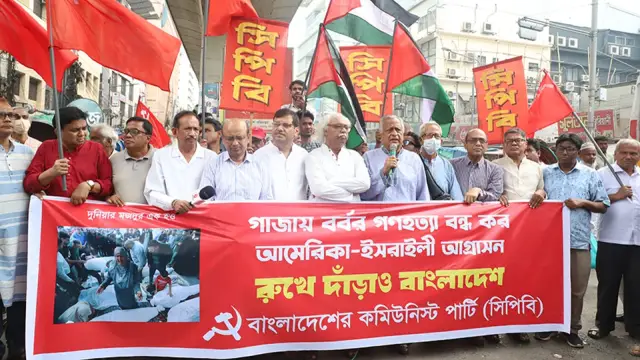
The timing proves particularly delicate as the May 30th-31st summit approaches. Mr Yunus’s government finds itself isolated on key policy decisions, with major political parties, including the Bangladesh Nationalist Party (BNP) and the Communist Party of Bangladesh (CPB), alongside Army Chief Waker-Uz-Zaman, pressing for immediate elections while questioning the interim administration’s authority to make far-reaching foreign policy commitments.
Sovereignty concerns overshadow diplomatic preparations
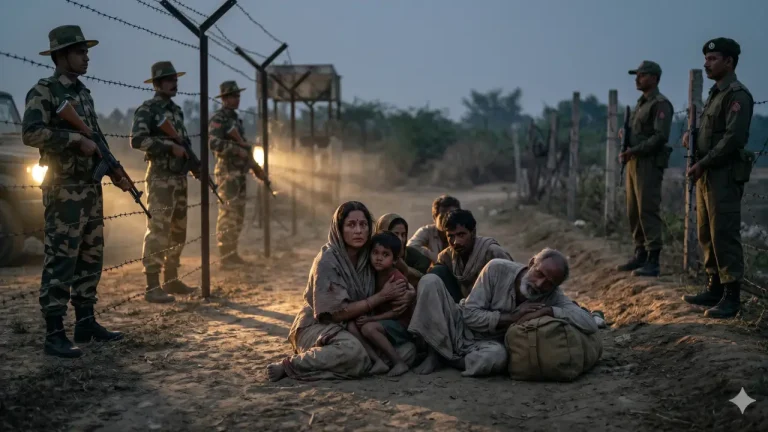
The most contentious issue threatening to undermine Bangladesh’s position at the Shangri-La Security Dialogue involves proposed discussions with the United Nations and Western powers regarding a “humanitarian corridor” for Rohingya refugees in Myanmar’s Rakhine province.
This initiative has sparked fierce opposition from across Bangladesh’s political spectrum, with critics arguing that such decisions exceed an interim government’s mandate.
“It seems that tactics to delay the next election have already begun or are underway. The future of the election is caught in a whirlpool of the so-called minor and major reform demands,” declared Tarique Rahman, BNP’s acting chairman, while addressing a massive rally in Dhaka’s Naya Paltan on Wednesday, May 28th.
The far-right BNP and CPB-led left forces maintain that only an elected government possesses the authority to establish international corridors that could compromise national sovereignty.
Their concerns extend beyond constitutional propriety to fundamental questions about Bangladesh’s founding principle of non-interference in other nations’ internal affairs.
Army Chief Mr Zaman has echoed these concerns, warning that such a corridor could jeopardise national security by making Bangladesh a party to Myanmar’s civil war—a conflict that serves as a crucial battleground for American, Chinese, Russian and Indian geopolitical interests.
Political isolation deepens before Shangri-La Security Dialogue
The interim government’s position on the humanitarian corridor has created an unusual political alignment that leaves Mr Yunus’s administration increasingly isolated.
Only far-right Jamaat-e-Islami Bangladesh and certain foreign-funded Islamist organisations provide covert support, alongside some pro-Western content creators living abroad.
This isolation proves particularly problematic as Bangladesh prepared for the Shangri-La Security Dialogue.
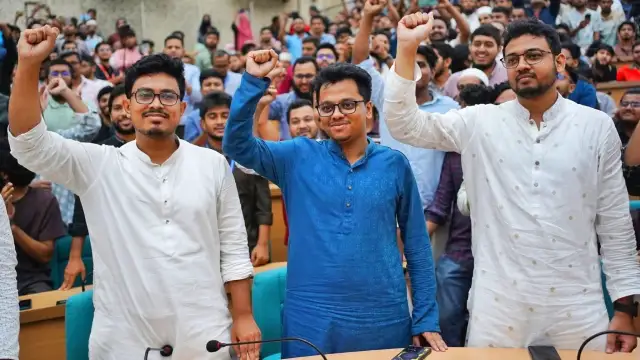
The newly-founded National Citizens’ Party (NCP) has notably refrained from opposing Mr Yunus’s policies, primarily because many of its members serve within the caretaker government—a conflict of interest that undermines genuine political debate.
“The interim government is focusing on issues outside the reform discussions, thereby putting the consensus building among the political parties into a crisis,” criticised Ruhin Hossain Prince, general secretary of the CPB, on May 19th.
His comments reflect growing frustration with the government’s apparent mission creep beyond its mandated responsibilities.
The BNP and CPB, despite their ideological differences, have found common ground in demanding that the interim government restrict itself to essential tasks: systematic reforms, addressing injustices committed by the previous Sheikh Hasina regime, investigating human rights violations, and conducting free elections.
Indian interference complicates regional dynamics
Bangladesh’s preparation for the Shangri-La Security Dialogue occurs against a backdrop of escalating Indian interference in domestic affairs.
New Delhi stands accused of sponsoring internal disputes through Hindutva-aligned organisations such as ISKCON while conducting systematic misinformation campaigns through mainstream Indian media outlets.
Before Bangladesh meets India at the Shangri-La Security Dialogue in Singapore, it has already fighting New Delhi’s handwork at different levels, including at the highest echelon of power.
New Delhi’s anti-Bangladesh disinformation campaign reached such intensity that Mr Yunus’s office was compelled to engage in public fact-checking through social media platforms to counter Indian media fabrications about communal violence in Bangladesh.
This unprecedented step highlights the severity of external pressure facing the interim government.
India’s strategic calculations regarding the Bangladesh Shangri-La Security Dialogue reflect broader regional power dynamics.
New Delhi appears to favour rapid elections that would likely bring the BNP to power, calculating that such an outcome would restore more favourable bilateral relations compared to the current administration’s independent stance.
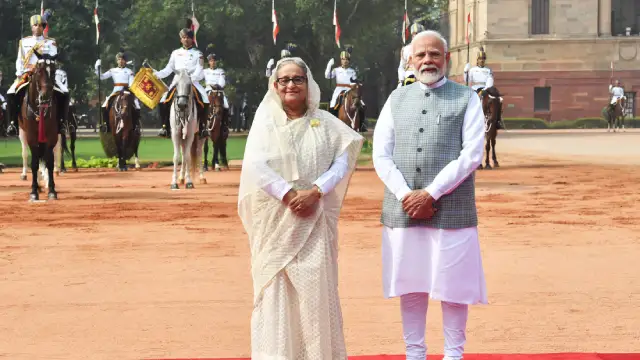
However, India’s recent blocking of Bangladeshi cargo access and Prime Minister Narendra Modi‘s persistent complaints about Bangladesh to international partners, including US President Donald Trump, suggest a deteriorating relationship regardless of electoral outcomes.
The massive public support demonstrated by Bangladeshis for Pakistan during recent India-Pakistan tensions further complicates prospects for improved relations.
It’s unlikely that any future elected government in Dhaka would dare to take a pro-India stance or even strengthen ties with New Delhi due to the latter’s attitude towards Bangladesh during and after the Awami League era.
Economic achievements amid political turbulence
Despite mounting political pressures before Bangladesh’s Shangri-La Security Dialogue participation, Mr Yunus’s government has achieved significant economic progress that strengthens its international credibility.
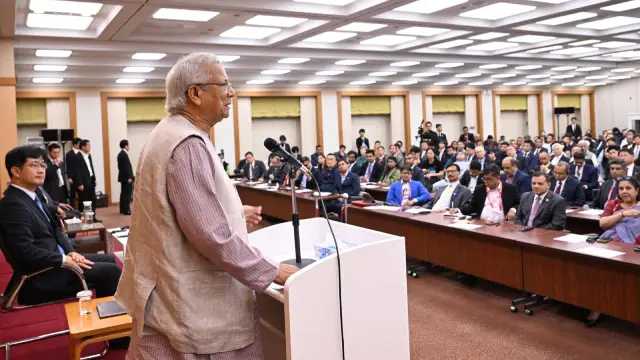
During his recent Japan tour, Mr Yunus outlined substantial accomplishments in banking sector reform, foreign exchange reserve rebuilding, and debt repayment.
“The previous regime destroyed every institution of our country, forcing the young people to rise up against it. The young people invited me to fix the mess that has been created,” Mr Yunus explained while in Tokyo.
His comments underscore the interim government’s legitimacy derived from the August 5th 2024 uprising that toppled Ms Hasina’s regime.
The Japan visit yielded concrete results, with Bangladesh expecting to complete Economic Partnership Agreement negotiations by August and sign the accord in September.
Once finalised, Japan will become the first country to establish such comprehensive economic ties with Bangladesh—a significant diplomatic achievement that enhances the nation’s standing before the Singapore summit.
This is also a setback for India, which has been strengthening its alliance with Japan against China under the aegis of the US.
“Japan has given every kind of assistance that we needed in the past ten months. I want to thank Japan a lot for its support. This is, in a way, a thank you tour,” Mr Yunus acknowledged, highlighting successful diversification of international partnerships beyond traditional Western allies.
Geopolitical calculations for Bangladesh’s participation in Shangri-La Security Dialogue in Singapore
Bangladesh’s participation in the Shangri-La Security Dialogue requires careful navigation of competing great power interests.
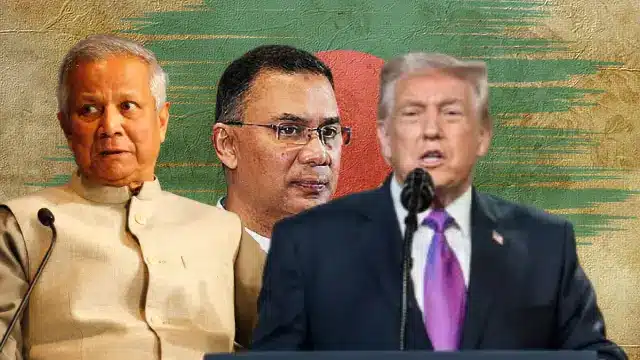
Mr Yunus’s government faces particular challenges given Mr Trump’s personal antipathy toward the Nobel laureate, stemming from their historical political differences and Mr Yunus’s long-standing Democratic Party affiliations.
This personal dimension complicates Bangladesh’s relationship with the United States precisely when the Shangri-La Security Dialogue seeks to build consensus among Asian nations regarding China’s regional role.
With traditional Western partnerships strained, Dhaka must consider whether closer alignment with Beijing better serves national interests.
During his last visit to China in late March, Mr Yunus cemented Bangladesh’s bilateral ties with China, where fissures had appeared due to Ms Hasina’s excessive obeisance towards India despite seeking aid from Beijing.
Facing trouble from the US, which is relying on India excessively to counter China, Mr Yunus formed a strategic alliance with Beijing during his win-win trip.
The interim government’s position becomes more complex given that the Singapore summit explicitly aims to contain Chinese influence in the Indo-Pacific region.
Bangladesh’s geographical position and economic needs suggest that antagonising Beijing would prove counterproductive, regardless of Western pressure.
China’s consistent support for Bangladesh’s sovereignty and development contrasts sharply with American and Indian interference in domestic affairs.
This reality shapes Bangladesh’s strategic calculations as the Shangri-La Security Dialogue approaches.
Regional implications of Bangladesh’s choices
Bangladesh’s participation in the Shangri-La Security Dialogue will be closely watched as an indicator of South Asian geopolitical alignment.
The interim government’s announcements in Singapore may influence regional power balances and determine whether Bangladesh maintains its traditional non-aligned stance or aligns more closely with particular blocs.
Critics argue that India has been manipulating Islamist organisations to disrupt Bangladesh’s socio-economic reforms while sponsoring far-right forces to create long-term instability.
New Delhi denies such interference, but its hostile attitude toward Dhaka and persistent international lobbying against Bangladesh suggests a coordinated campaign to influence the interim government’s policies.
The deterioration in bilateral relations, despite a one-to-one meeting between Mr Yunus and Indian officials at the BIMSTEC Summit in April, indicates structural problems that transcend personalities or particular governments.
As Bangladesh prepares for the Shangri-La Security Dialogue, the interim government must balance competing pressures while protecting national sovereignty and long-term interests.
The summit will test whether Mr Yunus’s administration can maintain its independent course amid mounting external interference and domestic political challenges.
The choices made in Singapore may determine Bangladesh’s trajectory for years to come, making the Bangladesh Shangri-La Security Dialogue a defining moment for the nation’s future strategic orientation.
East Post is an independent geopolitical analysis portal covering South Asia and global power dynamics for international audiences. Views expressed are analytical and do not constitute endorsement of any state or non-state actor.
Join our channels on Telegram and WhatsApp to receive geopolitical updates, videos and more.