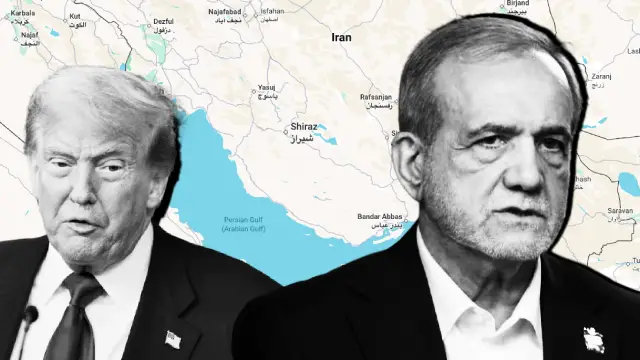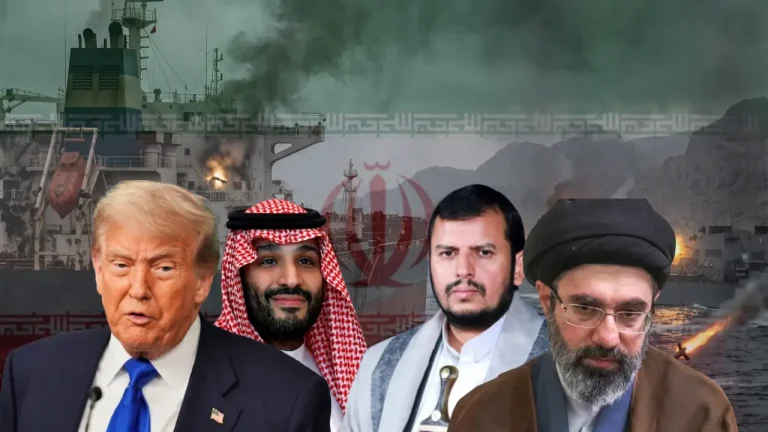
Two maritime chokepoints—Strait of Hormuz and Bab-el-Mandeb—that carry more than one-third of the world’s seaborne oil trade are once again under simultaneous threat.
On July 13th, Saudi Arabia resumed military strikes against Yemen‘s capital, Sanaa. The Ansar Allah (Houthi Militia) forces in Yemen retaliated by striking Saudi Arabia and threatening to blockade the Bab-el-Mandeb strait of the Red Sea. Iran, responding to recent incessant American military strikes on its territory, has fired on the Pentagon’s military bases in Jordan and Bahrain, along with UAE-flagged merchant vessels transiting the Strait of Hormuz. Amid these escalations that follow weeks of relative peace between the US and Iran, after they signed a memorandum of understanding (MoU), tensions in the region threaten to spill over globally and create a major supply chain crisis.
What connects these three developments is not merely regional conflict but the vulnerability of global commerce to disruption at critical maritime chokepoints. The UN Conference on Trade and Development (UNCTAD) estimates approximately 25% of global seaborne oil trade passes through the Strait of Hormuz. An additional 10% passes through Bab-el-Mandeb.
As the regional conflict now paves the way for the key players to resort to double-choking of these crucial waterways, such disruption would reverberate through energy markets, shipping costs, inflation, and industrial production simultaneously.
Escalation at Strait of Hormuz
The reported US strikes on July 14th were concentrated along Iran’s southern coast and strategic maritime corridor. According to Iranian officials, confirmed impacts of American attacks were reported in Bushehr, Bandar Kangan, Abu Musa Island, Kish Island, Bandar Abbas, Sirik, Bandar-e Jask, Konarak, Chabahar, and Saravan. There have been additional unconfirmed impacts reported from Bandar-e Mahshahr and Jam.
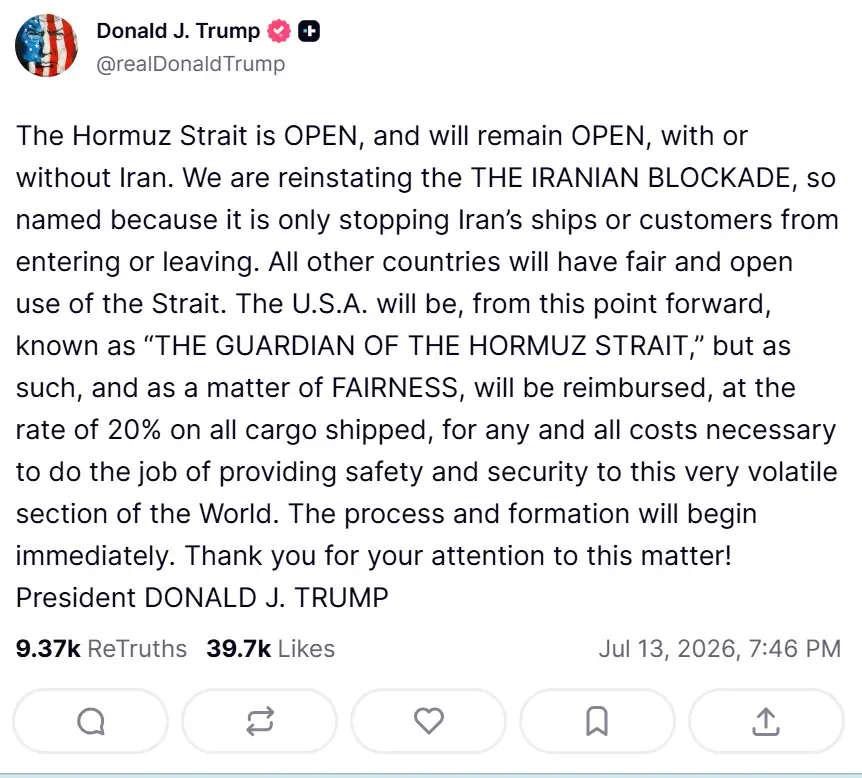
US President Donald Trump, in a statement posted to Truth Social on July 14th, 2026, announced that Washington would henceforth position itself as “the Guardian of the Hormuz Strait” and collect a 20% charge on all cargo transiting the passage in exchange for “safety and security.” This is not a security guarantee. It is a toll system, unilaterally imposed.
The locations Americans targeted are strategically significant for Iran as they include major naval facilities, commercial ports, oil and gas infrastructure, coastal missile deployment areas, logistics hubs, and key positions overlooking the Strait of Hormuz and the Gulf of Oman.
In retaliation for the attacks, the Islamic Revolutionary Guard Corps (IRGC) initiated retaliations targeting US bases in Bahrain, Kuwait and Jordan. On July 14th, Iranian response included the downing of a US MQ-1 drone over the Strait of Hormuz, two US Lucas drones over Bandar Abbas and Lar, cruise missile strikes on a US ship, Karrar drone attacks targeting the US military equipment in Kuwait, naval clashes between the Iranian Army-IRGC Navy and American warships and reports of additional ships being targeted near the UAE coast.
There are further reports on attacks and explosions in Abu Dhabi, a missile strike targeting the US Fifth Fleet headquarters in Juffair, Bahrain, a tanker being struck near the USS Abraham Lincoln, a US KC-135 tanker aircraft transmitted an emergency 7700 distress code while returning to Tel Aviv, a reported cyberattack targeting Bahrain’s banking system and reports of another tanker being hit by a projectile off Qalhat, Oman.
The IRGC Navy in a statement said, “In the first phase of Iran’s response to the enemy’s aggression, the courageous fighters of the IRGC Navy, during the second wave of Operation Nasr 2, under the blessed code “Ya Litharat al-Husayn” (“O Avengers of al-Husayn”), targeted and destroyed several weapons support depots, a satellite communications center, and the residence building of US forces at Juffair Base in Bahrain using missiles and drones.”
The Iranian Navy stated, “Following repeated acts of aggression by the United States against our country, the Army of the Islamic Republic of Iran, a short while ago, targeted the communications systems, fuel storage facilities, Patriot air defence systems, the control tower, and the ammunition depot of the US military in Kuwait using loitering attack drones.”
“In addition, the Navy of the Islamic Republic of Iran, in response to missile attacks on several military facilities, targeted a hostile American vessel by launching cruise missiles,” it added.
The US attacks on Iran, under the guise of securing control of the Strait of Hormuz, which was supposed to be managed by Iran for 60 days, resumed escalations in the region. However, while the world has suffered the supply chain disruptions caused by Iran’s blockade of the Strait of Hormuz during the 42-day war between the Islamic Republic and the Israel-US axis, the fear of a double blockade—involving the Bab-el-Mandeb Strait connecting the Red Sea to the Indian Ocean—has also gripped the world.
However, a broader question has arisen over what prompted the Saudi Arabian monarchy to launch attacks on Yemen, breaking the 2022 ceasefire.
A close analysis of the recent developments indicates a complex chain of developments prompting the Saudi Arabian attacks, which poses a greater threat now.
Why did Saudi Arabia break Yemen ceasefire?
Iranian experts claim that Saudi Arabia sought to appease the Ansar Allah movement in exchange for ensuring its non-involvement in the ongoing war between Iran and the Israel-US axis, and for not closing the Bab al-Mandab Strait or targeting Saudi territory.
On the other side, the Ansar Allah movement wasn’t eager to enter the conflict at the beginning of the 42-day war. Rather, Iran and Yemen’s Ansar Allah agreed that the latter would act as a trump card for maximum impact. Iranian experts claim that Ansar Allah’s limited and delayed participation has been due to a calculated deterrent message.
The Houthi movement was also not prepared for a wide confrontation due to the repercussions of the previous American-Israeli aggression on Yemen and the damage it caused, in addition to the field changes, especially the decline of the UAE’s influence and Saudi Arabia’s growing role.
It’s claimed that the Houthi movement and Iran have been aware of these realities and therefore have made the best decision in their favour.
However, it appears that Yemen has completed its preparations, compensated for the losses it had suffered and finally, an Iranian plane arrived a few days ago to break the air blockade imposed on Sana’a, which angered Saudi Arabia.
While the Saudi Arabian intelligence was assessing the impact of the first Iranian flight, a second Iranian flight attempted to land in Sana’a on Monday. This is when Saudi Arabia reacted to the eerie alarm and bombed the Sana’a airport, forcing the plane to land in Hodeidah.
These developments indicate that the Houthis and Iran have started activating the Yemeni front using air transport as a means to challenge the Saudi blockade imposed on Sana’a. The Ansar Allah movement had also escalated its pressure on Saudi Arabia to demand the lifting of the blockade.
Iran watchdogs claim that the next stage may witness, even without the return of the war with Iran in its previous form, escalatory steps such as closing the Bab al-Mandab Strait or targeting Saudi oil facilities. This would mean returning to the same targets that were bombed during the war, but this time in a different context, based on drawing Saudi Arabia into an escalatory path by breaking the equation of air deterrence imposed in Yemen.
With the IRGC choking the Strait of Hormuz, the cost of any confrontation between Ansar Allah and Saudi Arabia would rise for the US, Israel and their allies, whether through its effect on oil prices or navigation and supply chain disruption in the world’s most important maritime passages.
Arithmetic of disruption
The Strait of Hormuz is economically consequential in ways that most policy discussion underestimates. The Strait of Hormuz carries roughly $1.2 trillion in annual commerce. For China and India, the dependence is particularly acute. They collectively source over 44% of their total fuel imports through this route.
The Bab-el-Mandeb, though less economically central than the Strait of Hormuz, carries approximately 10% of global seaborne trade and represents the critical link between the Red Sea and the Indian Ocean. Disruption at either chokepoint immediately feeds through to global energy markets, and consequently to inflation across economies dependent on imported energy.
This transmission mechanism has already been activated. Brent crude futures were trading at $86.47 per barrel on July 14th—up $3.17 or 3.81% in a single trading session. West Texas Intermediate crude rose to $80.29 per barrel, up 2.75%. These price increases predate any formal implementation of Mr Trump’s proposed 20% tariff on shipping traffic.
UNCTAD analysis indicates that if the current disruptions persist, Brent crude could reach $100-120 per barrel, with further spikes possible if both American and Iranian shipping restrictions are enforced simultaneously. Each $10-per-barrel increase in oil prices translates, historically, to a 0.3-0.5 percentage point increase in global inflation. For developing economies already facing constrained fiscal space and high debt service burdens, this represents a material shock to growth prospects.
Markets may appear geographically distant from West Asia’s battlefields, but maritime trade links the two almost immediately.
Markets give muted but ominous signals
Stock markets have not yet fully priced the risks. India’s NIFTY index declined 158.95 points (0.66%) to 24,052.05 on July 14th. The index’s automobile, financial services and banking sectors recorded declines of 1.61%, 1.12% and 1.15%, respectively. The BSE’s Sensex fell 561.46 points (0.72%) to 77,054.94.
Europe’s London Stock Exchange recorded average declines of 0.41%, with the FTSE 250 declining 0.73% by midday. American markets, by contrast, showed relative resilience. This divergence indicates that markets are not yet incorporating sustained disruption to the Strait of Hormuz into valuations. The markets are rather pricing tactical risk, not structural change.
This represents a misreading of the situation. The muted response reflects the early stage of escalation, not evidence that supply-chain risks are contained. If both Bab-el-Mandeb and the Strait of Hormuz are blocked, the insurance premiums for vessels transiting these waters will adjust over the coming weeks, as will freight rates and bunker fuel costs. These incremental increases, accumulated across millions of transactions, represent the transmission mechanism through which geopolitical risk becomes economic cost.
India’s predicament: Caught between Western ties and regional economics
For New Delhi, the escalation presents a strategic dilemma that official statements have not yet acknowledged. India’s alignment with the United States, Israel and the UAE—formalised through defence partnerships and strategic dialogues—places New Delhi on the Western side of the Iran divide. Yet India’s economic interests demand the opposite.
The Strait of Hormuz is vital for India’s energy imports. Before the 42-day war, India imported more than 60% of its liquefied natural gas, over 90% of its liquefied petroleum gas and over 40% of its fuel through the Strait of Hormuzh. Any sustained disruption to shipping lanes directly translates to higher energy costs, which feed into inflation. India’s inflation rate declined to 3.5% in June 2026 after spiralling during the 42-day war.
During the peak of the conflict, India had to ration its cooking gas cylinders, the prices went up and the domestic and business consumers suffered due to the crisis. Industries had to scale down production. Many small and micro-scale eateries suffered immensely during the war, creating ripple effects across the economy.
However, this June decline in inflation reflects prevailing commodity prices. Sustained energy price increases of $10-20 per barrel would push inflation back above 5%, complicating the Reserve Bank of India’s monetary policy and constraining growth in a year when India’s GDP is already decelerating relative to previous years.
In response to the escalation, India’s Ministry of External Affairs issued a statement on July 14th condemning the attacks on merchant shipping and demanding de-escalation. The statement made specific reference to the killing of an Indian seafarer and called on all parties to return to negotiations. India simultaneously summoned the Iranian envoy to register a formal protest.
This dual positioning—diplomatically aligned with Western allies, economically dependent on energy flows through zones of conflict—leaves New Delhi without leverage. India cannot credibly threaten to join either side. American pressure has already demonstrated limits. India has refused to align entirely with the US-Israel Iran policy. New Delhi maintained ties with Tehran, despite remaining silent over the American-Israeli attacks. Conversely, Iran has no incentive to accommodate Indian interests in a conflict where Tehran faces existential pressure.
New Delhi must absorb the economic cost of escalation whilst hoping its diplomatic entreaties—which carry no enforcement capacity—will persuade antagonists to de-escalate. The probability of this succeeding is low.
Western intervention question: Costs and constraints
A significant contingent of Western geopolitical analysis has endorsed or entertained the prospect of military intervention by a coalition of the US, UK, Israel, Saudi Arabia and the UAE to forcefully break Iranian blockades and restore “freedom of navigation”. The proponents of this approach argue that such intervention would restore order and protect global shipping.
This framing misconstrues recent military history and underestimates asymmetric costs. Widyane Hamdach of Saint Peter’s University, in a March 2026 analysis published by Georgetown University, noted that Tehran has sustained escalation through asymmetric warfare.
A 2025 Pentagon assessment, cited by Ms Hamdach, estimated that three weeks of operations against Houthi forces alone consumed $1bn in American military expenditure, with limited operational effect.
The Houthis, moreover, have demonstrated the capability to strike at the core of Israel’s air defence during the 42-day conflict that preceded the current escalation. Thomas Juneau, a non-resident research fellow with the Sana’a Center and professor at the University of Ottawa, wrote in March 2026 that among Iran’s network of allied forces, the Houthis emerged strategically strengthened from earlier conflicts.
The geographic advantages of Yemeni forces—proximity to shipping lanes, terrain suitable for missile production and dispersal—provide meaningful capability to disrupt merchant shipping that no amount of Western air power can easily neutralise.
The UK has advocated for coalition action. Saudi Arabia, under Crown Prince Mohammed bin Salman, signalled willingness through renewed military operations against Yemen. However, previous Saudi-UAE efforts to degrade Houthi capabilities (2015-2022) resulted in strategic retreat, not victory. The current escalation suggests that neither Saudi Arabia nor Western powers have revised their assessment of Houthi resilience.
Trump factor: Domestic politics and international commitment
A question dominating policy circles across South and West Asia is why the Trump administration resumed military operations after the apparent de-escalation achieved through earlier negotiations. Several political and strategic factors appear to be driving Washington’s renewed intervention.
Former supreme leader Ayatollah Sayyed Ali Khamenei’s funeral in March 2026 mobilised an estimated 43m Iranians. International coverage highlighted both the scale of the funeral and rhetoric from sections of Iranian society calling for retaliation against Mr Trump. The administration subsequently portrayed the event as evidence of an Iranian plot against the president.
Several American geopolitical analysts have challenged that interpretation, arguing that the allegations remain unsubstantiated. They point out that, unlike the United States’ documented use of targeted assassinations as an instrument of state policy, Tehran has no recorded history of assisting in the assassination of a hostile head of state.
Domestic political pressures further complicate the administration’s calculations. According to YouGov polling, 57.8% of Americans disapprove of Mr Trump’s foreign policy. A Reuters survey found that only 37% support the current war against Iran, while 79% believe the conflict is likely to entangle the United States for an extended period. Just 18% expressed confidence that the Pentagon could achieve its military objectives quickly.
Despite these indicators, Mr Trump has repeatedly reaffirmed support for Israel’s refusal to withdraw from southern Lebanon—a condition Tehran has made central to any future ceasefire negotiations.
Analysis emerging from Tehran suggests that Israeli pressure has narrowed Washington’s diplomatic room for manoeuvre, pushing the administration towards military escalation rather than renewed negotiations. The result is a strategic contradiction: Mr Trump seeks a political victory amid growing domestic anti-war sentiment, while Israel continues to pursue military objectives that leave little space for a negotiated settlement.
Global consequences: Supply chains and systemic vulnerability
The economic consequences of simultaneous disruption at the Strait of Hormuz and Bab-el-Mandeb will extend well beyond West Asia. UNCTAD notes that higher energy costs ripple through global supply chains via multiple transmission channels, including freight rates, bunker fuel prices, insurance premiums and commodity-linked inflation affecting fertilisers, metals and agricultural inputs.
For Europe, which imports much of its energy and manufactured goods through Asian maritime corridors, these disruptions amount to a direct tax on competitiveness. A sustained $10–15 per barrel increase in oil prices could raise Europe’s annual energy bill by an estimated €200–300bn, assuming current consumption patterns. Those costs are ultimately borne not by energy companies but by manufacturers and consumers.
The impact extends beyond energy. Semiconductor supply chains routinely pass through Asian ports several times during production, leaving Japanese and South Korean manufacturers particularly exposed to prolonged shipping delays in the Strait of Hormuz. Even transit delays of 10–15 days can cascade through just-in-time manufacturing systems, disrupting automotive and electronics production across Europe.
Developing economies face an even narrower margin for adjustment. UNCTAD warns that countries already burdened by high debt-service obligations and limited fiscal capacity are especially vulnerable to rising food prices driven by higher energy and fertiliser costs. The combination of inflation, slowing growth and reduced capacity to subsidise essential goods risks intensifying political instability across South Asia, Africa and West Asia.
Strategic autonomy question: Can escalation be contained?
The central question animating regional capitals is whether escalation at the Strait of Hormuz and Bab-el-Mandeb will stabilise or expand. Several factors suggest expansion is more probable than containment.
First, the Trump administration has signalled a transactional approach to statecraft—pricing access and security rather than providing them as public goods. This breaks with post-Cold War norms, in which maritime commons were treated as shared resources protected by the American military presence. The announcement of the 20% charge signals that even allies cannot assume free access to critical chokepoints.
Second, Iran has demonstrated asymmetric capability that aerial interdiction cannot effectively suppress. Drone and missile production is decentralised, and supply chains favour Iranian production given current economic isolation. Western and allied air defence systems are expensive to operate and in finite supply.
Third, American strategic capacity is demonstrably stretched. Ms Hamdach’s analysis notes that Operation Epic Fury has diverted significant American military assets from the Indo-Pacific, raising concerns among Japan and South Korea about Taiwan contingency readiness. This diversion simultaneously reduces constraints on Russian operations in Ukraine (by reducing American attention and weapons supplies to Kyiv) and creates a strategic opening for China if a Taiwan-related crisis emerges.
Under these conditions, de-escalation depends on the US’s moves. Mr Trump would need to accept Iranian resilience without a decisive military victory. But he has not yet demonstrated a willingness for such compromise.
Geography as vulnerability, not inevitability
The Strait of Hormuz and Bab-el-Mandeb have not become global chokepoints by accident. Geography has always constrained maritime commerce. For decades, however, the American security umbrella masked that vulnerability by guaranteeing relatively uninterrupted transit. That assumption can no longer be taken for granted.
Whether these waterways become zones of sustained disruption or merely another episode of regional tension will depend on political decisions yet to be made. By framing maritime security as a service that can be priced rather than a global public good, the Trump administration has introduced a fundamentally different logic into international trade. Should other major powers—including China, India or Russia—adopt similar approaches to strategic waterways, the foundations of the post-Cold War trading system would begin to shift.
The irony is striking. Only weeks ago, US Secretary of State Marco Rubio argued that no state could legitimately charge for passage through international maritime corridors. Today, he finds himself defending precisely such a proposal from his own administration.
The economic consequences are already emerging. Higher energy costs, rising insurance premiums, supply-chain disruptions and food-price inflation remain limited for now, but they represent the early stages of a broader structural shock. For the Global South, the challenge is not choosing between Iran and the West. It is preserving economic growth while absorbing the costs of a confrontation over which it exercises little influence.
Whether the present escalation ultimately subsides will depend less on diplomatic appeals than on the calculations of the principal belligerents. As long as they judge the costs of confrontation to be bearable, the incentives for escalation will remain stronger than those for compromise.
East Post is an independent geopolitical analysis portal covering South Asia and global power dynamics for international audiences. Views expressed are analytical and do not constitute endorsement of any state or non-state actor.
Join our channels on Telegram and WhatsApp to receive geopolitical updates, videos and more.