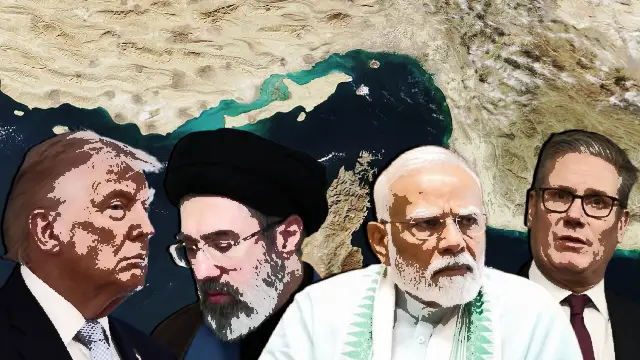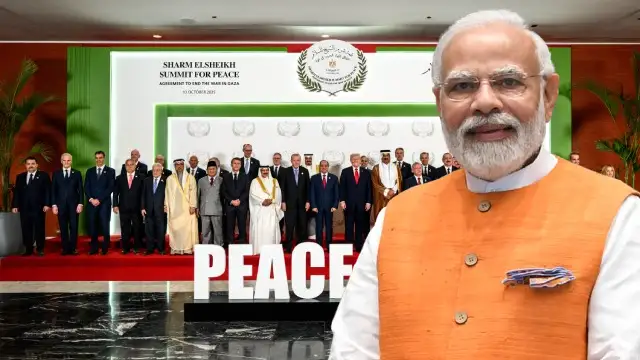
India is aligned with Israel—except on one battlefield where it stands on the opposite side.
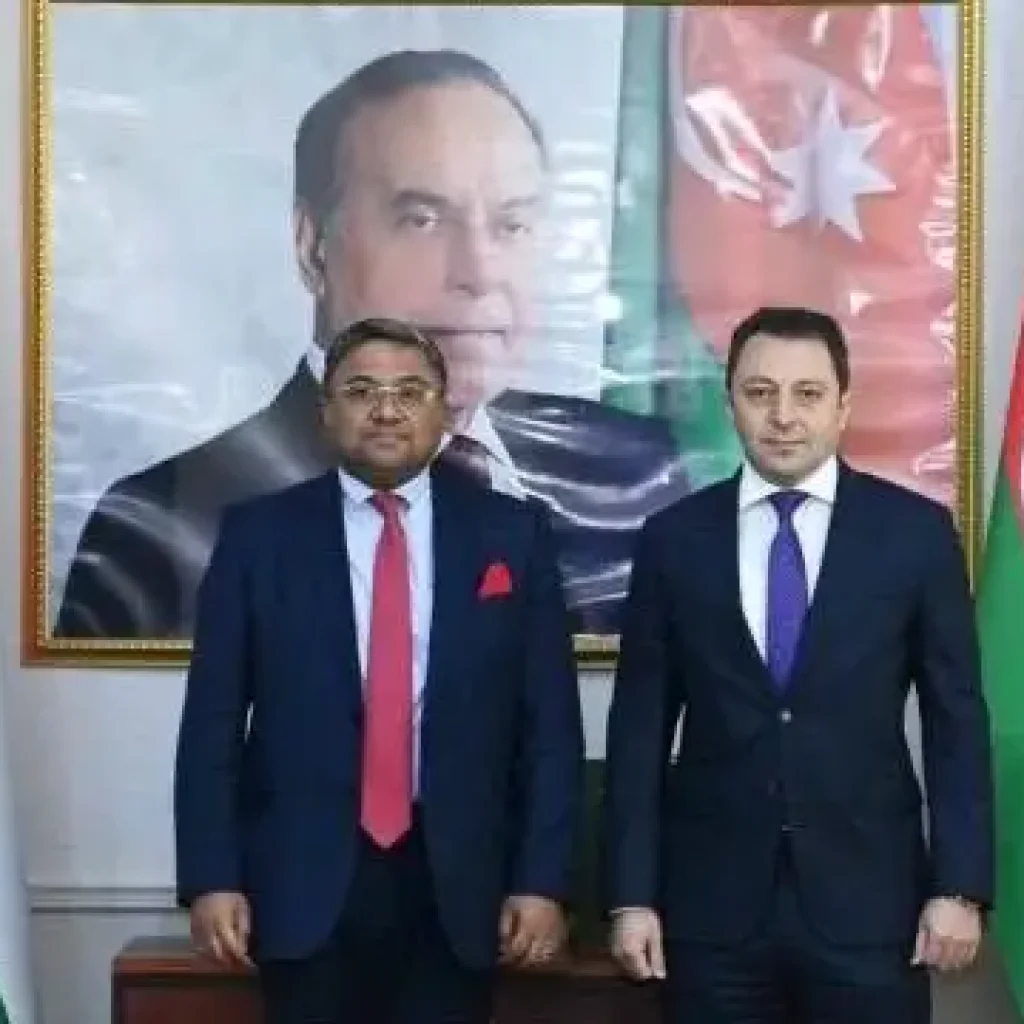
On April 3rd 2026, India’s Ministry of External Affairs (MEA) said New Delhi had begun resetting ties with Azerbaijan after a rift caused by India’s strikes on Pakistan in May 2025 following a terrorist attack in Pahalgam. The MEA’s statement came after Secretary (West), Sibi George, met Azerbaijan’s Foreign Minister, Jeyhun Bayramov, in Baku during the sixth round of India–Azerbaijan Foreign Office Consultations on the same day.
India’s reset of diplomatic ties with Azerbaijan reveals a deeper contradiction.
Azerbaijan criticised India’s May 7th strikes on Pakistan during Operation Sindoor, New Delhi’s response to the killing of 26 civilians allegedly by Islamabad-backed terrorists in Jammu & Kashmir’s Pahalgam on April 22nd 2025. During Operation Sindoor, India’s ties with Azerbaijan and Türkiye deteriorated sharply as both expressed solidarity with Islamabad.
Following exchanges with Azerbaijan’s foreign ministry on social media, New Delhi’s policymakers concluded that it was necessary to reset ties.
But this reset was not driven by diplomacy alone.
Less than a year later, India is not merely resetting diplomatic ties with Azerbaijan. It is seeking to secure its long-term strategic interests in the volatile Eurasian region, which has suffered a jolt due to the Iran war. In the context of Iran, Israel and the United States, India’s reset with Azerbaijan has acquired added significance.
Lessons from Iran war guide India’s ties with Azerbaijan
While Prime Minister Narendra Modi’s government appears to have relied on a quick Israel–US victory against Iran and “regime change” in the latter to secure its investments and interests without facing sanctions, Tehran’s retaliation and asymmetric warfare have altered regional military and geopolitical dynamics.
Israel and the United States launched strikes on Iran on February 28th, within a day of Mr Modi’s return from his Israel tour. New Delhi relied on Baku to facilitate safe passage for hundreds of medical students and other Indian nationals who were trapped in Iran. Despite their diplomatic feud during Operation Sindoor, both New Delhi and Baku coordinated to evacuate the Indian nationals.
In crisis, India’s ties with Azerbaijan shifted from diplomatic to operational.
This created an opportunity for New Delhi to reopen a channel of engagement with Azerbaijan.
At the same time, India has remained concerned about the strengthening of the Azerbaijan–Pakistan–Türkiye axis, which it sees as a threat to national security. This has made it necessary for New Delhi to recalibrate its approach towards Azerbaijan, which appears to be the most diplomatically accessible among the three.
That necessity exposed a deeper structural constraint.
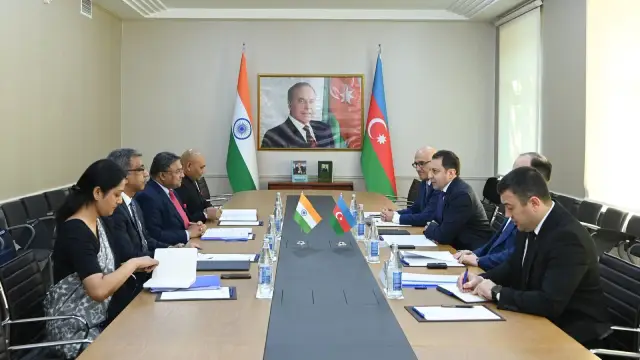
These developments made the sixth round of India–Azerbaijan Foreign Office Consultations in Baku a significant moment. Co-chaired by Mr George and Elnur Mammadov, Azerbaijan’s deputy minister of foreign affairs, the meeting “comprehensively reviewed the current state of bilateral relations covering areas of mutual interest”, the MEA stated. The issues discussed included trade, technology, tourism, pharmaceuticals, energy, culture, people-to-people exchanges and the fight against cross-border terrorism, the MEA added.
Secretary (West) @AmbSibiGeorge called on Minister of Foreign Affairs of the Republic of Azerbaijan, Mr. Jeyhun Bayramov. They reviewed bilateral ties and exchanged views on regional and global matters of common interest.
— Randhir Jaiswal (@MEAIndia) April 3, 2026
The 6th round of India-Azerbaijan Foreign Office… pic.twitter.com/U8FQ71eawz
During this visit, Mr George also met Hikmet Hajiyev, the foreign policy adviser to the Azerbaijani president.
India and Azerbaijan agreed to enhance ties and organise future consultations “at a mutually convenient date in New Delhi”, according to the MEA.
Mr Modi is not merely seeking to engage and rebalance relations with a partner Pakistan has relied on; he is also ensuring that India does not end up indirectly confronting Israel in the Eurasian region.
Where India’s ties with Azerbaijan intersect with Israel
Mr Modi’s government has consistently demonstrated support for Israel, even at the cost of straining decades-old diplomatic ties with Iran and diluting its historical support for the cause of an independent Palestine. Yet there is one battlefield where India’s position diverges from Israel’s.
That divergence is visible in the conflict between Azerbaijan and Armenia.
India has been one of the crucial supporters of Armenia in its conflict with Azerbaijan over the disputed Soviet territory of Nagorno-Karabakh. In the same conflict, Israel has been one of the largest suppliers of weapons to Azerbaijan. Given Azerbaijan’s geographic location and importance in regional geopolitics, Israel has remained a close ally of Baku.
India’s Contradiction in Eurasia
- Aligns with Israel globally
- Arms Armenia regionally
- Resets ties with Azerbaijan diplomatically
Thus, in Nagorno-Karabakh, where the two former Soviet republics have engaged in armed conflict, India and Israel find themselves on opposing sides, with their respective weapons deployed against each other.
And this is where India’s strategy becomes harder to sustain.
India’s support for Armenia, despite its broader alignment with Israel, reflects deeper strategic considerations.
Why India supports Armenia despite resetting ties with Azerbaijan
India’s position is shaped by three key factors.
First, geography and connectivity. Armenia’s location allows India to pursue alternatives to routes involving Pakistan and Azerbaijan. New Delhi has long explored the International North-South Transport Corridor (INSTC) involving India, Iran and Russia, as well as a Persian Gulf–Black Sea Corridor linking Europe through Iran’s Chahbahar Port and Armenia. While the Ukraine war and the US-backed India–Middle East–Europe Economic Corridor (IMEC) have reduced the immediate relevance of these projects, Armenia remains central to India’s long-term connectivity ambitions.
Second, diplomatic alignment. Armenia supports India’s position on the disputed territory of Jammu & Kashmir, unlike Azerbaijan and Türkiye, whose positions align with Pakistan.
Third, defence cooperation. Armenia has emerged as a significant buyer of Indian defence equipment.
This is where economics reinforces strategy.
According to India’s Ministry of Defence (MoD), weapons exports reached an all-time high of Rs 384.24bn in the financial year (FY) 2025–26, an increase of Rs 148.02bn, or 62.66%, over FY 2024–25’s figure of Rs 236.22bn. While the MoD has not shared country-wise data, it has stated that India now exports defence equipment to over 80 countries.
Data from the Stockholm International Peace Research Institute (SIPRI) up to 2023 indicates that Armenia is among the leading destinations for India’s defence exports.
Between 2020 and 2023, Armenia has signed contracts for Pinaka 214mm multiple rocket launchers, Akash SAMS surface-to-air missile systems, Swathi artillery locating radar sensors, MArG 155mm self-propelled artillery guns, ATAGS 155mm towed guns and Akash-1 surface-to-air missiles, SIPRI claims.
Indian Arms Exports to Armenia
These contracts are estimated to be worth approximately $2bn, according to experts.
Diplomatic risks shaping India’s ties with Azerbaijan
India is not choosing sides. It is managing contradictions.
For India, several geopolitical realities continue to shape its Eurasian strategy. The policy reflects competing priorities rather than consistency, forcing New Delhi to navigate a volatile regional environment.
India had earlier sought to reduce its reliance on the INSTC and the Persian Gulf–Black Sea Corridor. Encouraged by the United States, Israel, the UAE and the European Union, it prioritised the IMEC as a stable alternative connecting South Asia with Europe. The United States has strongly backed the IMEC as an alternative to China’s Belt and Road Initiative.
However, as US resources across West Asia have come under Iranian attack since the beginning of the US–Israeli strikes on Iran, Indian policymakers have concluded that the IMEC may not materialise in the near term.
Even if hostilities subside, Saudi Arabia—a key participant—has stated that it will not engage with the project or establish formal ties with Israel until a Two-State Solution is implemented and a Palestinian state with East Jerusalem as its capital is recognised.
In this context, India, which remained largely silent over the prolonged Israeli offensive in Gaza while criticising Iran’s response, has recognised that it cannot fully abandon efforts to develop the Persian Gulf–Black Sea Corridor despite the Ukraine war.
To do so, it must normalise ties with Azerbaijan, weaken alignment within the Azerbaijan–Pakistan–Türkiye axis, and sustain its relationship with Armenia simultaneously.
Through this layered approach, and with support from Russia and the United States, India aims to maximise its strategic benefits in the Eurasian region. It also expects that both Armenia and Azerbaijan will uphold the August 2025 truce brokered by US President Donald Trump and avoid renewed escalation.
As both countries—particularly Armenia—have distanced themselves from the Russia-backed Collective Security Treaty Organisation, New Delhi faces limited risk of friction with Washington. This derisks India’s attempts to strengthen ties with these two former Soviet republics.
India’s ties with Azerbaijan are not being rebuilt out of choice, but necessity. As Eurasian fault lines deepen, New Delhi is no longer shaping outcomes—it is adapting to them. The reset with Azerbaijan reflects not strategic expansion, but strategic constraint at a moment of pressure.
East Post is an independent geopolitical analysis portal covering South Asia and global power dynamics for international audiences. Views expressed are analytical and do not constitute endorsement of any state or non-state actor.
Join our channels on Telegram and WhatsApp to receive geopolitical updates, videos and more.