Nearly 24 hours of negotiations in Islamabad ended without a deal on Sunday, as the latest round of Iran-US peace talks in Pakistan produced no substantive agreement. A fragile two-week ceasefire, brokered by Islamabad, holds — for now. But with the Strait of Hormuz at the centre of the dispute, and the Bab al-Mandeb in the Red Sea lurking as a second flashpoint, Europe’s quiet faith that it can wait this conflict out may prove its most costly miscalculation since the fighting began.
The talks were expected to produce a framework for de-escalation. Instead, they ended with hardened positions and a deadline disguised as diplomacy.
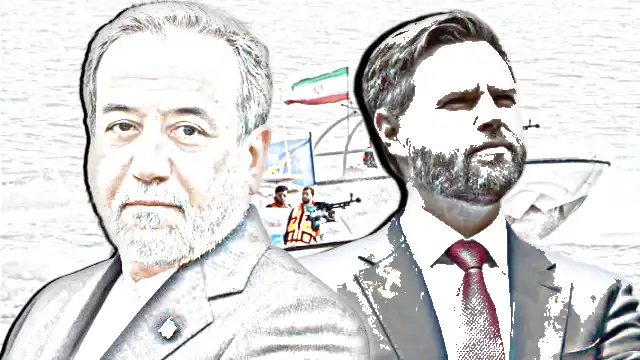
US Vice President JD Vance, who represented President Donald Trump in Islamabad, departed after declaring America’s position its “final and best offer.” Iran called the American terms excessive. The two sides exchanged draft texts — and little else.
.@VP in Islamabad, Pakistan: "We’ve had a number of substantive discussions with the Iranians. That’s the good news. The bad news is that we have not reached an agreement — and I think that’s bad news for Iran much more than it's bad news for the United States of America." pic.twitter.com/RLIQ30btO5
— Rapid Response 47 (@RapidResponse47) April 12, 2026
The room where it didn’t happen
Pakistan brought the two delegations to the table on Saturday, April 11th. The negotiations began at 1.05am local time on Sunday and formally concluded at 3.12am — among the longest sustained direct exchanges between Tehran and Washington in more than a year. Pakistani officials, led by Prime Minister Shehbaz Sharif‘s initiative, served as mediators throughout.
Iran’s foreign ministry spokesman, Esmaeil Baqaei, confirmed that discussions covered the Strait of Hormuz, Iran’s nuclear programme, war reparations, the lifting of sanctions, and a full end to hostilities across the region. Mr Baqaei described the atmosphere as one “of suspicion, not distrust” — a distinction that spoke clearly to how far confidence has deteriorated since the conflict began on February 28th. The 40-day war left both sides with casualties and losses.
The session ended with partial agreements on some issues, according to Mr Baqaei. Fundamental differences remain. “Nothing can or should deter us from fulfilling our great historic mission,” he wrote on X in the early hours of Sunday.
دیپلماسی برای ما ادامه جهاد مقدس مدافعان ایران زمین است. تجربه بدعهدیها و بدسگالیهای آمریکا را فراموش نکرده و نمیکنیم. همانطور که جنایات شنیع ارتکابی آنها و رژیم صهیونیستی در جریان جنگهای تحمیلی دوم و سوم را نخواهیم بخشید.
— Esmaeil Baqaei (@IRIMFA_SPOX) April 12, 2026
امروز روز پر کار و طولانی برای هیات نمایندگی جمهوری…
Mr Vance was more clinical. “We leave here with a very simple proposal — a method of understanding that is our final and best offer,” he told reporters. “We’ll see if the Iranians accept it,” he added.
Iran’s President, Dr Masoud Pezeshkian, confirmed in a phone call with his French counterpart Emmanuel Macron that Tehran had come to Islamabad “with seriousness and determination.”
Success, Dr Pezeshkian added, depends entirely on the other side’s approach. Mr Macron reiterated France’s condemnation of the war — Paris says it opposed it from day one — and expressed support for a diplomatic path forward.
Iran’s diplomacy, Mr Baqaei said on Sunday, “never ends.”
Strategy gap
On paper, both sides say they want peace. In practice, the Iran-US peace talks in Pakistan revealed just how far apart the two governments remain on fundamental terms.
Washington’s position — as understood from Iranian statements and reporting — centres on the nuclear question and binding guarantees regarding freedom of navigation through the Strait of Hormuz. Iran’s minimum conditions include war reparations, a full lifting of American and international sanctions, and a formal end to US and Israeli military operations in the region. These are not positions that can be bridged in 24 hours of negotiations held four days into a ceasefire, in a city chosen for its diplomatic credibility rather than its proximity to power.
Islamabad’s mediating role has given the Iran-US peace talks in Pakistan a legitimacy that earlier backchannels lacked. Islamabad maintains strategic ties with Washington while cultivating its relationship with Beijing, which has its own interests in regional stability and uninterrupted Gulf energy flows. Mr Sharif’s initiative, proposed weeks ago, has provided a rare and functioning channel. Whether Washington is serious about using it is a separate question.
Mr Vance did not announce the end of the process. He said the United States would wait for Iran’s response. That leaves the ceasefire in place — but it also leaves the region in suspension, waiting to see which side blinks, or whether either does.
The bill will come to Europe
European governments have largely observed this conflict from a distance. That assumption does not hold.
The Strait of Hormuz — the narrow chokepoint between Iran and Oman — carries approximately 20% of the world’s petroleum trade. An analysis of past disruptions to Gulf shipping, including the 1980s tanker wars and the 2019 Hormuz tension spike, confirms that even the credible threat of closure drives oil prices sharply upward within days. A sustained disruption would send energy costs across European households into territory not seen since the worst months of the post-Ukraine inflationary crisis.
Although most European imports in 2025 come from the US, Norway, Kazakhstan, and Libya, around 7% still originate from Gulf states such as Bahrain, Kuwait, Oman, Qatar, Saudi Arabia, and the United Arab Emirates (UAE). This oil passes the Strait of Hormuz and then the Bab al-Mandeb. The closure of the Strait of Hormuz will strongly impact Europe’s energy markets.
The Strait of Hormuz is not a peripheral issue in the Iran-US peace talks in Pakistan — it is one of the central contested points. Iran controls the northern coastline. It has both the capability and, depending on how the ceasefire breaks, the political incentive to use that leverage. Mr Baqaei described it explicitly as one of the “very complex issues” that “could not be resolved within nearly 24 hours.”
The Bab al-Mandeb, connecting the Red Sea to the Gulf of Aden, is the second chokepoint that European planners have largely stopped talking about since the Houthi operations in Yemen eased. They should not have. Between 2023 and 2025, Houthi strikes on commercial shipping forced vessels to reroute around the Cape of Good Hope — adding thousands of nautical miles, weeks of transit time, and high cost to every container making its way from Asia to Northern Europe. Joint naval operations by the United States, Britain and Israel, backed by Saudi Arabia and the UAE, failed to fully restore the route. European consumers paid the difference through higher retail prices across virtually every import category.
Yemen’s Houthi movement has maintained its alignment with Iran throughout the 40-day conflict. Were both straits disrupted simultaneously — Hormuz and Bab al-Mandeb — the combined energy and supply chain shock to Europe would be immediate and severe. Economies already bruised by consecutive waves of inflation since 2021 would have no buffer.
European Union (EU) leaders have issued calls for restraint but have not applied comparable pressure to force Washington and Tel Aviv out of the conflict as they have done to Tehran. This shows their bias against the Global South. The institutions Dr Pezeshkian criticised for their silence during the conflict, including the United Nations and the EU, have yet to convert condemnation into leverage.
A region that isn’t resting
Even during the ceasefire, the region has not been quiet. Israeli air strikes have continued in Lebanon. Military preparations across the broader conflict zone have not stood down. Iran’s network of allied movements — which Tehran describes collectively as the Axis of Resistance — has signalled continued solidarity and coordination. Imam Mujtaba Khamenei, addressing the axis following the 40th day of mourning for his father, the late Supreme Leader Ali Khamenei, who was killed during the conflict, stated that the front remains “united” against any resumption of aggression.
In Tehran, civilians have reportedly gathered near critical infrastructure, anticipating a possible resumption of strikes. The Iranian government has framed the ceasefire not as a concession but as a position of relative strength following 40 days of conflict — a framing that, whatever its domestic purpose, shapes the negotiating dynamic in Islamabad in ways Washington cannot easily ignore.
۱/پیش از مذاکرات تأکید کردم که ما حسن نیت و ارادهٔ لازم را داریم ولی به دلیل تجربیات دو جنگ قبلی، اعتمادی به طرف مقابل نداریم.
— محمدباقر قالیباف | MB Ghalibaf (@mb_ghalibaf) April 12, 2026
همکاران من در هیئت ایرانی میناب۱۶۸ ابتکارات رو به جلویی مطرح کردند ولی طرف مقابل در نهایت نتوانست در این دور از مذاکرات اعتماد هیئت ایرانی را جلب کند.
France’s Mr Macron has been the most vocal European voice for a negotiated settlement. But European diplomacy as a whole remains reactive rather than active — waiting for outcomes rather than shaping them.
History offers little comfort to those who believe distance is protection. The 1980-88 Iran-Iraq war, the 1990 invasion of Kuwait, and the 2003 Iraq war each restructured energy markets and global security in ways that no European government could insulate itself from. Each, in its own way, was also preceded by a period in which European capitals believed the crisis was ultimately someone else’s to manage.
No one is safe until everyone is
The Iran-US peace talks in Pakistan are not over. Mr Baqaei said diplomacy “will continue.” The draft texts exchanged in Islamabad may yet become the basis for the next round. The ceasefire, however fragile, is still holding as these words are written.
But the gap between Washington’s final offer and Tehran’s minimum conditions is wide — wide enough that a miscalculation, a provocation, or a domestic political shift in either capital could end the pause in a matter of hours. When that happens, the first bill will not arrive in Islamabad or Washington. It will arrive in Oslo, Dublin, Berlin and Copenhagen — in the form of energy prices that household budgets, already strained, cannot absorb.
Europeans did not vote for this war. But they are not insulated from its consequences. The sooner their governments act as if they understand that, the greater the chance that the next round of Iran-US peace talks in Pakistan produces something more than draft texts and a departing vice-president.
East Post is an independent geopolitical analysis portal covering South Asia and global power dynamics for international audiences. Views expressed are analytical and do not constitute endorsement of any state or non-state actor.
Join our channels on Telegram and WhatsApp to receive geopolitical updates, videos and more.